🔄 Updated 21 Jun 2026
The Tai Lue of Chiang Kham settled around Ban That Sop Waen, Ban Yuan and Ban Mang, clustered near old temples like Wat Phra That Sop Waen and Wat Saen Mueang Ma. The community's own slogan even spells out its food in plain terms — ‘kalamae from Ban That Sop Waen, khanom pat from Ban Yuan, come try khao kaep from Ban Mang’ — which tells you food is the heart of the place. Come to Chiang Kham and eat nothing but khao soi nam ngiao, and you've missed a lot of the real thing.
Tai Lue dishes worth trying
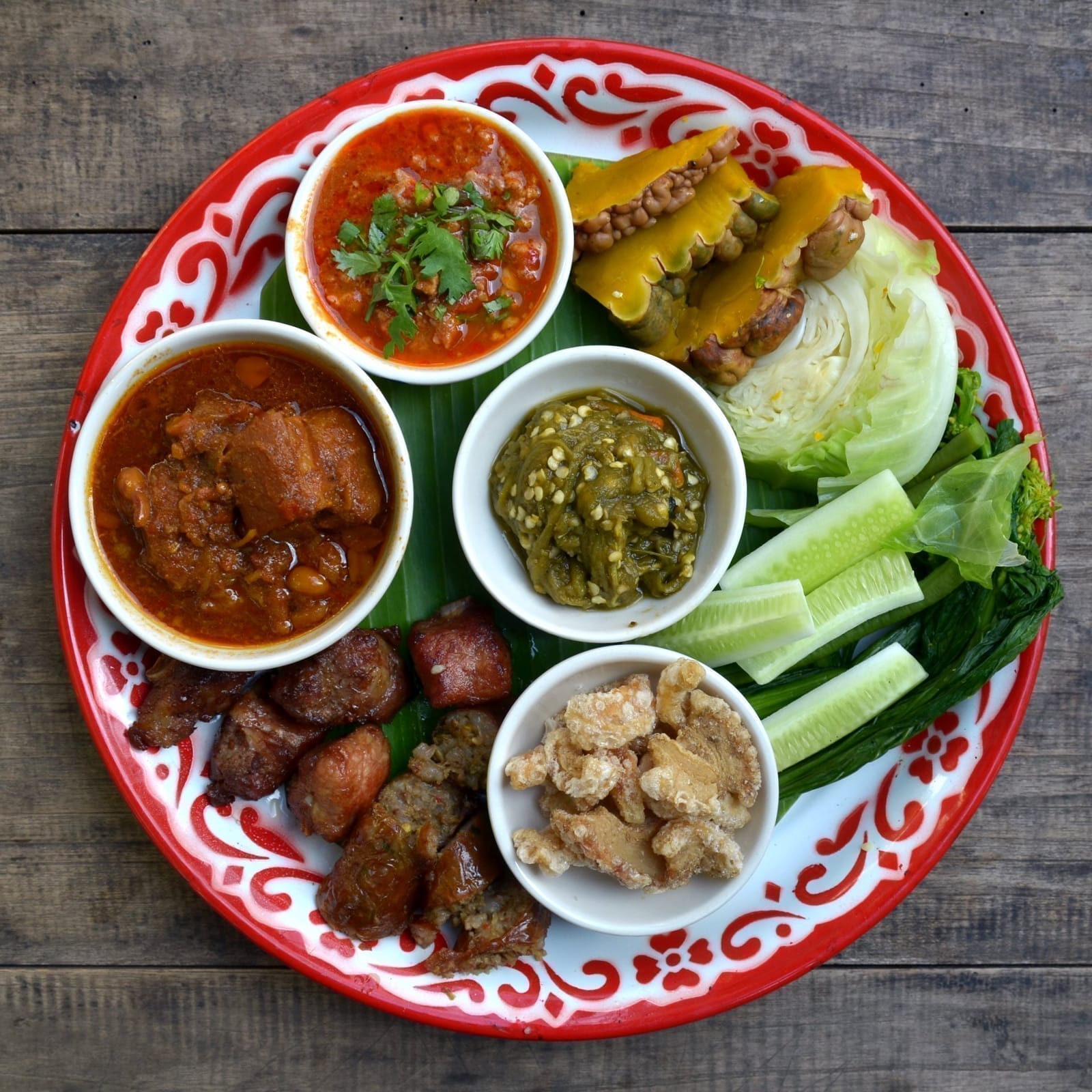
Tai Lue cooking is built on preserving food — fermenting, pickling, drying, and chili dips pounded to eat with steamed vegetables. It isn't as fierce as Isan food, but it has a deep savory pull from the ferments and the local herbs. These are the dishes people in Chiang Kham actually eat day to day.
Jin som (jin sam)
Pork or beef fermented with cooked rice until it turns naturally sour — like naem, but the Tai Lue version. Eat it raw with ginger and fresh chili, or fry, grill, or stir-fry it with egg. It's the house ferment nearly every kitchen in Chiang Kham keeps on hand.
Nam prik nam pu
A chili dip made from rice-paddy crab simmered down to a thick, dark paste, pounded with chilies and herbs. The smell is strong but the flavor is deeply savory. People in Chiang Kham eat it with steamed veg and sticky rice — for the full Tai Lue combo, get it alongside khao kaep crackers to dip.
Khao kaep (Ban Mang)
Thin sheets of sticky-rice batter scattered with sesame and dried in the sun, then grilled or toasted until they puff up crisp. Eat them as a snack or use them to scoop chili dip. Ban Mang is so well known for these that they've become Chiang Kham's signature thing to take home.
Gaeng pak kat som (sour mustard-green curry)
A clear curry with sour pickled mustard greens and pork or pork rib — a mild, well-rounded sourness. It's a Tai Lue home staple that goes down easy, and just the thing on a day you want something hot to slurp.
Northern larb (larb khua)
Northern-style larb with fragrant roasted larb spices, no toasted rice powder like the Isan version. Some places do a bitter larb with phlia (cattle bile) for that savory-bitter edge locals like. Eat it with fresh veg and hot sticky rice.
Sa (sa pak / sa jin)
A northern-style herb salad — vegetables or cooked meat tossed with sa seasoning and lime juice for a fresh, sour kick. It's a good opener for a meal, light on the stomach and a nice cut against anything fried.
Jin sam prik
Fermented meat tossed with chili Tai Lue style — sour and spicy on the tip of the tongue, the kind of thing you can't stop eating with sticky rice. It's hard to find outside Chiang Kham.
Grilled stuffed fish (tilapia/freshwater fish)
Freshwater fish stuffed with lemongrass and herb leaves, wrapped and grilled until fragrant — tender, not fishy. It's a dish traditional Tai Lue houses like to make for guests. Eat it with chili dip and steamed veg.
Khanom pat (Ban Yuan)
A thick, sticky sweet made from rice flour stirred with sugar and coconut milk, simmered long until it turns deep brown. It's the original recipe behind Chiang Kham's kalamae, made for merit-making and for guests during Songkran and the northern new year.
Old-style kalamae (Ban That Sop Waen)
A chewy stirred sweet, the Tai Lue recipe that grew out of khanom pat, fragrant with coconut milk and cane sugar. It's a Chiang Kham souvenir you can pick up at the morning market and at community shops.
Local tip
Ferments and dried foods like jin som and khao kaep are sold at Chiang Kham's morning market before the sky even lightens. If you want them freshly made and the full range, get there before 8am and you'll have more to choose from. Kalamae and khanom pat tend to sell out fast during festivals.
Want to taste deeper? Try a Phayao food tour or cooking class
Half a day with a local who knows the lanes — or cooking a dish yourself — teaches you more than just eating. Book ahead on Klook or GetYourGuide.
Community spots that are still open
Chiang Kham doesn't have flashy big-sign Tai Lue restaurants. Most are humble home kitchens run by people in the community who've been cooking this way for years. These are the spots locals mention and that are still open right now — friendly prices, mostly around 70–130 baht a plate.
Moyo Lue (Tai Lue restaurant)
A spot in the Chiang Kham town area, set on a river bend in a raised wooden house. The name means ‘our Lue kin.’ The standouts are Chiang Kham-style cooked pork larb, cooked sa, tom saeb, a mixed fried platter, and fried naem ribs. Around 70–130 baht a plate.
Larb Lung Rop
An old larb shop open for more than 40 years, just across from Wat Phra Nang Din, serving both northern and Isan food. It's the place people in Chiang Kham think of when they want larb made the old-fashioned way.
Heuan Tai Lue Mae Saeng Da
A traditional Tai Lue house in the Ban Yuan community, where the owner — in her nineties — still keeps the old home and cooks proper Tai Lue food: jungle curry, grilled stuffed fish, and homemade sweets. A real way to experience Tai Lue life. Arrange it through the community in advance.
Chiang Kham morning market
The real treasure trove of local food, open at first light, with jin som, khao kaep, nam pu chili dip, khanom pat, kalamae, and all the local vegetables. You can graze and pick up souvenirs in one place.
A full day of Tai Lue eating
If you've got a day in Chiang Kham, here's an eating plan that takes you through Tai Lue flavors from morning to evening, with a temple and a weaving village worked in so you get both the food and the sights.
Morning market + ferments and dried foods
A proper Tai Lue main meal
Tai Lue life + something sweet
Know before you go
- Bring cash — community spots and the morning market mostly take cash or PromptPay transfer, not cards.
- Ferments have a strong flavor — jin som and nam pu chili dip are pungent and sour. If you've never had them, start with a little at a time.
- Arrange ahead if you want to eat at a Tai Lue house — traditional houses take groups, so coordinate through the community center or a Chiang Kham tourism page first.
- Buy souvenirs in the morning — khao kaep, kalamae and khanom pat are made fresh and sell out fast, especially during festivals.
Plan a Phayao trip that covers the food and the sights
See the Phayao travel guide →