🔄 Updated 21 Jun 2026
Handicrafts are a root of Chiang Mai that plenty of people walk straight past without noticing. Umbrella makers, silversmiths, weavers, and wood carvers have clustered into villages here since the Lanna era. Three main spots draw most visitors: Bo Sang (saa-paper umbrellas), the San Kamphaeng road (a mix of many crafts), and the Wua Lai quarter in town (silverwork). You can do all three in a single day if you plan the route well — we'll take them one at a time.
Bo Sang — the saa-paper umbrella village
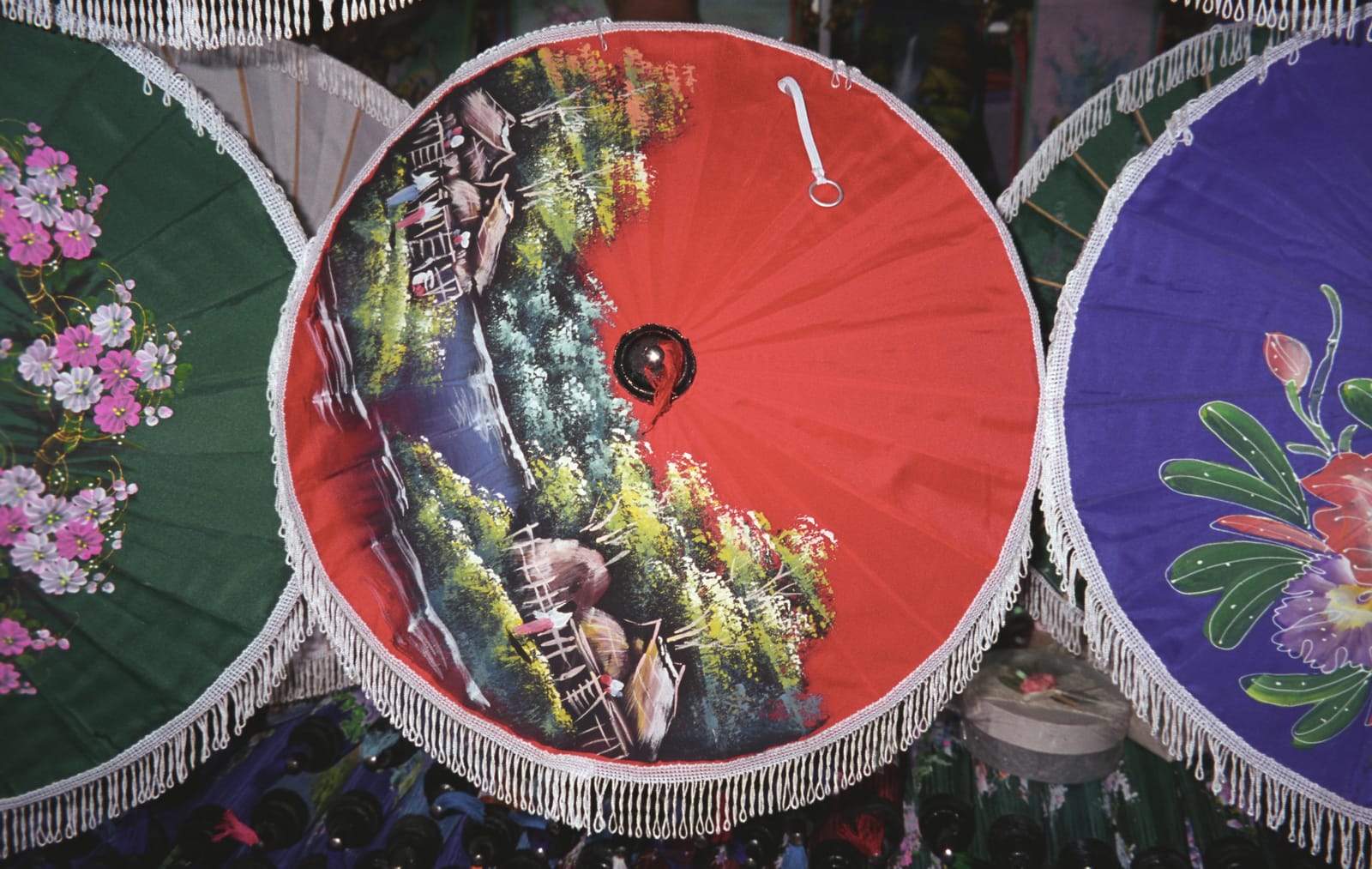
Bo Sang sits on Route 1014 in San Kamphaeng district, about 9–12 kilometres east of the old city. The whole village is known for handmade saa-paper umbrellas and fans, and the Bo Sang umbrella has become one of Chiang Mai's symbols. The place to start is the Bo Sang Umbrella Making Centre, because behind the showroom there's a workshop yard where you can watch every stage — building the bamboo frame, stretching the saa paper, right through to painting the designs by hand.
- Opening hours — the Bo Sang Umbrella Making Centre is open daily, roughly 8:30–17:00.
- Entry — walking around the village and watching the umbrella-making is free, no admission fee.
- Paint-your-own workshop — painting your own umbrella runs around 1,100 THB, while painting a design on a small item such as a phone case, bag, or fan starts in the low hundreds of THB.
- Time needed — an easy walk-through takes about 2–3 hours, including time to sit and watch the painters.
Beyond umbrellas, Bo Sang also has other crafts mixed into the shops around it — fans, silk, silverware, and carved wood. Most prices are negotiable, and buying several pieces usually brings the price down. To be honest, some shops sell stock brought in from elsewhere rather than made on site. If you want genuinely handmade pieces, pick the shops where you can see the maker at work out front.
The busiest time
Come in mid-January and you'll hit the Bo Sang Umbrella Festival — in 2026 it runs 16–18 January. The whole street is hung with hundreds of umbrellas, with a parade of women cycling and holding red umbrellas in Lanna dress, performances, and craft demonstrations from villages around San Kamphaeng. It's crowded, but the most photogenic time of the year.
Want more out of Chiang Mai? Book tours & activities
Booking online ahead on Klook or GetYourGuide is usually cheaper than the gate and skips the queue. Pick only the experiences you actually want — prices and availability are shown live on each site.
San Kamphaeng — the road of many crafts
If Bo Sang is umbrellas, the San Kamphaeng road (continuing east from Bo Sang) is where nearly every craft Chiang Mai makes comes together. Each roadside workshop tends to specialise in just one thing, and you can walk in and watch the makers at work — silk weaving, teak carving, pottery, lacquerware, and silverwork. Most are free to visit, with no admission fee.
Handwoven silk & cotton
Weaving houses where you can watch the whole process from reeling silk to finished cloth — scarves, dress fabric, and home decor, with something for every budget.
Wood carving & lacquerware
Hand-carved teak and gilded lacquerware, good for larger home pieces, with shipping available at some shops.
Pottery & ceramics
Bowls, vases, and northern-style glazed ware, from small souvenirs to collector pieces.
Getting around
The workshops along the San Kamphaeng road are kilometres apart — too far to walk between. Rent a motorbike or hire a red songthaew to wait for you and you'll move around far more easily, and most shops have their own parking.
Wua Lai — the silver quarter in town
You don't even have to leave town for old-school crafts. The Wua Lai quarter, south of the old city, has been a silversmiths' neighbourhood for over two hundred years. Silver and lacquerware artisans migrated here from Shan State and settled the area, and silver workshops still run here into the present generation. The heart of the quarter is Wat Sri Suphan, home to the only all-silver ordination hall in Thailand, every pattern hand-embossed by the community's silversmiths.
- Wat Sri Suphan — 100 Wua Lai Road, 50 THB to view the silver ordination hall (includes a souvenir keyring and a bottle of water).
- Good to know — women may visit the temple grounds, but by tradition are not allowed inside the silver ordination hall itself.
- Saturday nights — the Wua Lai walking street runs in front of the temple, the silver hall stays open until around 21:30, and there's a light-and-sound show on the hall.
- What you can buy — handmade silverware, jewellery, and embossed pieces, bought directly from the makers in the lanes around the temple.
Come on a Saturday night and you get crafts, northern street food, and the walking-street atmosphere all in one place — but be warned, it's packed on Saturday evenings. If you'd rather look at silverwork quietly and actually chat with the makers, try a weekday afternoon instead.
Suggested routes — half day and full day
You can plan these three stops two ways. Short on time? Do a half day on just the eastern side (Bo Sang + San Kamphaeng). Have the whole day? Finish with Wua Lai in the evening.
Half day on the eastern craft road
Full day, adding Wua Lai in the evening
Know before you go
- Prices are negotiable — most crafts in the villages can be bargained, especially if you buy several pieces.
- Look for the real handmade pieces — choose shops where you can see the maker working out front, to avoid stock brought in to resell.
- Bring cash — many small shops take cash only, though some accept QR payment.
- Dress for the temple — for Wat Sri Suphan, dress modestly with shoulders and knees covered.
Plan a full craft trip and the rest of your Chiang Mai stay
See the Chiang Mai travel guide →