🔄 Updated 14 Jun 2026
Doi Ang Khang sits in Fang district, Chiang Mai, right up against the Myanmar border at around 1,400–1,900 metres. The draw is the year-round cool air and the Ang Khang Royal Agricultural Station, the very first Royal Project in Thailand, where they grow cool-climate trees, flowers, tea and strawberries. It's about 160 km from Chiang Mai city — roughly three and a half to four hours of driving if you don't stop. But stopping along the way is exactly what makes this trip worth it.
Read this before you set off
This trip suits people who drive themselves or hire a car with a driver who knows mountain roads. The final climb to the summit has steep, back-to-back hairpins. A regular car can make it, but you need confidence in your brakes and engine power. If you'd rather not drive it yourself, there are songthaews (shared pickups) for hire up the mountain from the Wat Hat Samran turnoff, plus one-day tours from Chiang Mai.
Routes at a glance and a 2-day, 1-night plan
You can do Doi Ang Khang as a day trip, but it's tiring and you'll miss the morning sea of mist. We'd suggest one night up the mountain or around Fang, so you can wake up to the full winter mist. The rough plan: on day one you drive north from Chiang Mai, spend the morning around Chiang Dao, then climb up to Doi Ang Khang in the afternoon and check in. On day two you're up early for the sea of mist and tick off the rest of the mountain's sights before driving home.
- Day 1 — Chiang Mai → Chiang Dao (stop at Chiang Dao Cave / a mountain-view cafe) → up to Doi Ang Khang → check in → walk the Royal Agricultural Station in the afternoon
- Night 1 — Sleep up the mountain or at the Mon Son camping ground to catch the morning mist
- Day 2 — Sunrise / sea of mist → Tea Plantation 2000 → border viewpoint → Nor Lae / Khob Dong villages → drive back to Chiang Mai
- Total driving — Around 320 km round trip; allow extra, as climbing and descending the mountain is much slower than flat roads
Book the activities in your Chiang Mai trip ahead
Booking online ahead on Klook or GetYourGuide is usually cheaper than the gate and skips the queue. Pick only the experiences you actually want — prices and availability are shown live on each site.
Which route should you take — the 1178 back road or the steep 1249 from Fang?
There are two main routes up Doi Ang Khang, both branching off Highway 107 (Chiang Mai–Fang). The first is the back-mountain route, Highway 1178, turning off at Chiang Dao. It's more of a detour but the gradient is gentler and the bends are less brutal — better for drivers who aren't used to mountain roads or are nervous about steep climbs. The other is Highway 1249, turning off near Wat Hat Samran in Fang. It's a shorter, more direct climb but very steep, with continuous hairpins. The popular trick is to go up one way and down the other, so you see two different sets of views and avoid squeezing past oncoming cars on the narrow bends.
Highway 1178 (back route)
Turns off 107 at Chiang Dao. More of a detour but a gentler gradient and wider bends — an easier drive, well suited to mountain-road beginners and regular cars.
Highway 1249 (Fang)
Turns off near Wat Hat Samran in Fang. Short and direct, but very steep with frequent hairpins. You need confidence in your brakes and engine. Best for experienced drivers.
Up one way, down the other
The popular approach — up 1178 and down 1249 (or the reverse). You see two different sets of views and avoid passing oncoming cars on the same narrow bends.
Don't want to drive up
Park at the Wat Hat Samran turnoff and charter a songthaew up the mountain. Safer if you're not confident on steep roads.
Fill up before you climb
The big petrol stations are in Chiang Dao town and Fang. There's no proper station up the mountain, so fill the tank completely before every climb. On the long, steep descent, use a low gear to let the engine help with braking — don't ride the brakes until they overheat.
Stops along the way — Chiang Mai through Chiang Dao
Before you reach the foot of the mountain, the route passes through Mae Rim, Mae Taeng and Chiang Dao, where there's plenty to stop for. Along this stretch Highway 107 is the main road and an easy drive — a good chance to stretch your legs and refuel before the climb. We've picked stops that are right on the route, so you don't have to detour far.
Chiang Dao Cave
A limestone cave with stalactites and stalagmites beneath Doi Luang Chiang Dao, where local guides carry lanterns to walk you through the deeper chambers. A popular stop before the Doi Ang Khang climb, just a few kilometres off the main route. The walk isn't strenuous, so it's good for a mid-morning stop.
Doi Luang Chiang Dao view cafe
Around Chiang Dao there are several roadside cafes that look out onto the Doi Luang Chiang Dao peak as a backdrop. Stop for a coffee and a stretch before the climb, and shoot the mountain on a clear morning.
Chiang Dao town (fuel / supplies stop)
The last town with a big petrol station, convenience stores and full restaurants before the turnoff up the mountain. Stop to fill up, grab water and snacks for the car, and use the bathroom while you can.
Wat Hat Samran (1249 turnoff)
Around km 137 on Highway 107 in Fang district, this is where you turn onto the steep 1249 — and where people who aren't driving themselves park and switch to a songthaew up the mountain.
What to do up on Doi Ang Khang
Up top, the sights cluster around the Royal Agricultural Station and the hill-tribe villages, and you can loop between them all in a single day. The highlights are the cool-climate flower gardens, terraced tea plantations, border viewpoints and ethnic villages where everyday life still goes on. We've listed them in an easy order so you can fit them all into one morning.
Ang Khang Royal Agricultural Station
The heart of the mountain, with cool-climate flower gardens, the Suan 80 tea garden, strawberry fields and greenhouses of cold-climate vegetables. An easy walk around, with the flowers in full bloom in winter. There are also station guesthouses you can book to stay overnight inside.
Tea Plantation 2000 (terraced tea)
Terraced tea plantings stepping down the hillside. Early mornings, mist drifts over the rows for great photos. Walk the rows for shots, or sit at the tea house and take in the view. Best in the early morning before the sun gets harsh.
Kiew Lom viewpoint / Thai–Myanmar border viewpoint
A sea-of-mist and sunrise spot that draws crowds in the morning, looking out over the border and the hill-tribe villages below. It's bitterly cold at dawn, so have your warm layers ready.
Mon Son viewpoint (camping ground)
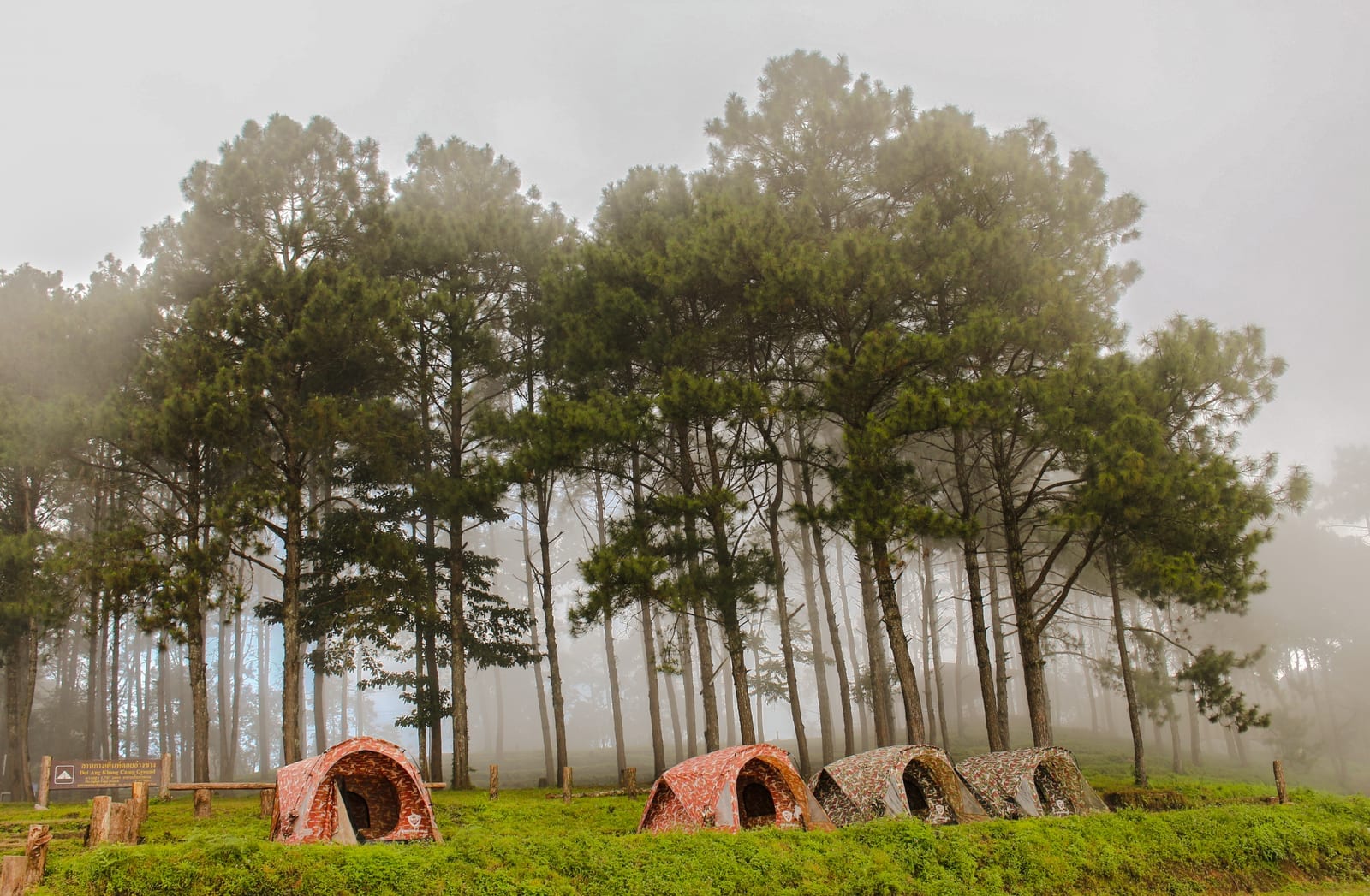
A pine-covered rise that's both a viewpoint and a camping ground. Wake up, unzip the tent and the sea of mist and sunrise are right in front of you. It fills up fast on winter weekends, so book ahead.
Nor Lae village (Palaung)
A Palaung hill-tribe village right on the border, with local handicrafts for sale and a way of life you can take in. Some mornings there's an alms-giving to the monks. Walk through respectfully — don't photograph people without asking.
Ban Khob Dong + strawberry fields
A Lahu village with a sunset viewpoint and terraced strawberry fields. In winter you can buy fresh strawberries right at the fields. There are homestays if you want to stay close to the community.
Tick off Doi Ang Khang before heading back
Where to stay on Doi Ang Khang
There's a range of places to stay up the mountain — from the Royal Agricultural Station's guesthouses to small resorts, community homestays and camping grounds. Prices are friendlier than in the city, but rooms are limited, and winter and long weekends fill up very fast. Book several weeks ahead. If you genuinely can't get a room up top, sleep down in Fang town and drive up to explore in the morning.
Ang Khang Royal Agricultural Station guesthouse
The Royal Project's own guesthouses on the station grounds — wake up and walk straight into the gardens. The option everyone wants, so book through the station's channels well in advance.
Resorts / bungalows on the mountain
Small resorts and bungalows around the mountain, such as the zone near the station, some with their own cafe and garden or mountain views. Mid-range prices, good for couples or small families.
Ban Khob Dong / Nor Lae homestays
Stay with a hill-tribe community on a budget, with a real taste of local life and home cooking. Good for travellers who want to be close to the people.
Mon Son camping ground
Sleep in a tent with the morning sea of mist right in front of you. Tents are available to rent, with a service point on site. It's genuinely cold at night, so bring a warm enough sleeping bag.
Want a comfortable stay with reviews to back it up
Most places on Doi Ang Khang are local guesthouses without many online reviews. If you'd rather have a hotel or resort with nature views and real reviews to help you decide, take a look at the well-located nature stays around Chiang Mai we've rounded up, and use one as a base before or after the mountain.
Mountain-road warnings to know before you set off
The climb up Doi Ang Khang — especially the 1249 — is genuinely steep with frequent hairpins. Every year cars overheat their brakes or run out of engine power partway up. Getting your car and yourself ready makes the trip a lot more fun and a lot safer. Here are the key points worth stressing.
- Check your car before you go — brakes, tyres, tyre pressure and the engine. If you're tackling the steep 1249, the car needs to be in genuinely good shape.
- Use a low gear downhill — let the engine slow you rather than riding the brakes, to stop them overheating and fading. On an automatic, use L or 2.
- Avoid driving at night or in the rain — there are no streetlights up the mountain, the mist comes in thick and visibility is poor. Climbing and descending in daylight is safest.
- Sound your horn before blind bends — on many hairpins you can't see oncoming cars, so beep to warn them and keep left.
- Allow extra time — climbing and descending is much slower than flat roads, so don't plan a rushed schedule. Setting off early is far less stressful.
- Keep emergency numbers handy — 1193 Highway Police · 1155 Tourist Police · 1669 medical emergency · 191 general emergencies
When is the best time to visit Doi Ang Khang?
Doi Ang Khang is cool all year, but each season has a different feel. Winter (November–February) is the peak and the most beautiful: cool-climate flowers in bloom, a sea of mist nearly every morning, and the time when the wild Himalayan cherry, Thailand's sakura, blooms pink across the mountain. It generally starts in late December and is at its best around late January to early February, lasting roughly 1–2 weeks before the petals drop. If you're chasing this window, check the bloom news year by year, as the timing shifts with the weather.
Nov–Feb (winter)
The best time — flowers in bloom, morning sea of mist, and the Thai sakura in late January. But it's crowded and rooms fill fast, so book well ahead.
Mar–May (hot season)
Still cooler than the lowlands and quieter, but this is when the north can get haze from crop burning, with poor visibility and air on some days.
Jun–Oct (rainy season)
Lush and green in a different way, with fewer people and cheaper rooms. But the rain makes the roads slippery and the mist comes in thick, so drive with extra care.
Want to extend the trip with another self-drive mountain in Chiang Mai?
See the nature plan: Doi Inthanon & Mon Jam →