Home Destinations Chiang Mai 🧭 Plan Your Trip 🔎 Search About
HomeThailandChiang MaiChiang Mai Temples & Lanna Culture: A 3-Day Plan
🛕 Chiang Mai itinerary

Chiang Mai Temples &
Lanna Culture: A 3-Day Plan

Chiang Mai was the capital of the Lanna kingdom for more than 700 years, and you only have to walk a few steps in the old city before you hit an ancient temple where monks still chant every morning. This plan lays out a temple-and-Lanna-culture route over 3 days — from temples inside the old moat to forest temples in the shade, up to Doi Suthep, and on to the museums and a khantoke dinner. We've paced it so you can actually walk it without wearing yourself out, and we give you the real entry fees and how to get around in 2026.

🛕 Old-city temples🧘 Meditation & Monk Chat🎎 Lanna culture
Chiang Mai Temples & Lanna Culture: A 3-Day Plan

🔄 Updated 21 Jun 2026

If you like to travel slowly and soak up the stories, Chiang Mai is the best city in Thailand for temples and culture. Many of the temples inside the old city date back to when King Mangrai founded the town, with genuine Lanna architecture — elephant-ringed chedis, gilded teak viharns — through to forest temples where monks still practise. This plan splits into 3 days: day one walks the temples inside the moat, day two heads to the outskirts for a forest temple and up Doi Suthep, and day three covers the museums and a cultural dinner.

Before you start, the key thing to know is that every temple here is still a living, sacred place. Dress modestly with shoulders and knees covered, take your shoes off before entering a viharn, and women should avoid touching monks. Tucking a shawl or sarong into your bag makes the whole day a lot easier.

Day 1 — Old-city temples, walkable all day

Day one covers the major temples inside the old moat, which sit very close together — you can walk between them all or rent a bicycle. Start early: the late-morning sun in Chiang Mai gets hot, and the famous temples are quieter first thing.

Day 1

Heart of the old city — Wat Phra Singh, Chedi Luang, Chiang Man

08:30
Wat Phra Singh WoramahawihanChiang Mai's signature temple. The highlight is the Lai Kham viharn — gilded teak carving and Lanna murals. Open 08:00–17:00; entry for foreign visitors is around 20–40 THB, while Thais are usually free or give a donation.
10:00
Wat Chedi Luang WorawihanA huge chedi over 600 years old that once stood taller before an earthquake brought down the top; it once housed the Emerald Buddha. Open 06:00–18:00, entry around 40 THB. It's under a 10-minute walk from Wat Phra Singh.
11:30
Lunch around RatchadamnoenGrab khao soi or other northern food nearby before you carry on. Midday sun is strong — rest in an air-conditioned spot for an hour.
13:30
Wat Chiang ManThe oldest temple in Chiang Mai, built in 1296 when King Mangrai founded the city. The highlights are the elephant-ringed chedi and the white crystal Buddha (Phra Sae Tang Khamani). Open 06:00–17:00, free entry. It draws fewer people than the first two temples, so the atmosphere is calm.
15:30
Three Kings Monument + a stroll through the centreThe central point of the old city, good for photos. Around it are cafés and craft shops where you can sit and rest before heading back.

Day-one tip

The temples inside the moat are close enough to walk, but on a very hot day flag down a rot daeng (red songthaew). They run around town for 30–40 THB per person — always tell the driver your destination before you get in.

🎟️

Book the activities in your Chiang Mai trip ahead

Booking online ahead on Klook or GetYourGuide is usually cheaper than the gate and skips the queue. Pick only the experiences you actually want — prices and availability are shown live on each site.

🎟️ See all Chiang Mai tours & activities (Klook)

Day 2 — A forest temple on the edge of town + up Doi Suthep

Day two heads west out of the moat to two temples that feel clearly different from those in town: a shaded forest temple and a temple on a mountain top. We'd suggest renting a vehicle or hiring a red songthaew for the half-day, since the distances are bigger and Doi Suthep sits up on the mountain.

Day 2

Wat Suan Dok, Wat Umong and Doi Suthep

08:30
Wat Suan DokOnce a royal flower garden of the Lanna kings. The standout is the row of whitewashed mausoleums holding the ashes of northern royalty, set against the golden chedi and the backdrop of Doi Suthep. Open 06:00–18:00, donation around 20–40 THB.
10:00
Wat Umong (the tunnel temple)A roughly 700-year-old forest temple at the foot of Doi Suthep. You can walk through the ancient brick tunnels that survive from the late 14th century, with big shade trees and a pond around you. Open 06:00–17:00, free entry.
12:00
Lunch near Chiang Mai University / Suan DokThis area has plenty of restaurants and cafés — fuel up before heading up the mountain.
14:00
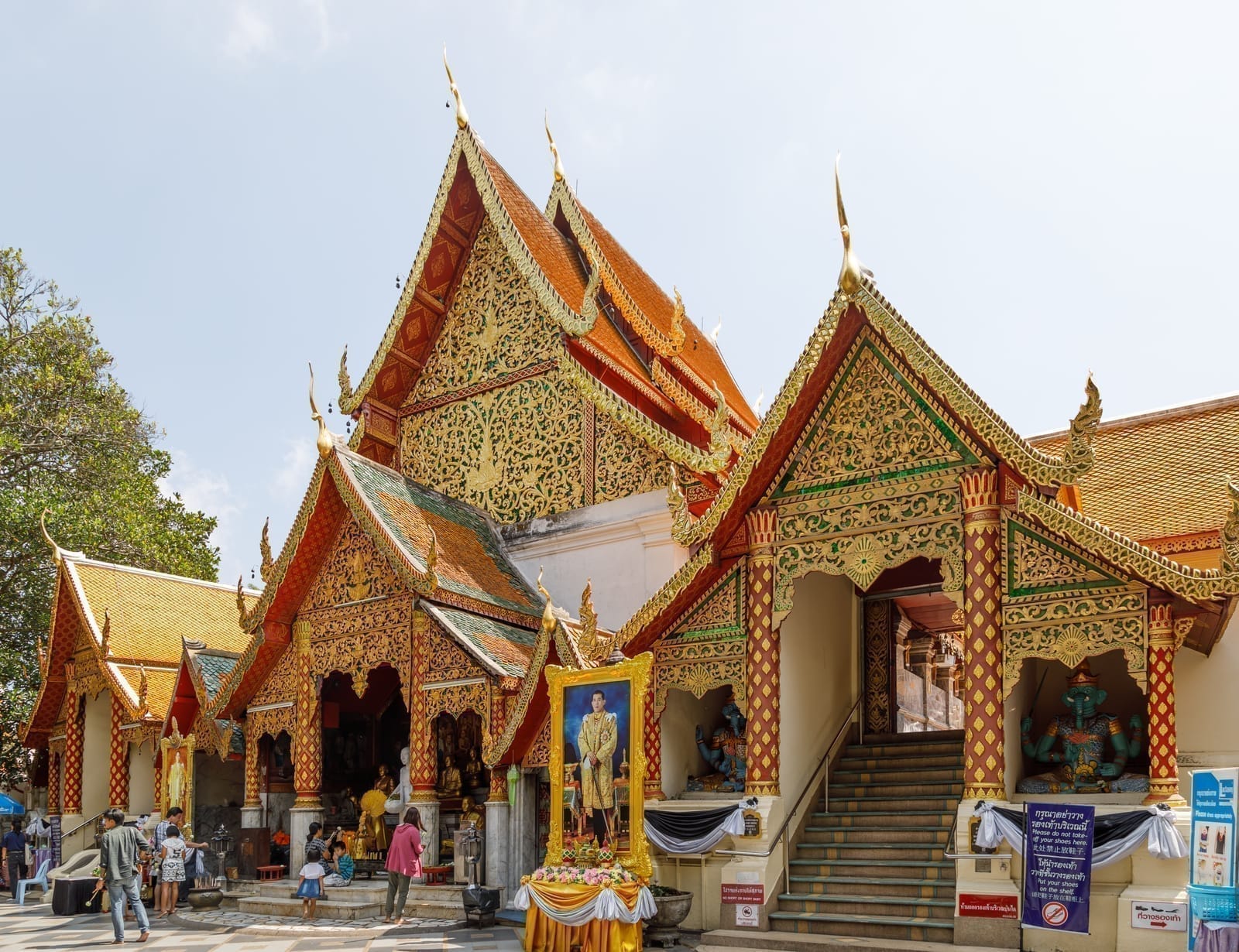
Up Doi Suthep — Wat Phra That Doi SuthepA sacred temple on the mountain top, about 15 km from town. Take a red songthaew from Huay Kaew Road near the zoo, around 60 THB per person each way. Open 06:00–20:00, entry for foreign visitors 30 THB. Climb the 309-step Naga staircase, or take the tram for around 20 THB extra.
16:30
City view from the chedi terraceLate afternoon brings soft light, and you can see all of Chiang Mai laid out below from the mountain. It's most people's favourite photo spot of the trip.

What to know about Doi Suthep

The road up is winding, so bring tablets if you get carsick, and if you ride a motorbike yourself you need to be confident on steep climbs. Late in the day it's cooler up the mountain than in town, so pack a light jacket.

Day 3 — Lanna museum, meditation and a khantoke dinner

The last day is about the stories and the experiences rather than ticking off sights. Go deeper into Lanna culture through a museum, try chatting with a monk or sitting in meditation, then close out with a khantoke dinner and a traditional performance.

Day 3

Folk museum, Monk Chat and khantoke dinner

09:30
Lanna Folklife MuseumOpposite the Three Kings Monument, in the old provincial court building. It shows Lanna daily life through life-sized dioramas — textiles, lacquerware and paintings — so you can take in northern culture in one place.
11:30
Lunch + a walk through the old cityFind a northern restaurant near the museum, then wander the small lanes inside the moat where old wooden houses still stand.
15:00
Monk Chat at Wat Umong / Wat Suan DokSeveral temples let visitors chat with monks in English, so you can ask about Buddhism and monastic life. Wat Umong usually runs it on Sunday afternoons — check the temple's website for days and times before you go.
18:30
Khantoke dinner + Lanna performanceSit on mats at low tables for a khantoke spread while you watch traditional dance and folk music at the Old Chiang Mai Cultural Center, which has been running since 1971. Around 570 THB per person, including food, herbal drinks and the show. Book ahead.

If you have a spare half-day or want to add another day, head to Wiang Kum Kam, an old underground city that was a former capital before the move to Chiang Mai. You can tour the ruins by horse-drawn carriage or tram, and the mood is clearly different from the temples in town.

Rough budget per person (3 days)

  • Temple entry — around 100–150 THB for all of them combined (many are free or donation-based)
  • Doi Suthep — 30 THB entry + 20 THB tram + about 120 THB for the red songthaew round trip
  • Lanna museum — entry just a few tens of baht
  • Khantoke dinner — around 570 THB per person, including food and the show
  • Getting around / food — red songthaew 30–40 THB a ride · northern meals from 40–80 THB

The most comfortable time to visit

November to February is cool and dry, so you can walk temples all day. Avoid March–April, which is hot and hazy from crop burning. If you can catch Loy Krathong–Yi Peng (November) you'll see Lanna culture at its fullest — but it's crowded and accommodation gets pricier.

Temple etiquette worth knowing

  • Dress modestly with shoulders and knees covered, for both women and men
  • Always take off your shoes and hat before entering a viharn or ordination hall
  • Women should not touch a monk or hand things to a monk directly
  • Sit with your feet pointing away from Buddha images — never point your feet at the main Buddha
  • Keep your voice down, don't take photos where signs forbid it, and respect people who are praying

Want a base that's an easy walk from the old-city temples?

See the Top 10 Chiang Mai hotels →

FAQ

How many days do you need for a temple-focused trip in Chiang Mai?

If you just hit the major temples in the old city, one day is enough to see the highlights. But if you want the forest temples, Doi Suthep and Lanna culture too without rushing, 3 days is about right — it's walkable, lets you soak up the stories, and isn't packed to the point of exhaustion.

How do you get up Doi Suthep without your own vehicle?

Take a red songthaew (rot daeng) from Huay Kaew Road near Chiang Mai Zoo, around 60 THB per person each way; the driver waits for a full load before leaving. At the temple there's a 30 THB entry for foreign visitors, and you can either climb the 309 steps or take the tram for about 20 THB extra.

Do you have to pay to enter temples in Chiang Mai?

Most temples are free or ask for a donation. The famous ones like Wat Phra Singh and Wat Chedi Luang charge foreign visitors around 20–40 THB; Thais are usually exempt or give what they can.

What should you wear to enter temples in Chiang Mai?

Cover your shoulders and knees, women and men alike — skip spaghetti straps, short shorts and overly tight clothing. Take your shoes off before entering a viharn, and carrying a shawl or sarong makes it easy when you visit several temples in one day.

What is a khantoke dinner, and should you book ahead?

Khantoke is a northern Thai spread served on a low wooden tray, eaten while you watch traditional dance and folk music. At the Old Chiang Mai Cultural Center it's around 570 THB per person, including food and the show. The dinner sitting starts in the evening, and you should book ahead, especially in high season.

Copyright & Image Takedown Policy

Thailandaddict is created to review and share travel experiences. Where an image is sourced from elsewhere, we credit the source. If you are the copyright owner and prefer that your image not appear on this site, please contact us and we will gladly remove the image or correct the information.