🔄 Updated 21 Jun 2026
A lot of people arrive in Chiang Rai and get confused about which "walking street" everyone keeps mentioning, because there really are several and they open on different days. The first thing to know is to check the calendar for whichever night you're in town, then pick the market that matches. That way you won't end up standing on a quiet, empty street wondering where everyone is.
Chiang Rai's night-eating markets — which days they open
- Kad Chiang Hai Ramluek (Saturday Walking Street) — on Thanalai Road, right in the city center, open Saturday evenings only, roughly 4 PM–10 PM. It's the busiest and longest of the eating markets.
- Thanon Khon Muan, Sankhong Noi (Sunday Walking Street) — in the Sankhong Noi neighborhood in front of Wat Chetuphon, open Sunday evenings around 4 PM–10 PM. The vibe is relaxed and community-feeling, with a retro folk-dance area.
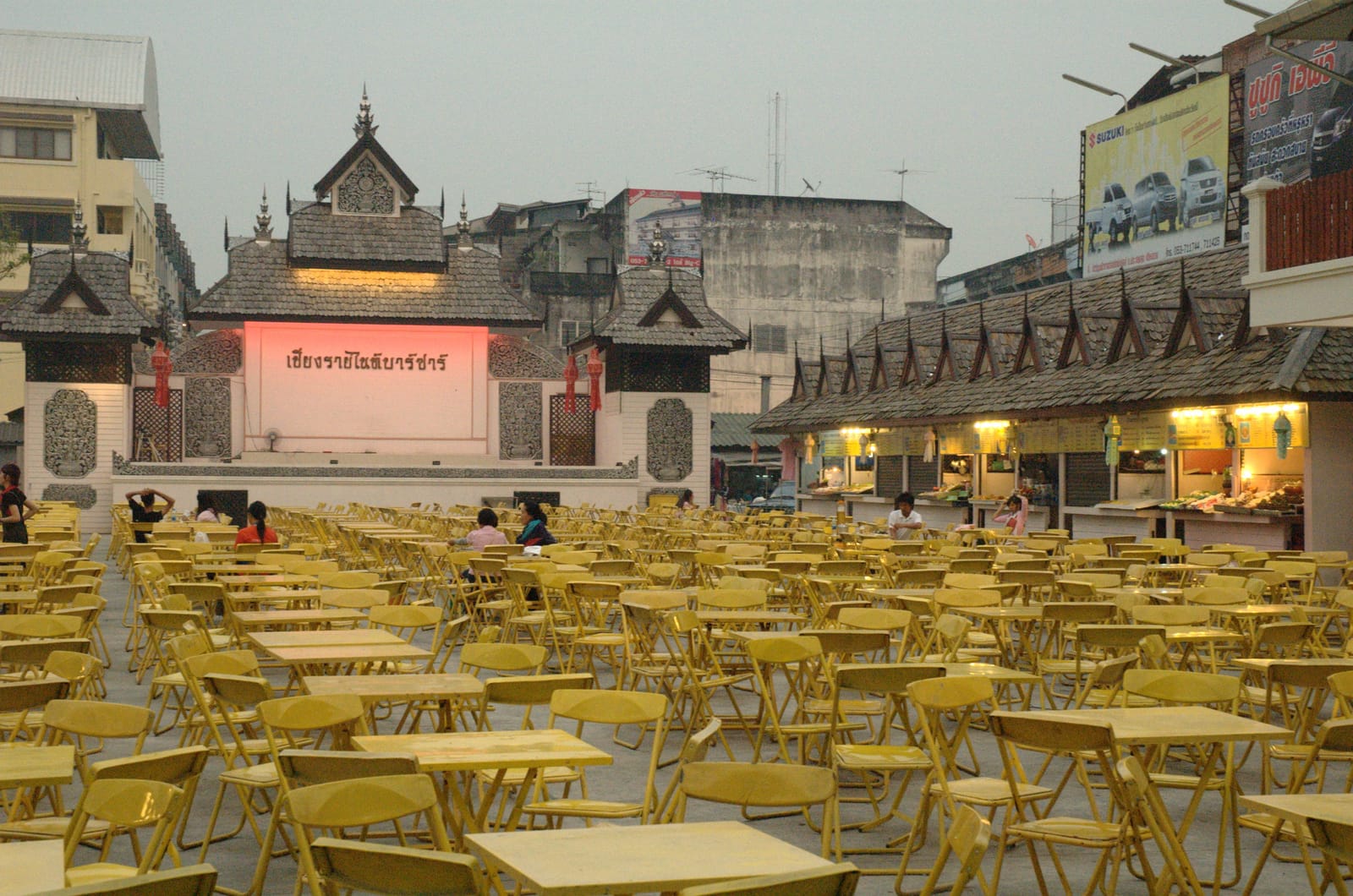
- Chiang Rai Night Bazaar — next to the old bus station downtown, open every evening around 5 PM–11 PM. It has a food court with yellow tables where you can sit and eat comfortably, perfect for any night that isn't Saturday or Sunday.
Match the day
If you're only in Chiang Rai for one night and it isn't a Saturday or Sunday, just lock in the Night Bazaar — it's open every day. If you happen to land on a Saturday or Sunday, switch to the Kad Chiang Hai or the Sunday Walking Street instead for a bigger, livelier scene.
Want to taste deeper? Try a Chiang Rai food tour or cooking class
Half a day with a local who knows the lanes — or cooking a dish yourself — teaches you more than just eating. Book ahead on Klook or GetYourGuide.
Dishes worth grazing on at the market
The food at Chiang Rai's markets runs in two lanes: the everyday street food you'll find at any market anywhere, and the local northern dishes worth chasing down specifically because you've made it this far north. We've ordered them by what to hunt for first.
Khanom jeen nam ngiao
Rice noodles ladled with an orange broth made from tomatoes and dried red kapok flowers — a rounded sour-salty-spicy flavor, eaten with crispy pork rinds and fresh veg. It's a northern dish that's easy to find at the markets and the first thing you should try.
Khao soi
Egg noodles in a coconut-curry broth made with northern curry paste, topped with crispy fried noodles, with chicken or beef, finished with a squeeze of lime, pickled greens and shallots. Some markets have stalls ladling it into bowls so you can sit and eat right at the tables.
Sai ua + crispy pork rinds
A grilled herb sausage fragrant with lemongrass and kaffir lime leaf, sliced up and dipped in chili paste, eaten with crunchy pork rinds. Easy finger food you can carry and nibble as you walk.
Khao kan jin (jin som ngiao)
Rice mixed with pork blood and seasonings, wrapped in banana leaf and steamed, drizzled with fried-garlic oil and topped with fried dried chilies. It's a genuinely local northern dish most tourists walk right past — try one parcel and you'll get hooked.
Jin nueng nam phrik kha
Tender steamed pork dipped in a punchy galangal chili paste fragrant with galangal and garlic, eaten with steamed veg and sticky rice. A bold northern dish that locals genuinely eat.
Grilled pork skewers, grilled chicken, sticky rice
Market staples that are easy to find and never miss — skewered and grilled over charcoal, the smell drifting across the whole market. Buy a skewer to snack on or pair it with sticky rice for a proper fill.
Som tam, yam, larb
The spicy-tangy corner of every market — papaya salad pounded to order, squid yam, mixed-seafood yam. Sit down at the tables with a cold beer and make it a real meal, not just a snack.
Fried squid eggs and battered skewers
Fried fish balls, battered squid, fried quail eggs — skewered and dipped in sauce, great to carry and nibble while you browse the stalls. Easy on the wallet.
Mango sticky rice and northern sweets
Finish with something sweet — mango sticky rice drizzled with coconut cream, khanom krok, banana-leaf-wrapped Thai sweets, and coconut ice cream. Plenty of vendors to choose from around the markets.
Thai iced tea, mountain coffee, fruit smoothies
Chiang Rai is tea-and-mountain-coffee country. Plenty of market stalls serve oolong, milk tea, iced coffee and blended fruit drinks — good for cooling off as you walk.
Bring cash
Most market stalls and food courts deal mainly in cash. Some have a QR code, but not every stall does, so bring plenty of small 20–100 baht notes and you'll move faster. Most dishes fall in the 10–80 baht range per item.
How the three markets differ
Kad Chiang Hai Ramluek (Sat)
The biggest and longest, with food, take-home gifts, crafts, and a stage with Lanna performances — folk dancing, fingernail dance, Ngiao dance. Good for a long stroll and soaking up the atmosphere.
Thanon Khon Muan, Sankhong Noi (Sun)
A relaxed, community feel with lots of locals about, a retro folk-dance area in front of the temple, and plenty of stalls to graze at your own pace — less packed than Saturday.
Night Bazaar (daily)
A sit-down food court for a proper meal, with live music, open every evening. Best for ordinary nights and anyone who'd rather sit and eat than walk and carry.
What time to go and things to know
- The sweet spot — show up around 5:30–6:30 PM. Most stalls are open by then but the crowd hasn't peaked, so it's easy to walk and the food hasn't sold out.
- Allow 2–3 hours — if you want to eat your way through, catch the performances, and browse the gift stalls too.
- Parking — the Saturday/Sunday markets close the street, so you'll park on side streets nearby and walk in. Arrive before early evening and it's easier to find a spot.
- Prices for gifts and crafts — food prices are fixed, but you can haggle a bit on crafts and clothing, especially near closing time.
Want a full-day eat-and-explore plan for Chiang Rai? Check the city guide next.
See the Chiang Rai travel guide →