🔄 Updated 21 Jun 2026
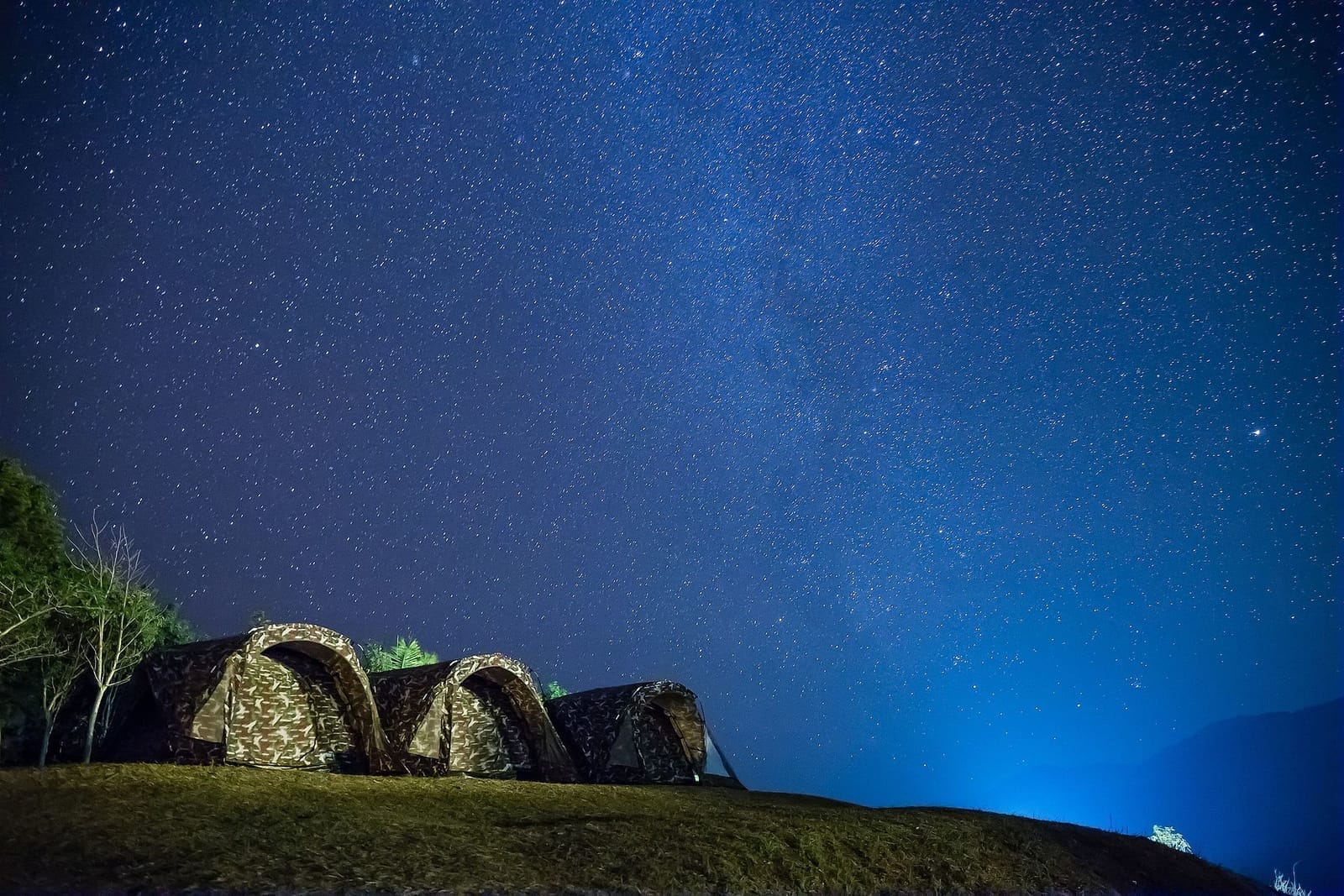
Doi Samer Dao sits inside Sri Nan National Park, in Si Sa Ket Subdistrict, Na Noi District, at roughly 888 metres above sea level. The draw is a wide ridge-top clearing where you can pitch a tent and take in views in almost every direction — stars at night, a sea of mist and sunrise in the morning. It's a nature spot that locals from Nan and travellers from out of province often pencil in as the highlight of the trip.
Doi Samer Dao, Pha Chu, Pha Hua Sing — what's the difference?
These three spots sit close together in the same park but serve different purposes. A lot of people get confused about where to sleep and where to watch the sunrise, so here's the quick rundown first.
Doi Samer Dao
The main camping clearing on the ridge — wide and open. Sleep under the stars at night, and you can see the sea of mist from the clearing itself come morning. This is where most people stay overnight.
Pha Chu
The cliff on the eastern side, and the spot to catch the sunrise over the Nan River. It has its own camping ground and cabins, in a separate zone from Doi Samer Dao.
Pha Hua Sing
A cliff shaped like a crouching lion facing east, with views of nearly 360 degrees. It's about a 2 km walk up and you'll need to arrange a staff guide — this isn't a place to sleep.
Want more out of Nan? Book tours & activities
Booking online ahead on Klook or GetYourGuide is usually cheaper than the gate and skips the queue. Pick only the experiences you actually want — prices and availability are shown live on each site.
Sea of mist and sunrise — where and when to watch
The sea of mist here is seasonal. It's thickest and most beautiful in winter, roughly November to February, when the mist settles over the valley below and the Nan River. The sun rises from the east, right along the line of Pha Chu. If you want to capture the sunrise over the Nan River in full, most people leave their tent while the sky is still dark to go and wait at the viewpoint.
What time should you get up?
Winter sunrise is around 6 a.m. or a little after, so you'll want to be up and standing at the viewpoint by about 5:30–6:00 a.m. to allow time to walk over and find a spot. The sky just before sunrise, when the mist starts to roll in, is often prettier than once the sun is fully up.
If you want to climb Pha Chu for the full sunrise spot, it's about a 2-kilometre walk that takes roughly an hour — which means setting off while it's genuinely still dark. If you'd rather not walk that far, sleeping on the Doi Samer Dao side and watching the mist and early light from the clearing is plenty pretty on its own. No need to push it.
Entry fees, tent costs, and booking
The prices below are gathered from news sources and the park's pages and can change, so it's worth calling the park to double-check before you actually go — especially about booking queues in high season.
- Park entry fee — 20 THB per person (covers several spots in the park, such as Doi Samer Dao, Pha Chu, Sao Din Na Noi, and Khok Suea)
- Vehicle fee — 20 THB per motorbike, 30 THB per car
- Tent with bedding (rented from the park) — 1 person 330 THB · 2 people 390 THB · 3 people 450 THB
- Empty tent — 270 THB · pillow 10 THB · sleeping bag 30 THB · sleeping mat 20 THB
- Bring your own tent — 30 THB per person pitching fee, walk-ins accepted
- Cabins (Pha Chu side) — from around 1,000 THB, with discounts on some weekday dates
How to book a tent
Overnight camping is only open from October to February. You can book about a month ahead by phone between 9 a.m. and 4 p.m. — Doi Samer Dao 093-242-2914 · Pha Chu 098-685-3293. Tents fill up fast on long weekends, so calling the moment booking opens is the safer bet.
Getting to Doi Samer Dao
From Nan city, Doi Samer Dao is about 78 kilometres away — roughly an hour and a half of driving. The final stretch is a winding mountain climb. A sedan can make it, but check your brakes and tyres first. If you're driving in the evening or at night, take extra care — it's dark and there are a lot of bends.
- Own vehicle — the easiest option, since the sights are spread out and there's no public transport running directly to the doi
- No vehicle — rent a car or motorbike from Nan city, or use a tour/shuttle service that some operators run on a schedule in winter
- Fuel and supplies — fill up and buy food in Na Noi town before heading up, as shops on the doi are few and close early
What's available up on the doi
Don't expect resort-level comfort — this is a camping ground inside a national park. There are shared toilets and shower points, and the water is very cold in winter. The park has a small restaurant and coffee stand, but they keep set hours and can sell out fast when it's busy. People who bring their own snacks and water tend to have an easier time.
Colder than you'd think
On the ridge from late night into morning, the temperature drops a lot and the wind picks up. Pack a warm jacket, a hat, gloves, and thick socks — even if it doesn't feel cold down in town. Better to over-prepare for the cold than come up short.
More to see around Na Noi
Inside the park and nearby, there are easy spots to add on — perfect for a stop on the way down before heading back to the city.
Sao Din Na Noi (Khok Suea)
Oddly shaped earth pillars formed by erosion, inside the same park, covered by the same ticket. Fun to walk around and photograph — go early or late, as the sun is harsh.
Pha Hua Sing
A viewpoint walk with views in nearly every direction, taking in Na Noi, Wiang Sa, and the Nan River. You'll need to arrange a staff guide.
Plan a full Nan trip — where to stay, where to eat, and routes to explore
See the Nan travel guide →