🔄 Updated 3 Jun 2026
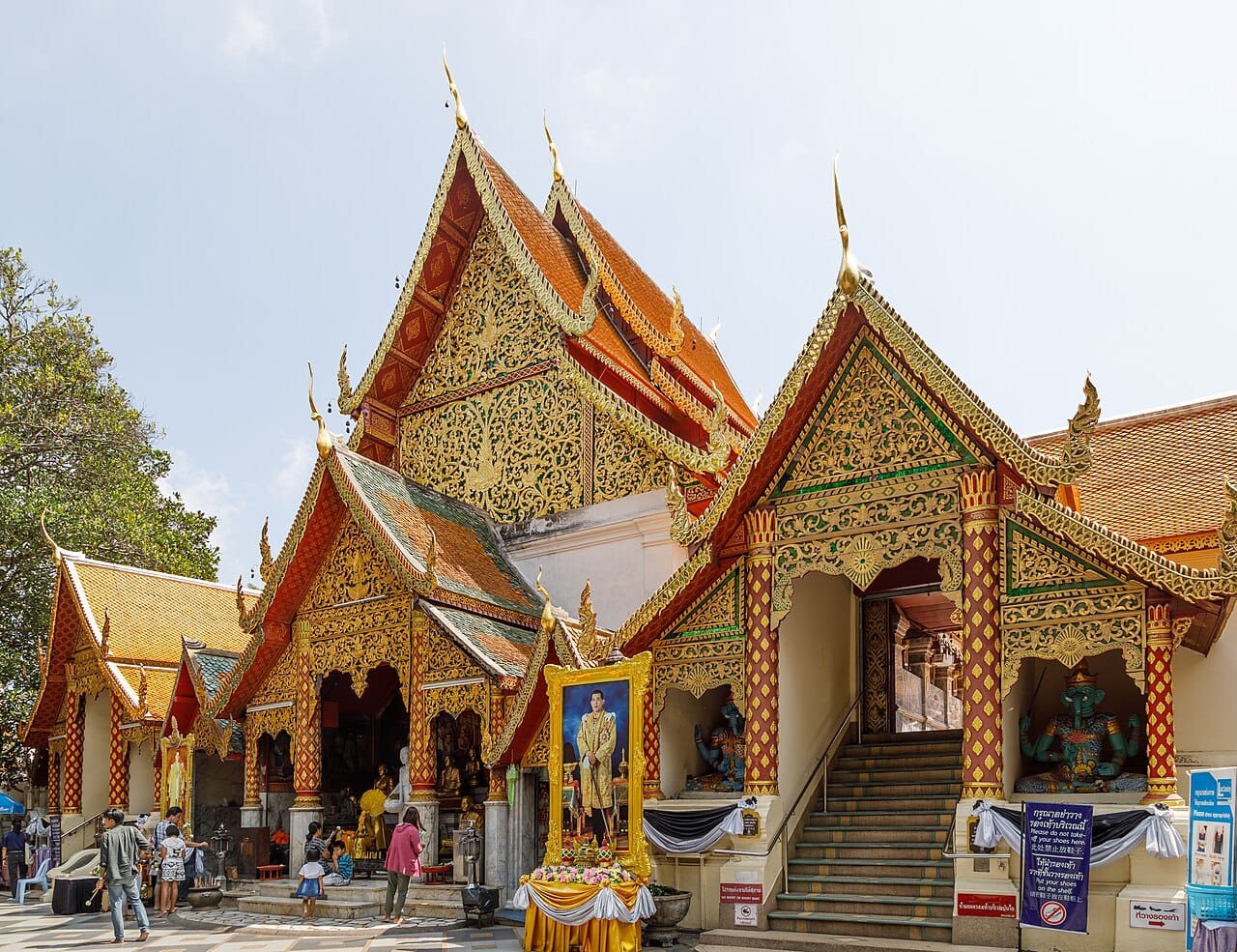
Wat Phra That Doi Suthep Ratchaworawihan sits on Doi Suthep mountain, about 15 km from central Chiang Mai, roughly a 30–40 minute drive up the hill. The highlight is the golden chedi that enshrines a relic of the Buddha — it's the year-of-birth chedi for people born in the Year of the Goat, and northern Thais consider it a sacred temple everyone should pay respects to at least once. This article draws on the latest information and real reviews from people who've just been.
Opening hours and entry fee
- Opening hours: daily 06:00–20:00 (it opens early at 6 a.m., so if you want to beat the heat and the crowds, go early)
- Foreigner entry fee: 30 THB (most Thais don't pay an entry fee but can make a merit donation as they wish)
- Funicular: about 20 THB extra for the ride up and down, if you'd rather not take the stairs
- Time needed: a walk around the grounds takes about 1 hour, not counting travel time
A fee mix-up people make all the time
The 30 THB entry fee and the 20 THB funicular fare are two separate things. If you pay both together at one counter before riding the funicular, it comes to about 50 THB. Some people think the 50 THB is the temple entry fee, when really it already includes the round-trip funicular. If you take the stairs yourself, you only pay the 30 THB.
Want more out of Chiang Mai? Book tours & activities
Booking online ahead on Klook or GetYourGuide is usually cheaper than the gate and skips the queue. Pick only the experiences you actually want — prices and availability are shown live on each site.
How to get up Doi Suthep
There's no direct public bus to Doi Suthep. The way most travellers go is by red songthaew (the red shared pickup trucks), followed by renting a motorbike or car, or calling a Grab/taxi. Here's a rough breakdown of the prices so you know what to expect.
Red songthaew (red shared pickup)
The most popular and cheapest option. The main pickup points are in front of Chiang Mai University (the zoo side) and Chang Phueak Gate on the old-city side. They leave once about 8–10 passengers fill the truck, so you may have to wait a while for it to fill up.
Charter a red songthaew round trip
If you're a group or don't want to wait for the truck to fill, you can charter a whole songthaew. The driver waits and brings you back — always agree on the price before you get in. Good for groups who want to carry on to Bhubing Palace or the Doi Pui Hmong village afterwards.
Rent a motorbike and ride yourself
The most freedom — you ride up via Huay Kaew Road, past Maya and the zoo and on up the hill. But there are lots of curves and it's steep, so if you're not used to mountain roads, be careful, and the road gets slippery in the rain. Motorbike rental in town is just a few hundred baht a day.
Grab / taxi
Comfortable and no waiting, but few cars go up the mountain and the fare is several times the songthaew. Sometimes it's hard to get a driver to accept the trip up, and getting a ride back down from the temple can be tricky. Good if you'll pay for the convenience.
Half-day join-in tour
A van picks you up from your hotel and takes you up Doi Suthep, then adds Bhubing Palace or the Doi Pui Hmong village in the same trip, with a guide along the way. Good if you don't want to plan it yourself — book ahead with an agency in town.
Plan ahead for the trip back down
If you came up by red songthaew on a per-person basis, you'll need to wait for another songthaew at the parking lot up top to fill up for the ride down. Late in the afternoon when there are fewer people, that wait can be long. If you'd rather not risk it, charter a songthaew to wait for you, or arrange a return time with the driver in advance.
The 306 steps or the funicular
From the parking lot up to the temple itself you have to climb, and there are two options. The first is the 306-step naga staircase, with serpent balustrades running down both sides — it's the classic photo spot you've seen on every postcard, and a steady walk up takes about 10–15 minutes. The second is the funicular that pulls you straight up the slope, ideal if you have bad knees, are elderly, or have young kids with you.
- The stairs — great atmosphere and lovely photos, but the steps are fairly steep, so wear comfortable shoes and bring water
- The funicular — fast and easy, about 20 THB extra, good on a scorching day or if you can't manage the climb
- Mix and match — plenty of people walk up the stairs for the photos, then take the funicular down to spare their legs
Temple highlights you shouldn't miss
The golden chedi
The gleaming golden chedi in the centre of the courtyard enshrines a relic of the Buddha. Visitors like to walk three times around it with lit candles for good fortune.
Chiang Mai city viewpoint
A viewpoint looking out over the city of Chiang Mai stretching out below. On a clear day you can see all the way to the airport, and the mornings are clearer and less crowded.
Naga staircase and gate arch
Seven-headed serpents stretch down the staircase — an unmistakable photo backdrop. Shoot from the bottom looking up for the best angle.
Bells around the courtyard
A row of bells you can strike for belief and tradition, ringing out across the temple courtyard. Kids love it, and it's a good corner to capture the atmosphere.
Photo spots and the best time of day
The most-photographed angles are the naga staircase shot from the bottom looking up, the golden chedi against the sky, and the city viewpoint. The best time is early morning, around 06:00–08:00, when the sky is still clear, the sun isn't harsh, and there are few people. From mid-morning to midday is when the tour crowds are thickest.
Dress code and etiquette
The temple has a clear dress code: shoulders and knees must be covered, so shorts and spaghetti-strap tops aren't allowed. You'll need to take your shoes off before entering the buildings, and keep your voice down, since people come here to genuinely pray. If you're not dressed appropriately, there are wraps to borrow at the entrance.
More to see up the mountain
- Bhubing Palace — about 4 km further up the road, with flower gardens and cool air. It's only open to visitors when there's no royal residence, so check the opening days before you go.
- Doi Pui Hmong village — a Hmong village near the summit with souvenirs, coffee, and a viewpoint, good to add on after Bhubing Palace.
- Huay Kaew Waterfall / Kruba Srivichai — at the foot of the mountain on the way up, where you can stop for photos at the Kruba Srivichai monument and make a wish before heading up.
Plan your whole Chiang Mai trip without missing the best bits
See the Chiang Mai travel guide →