🔄 Updated 21 Jun 2026
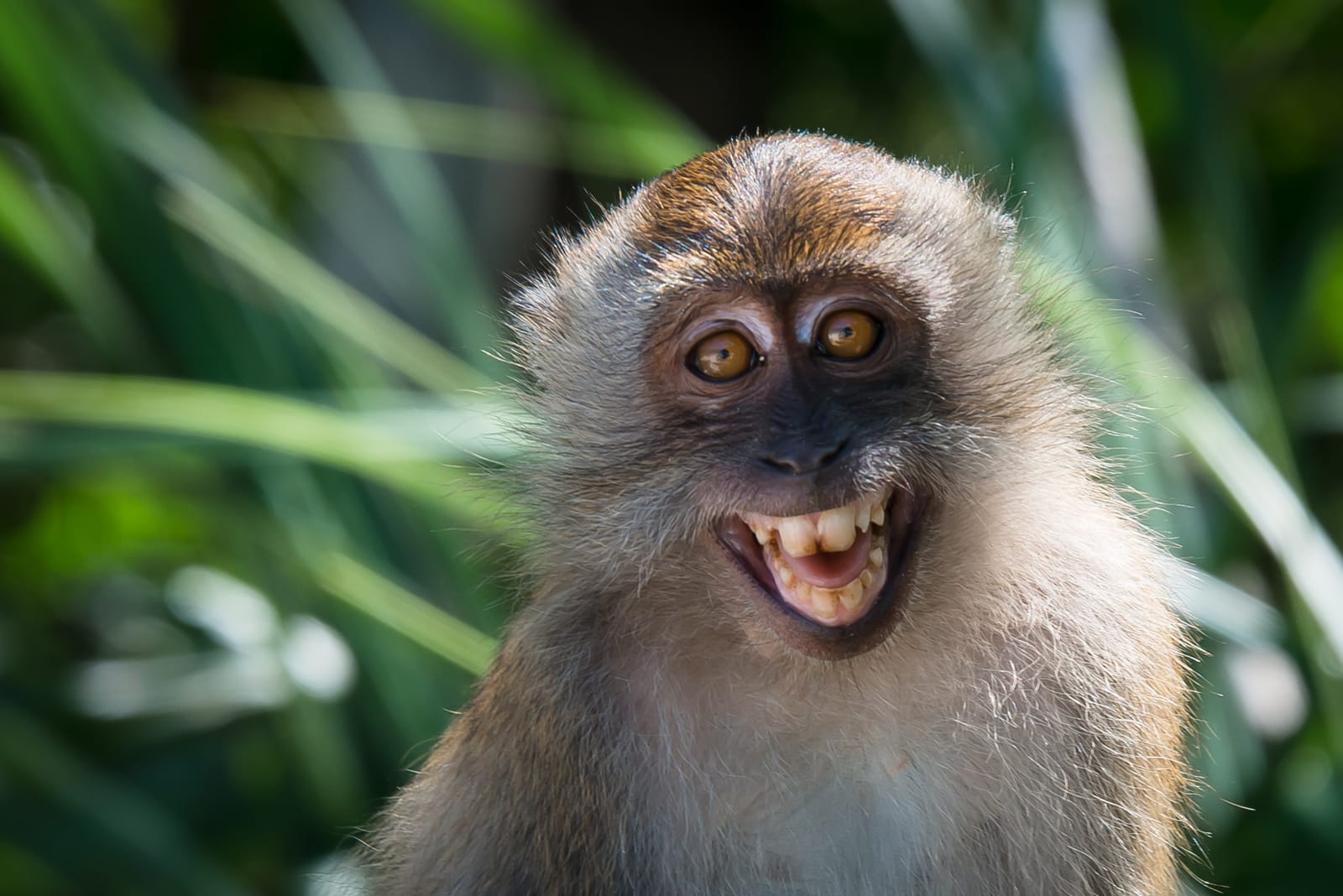
If you've ever driven through an Isan village and spotted a small, dense patch of forest sitting out in the open fields while everything around it is bare rice paddy, that's usually a Don Pu Ta — a forest the villagers keep as the dwelling place of the Pu Ta spirits, the ancestral guardians of the village. No one dares cut the trees or hunt here, so the forest survives as a green canopy in the middle of farmland and becomes home to small creatures, including troops of monkeys.
Don Chao Pu Ban Nong Khu is exactly this kind of Don Pu Ta forest. What people come for is the shade and the troop of monkeys that wander along the paths waiting to be fed. It's a small, free attraction — better as a stop along the way than a place you'd spend a whole day.
What is a Don Pu Ta, and why are there monkeys?
A Don Pu Ta (sometimes called Don Chao Pu or Dong Pu Ta) is a village's sacred forest in Isan culture. Villagers believe it's the home of the Pu Ta spirits, who protect the village and its fields. There's a spirit shrine set under the big trees, and a quiet community rule that no one may cut wood or hunt within its boundary. That's how the forest stays intact even after everything around it has turned to rice paddy.
As long as the forest survives, the animals do too. The monkeys you see in many Don Pu Ta forests have lived alongside the community for a long time. Villagers regard them as the grandfather spirit's monkeys, so no one harms them — they live as a troop and have grown used to people. When visitors arrive, they come down to the paths to wait for food. That's why a tiny forest in the middle of a village lets you watch monkeys this close.
Know this before you go
A Don Pu Ta is a community belief-space, not a zoo. The monkeys here are wild animals that are used to people, not pets. So walking in, behave like a guest of the village: keep things low-key around the spirit shrine and respect the community's rules.
Want more out of Maha Sarakham? Book tours & activities
Booking online ahead on Klook or GetYourGuide is usually cheaper than the gate and skips the queue. Pick only the experiences you actually want — prices and availability are shown live on each site.
The atmosphere inside: strolling under the trees
The charm of this place is the shade. Most of the big trees in a Don Pu Ta are old growth that's never been cut, so the moment you step underneath it feels noticeably cooler than out in the open, however fierce the Isan sun is. You can walk the forest paths comfortably, listening to the leaves, the birds, and the monkeys calling back and forth — a quiet break for the eyes.
There's usually a spirit shrine at the centre as the focal point. Some visitors take the chance to pay respects or make a vow according to local belief, while those who've come just to look around walk among the trees, watch the monkeys and snap a few photos. It doesn't take long — about half an hour to an hour and you've seen it all.
- Big shade trees — it's cool and comfortable under the canopy, so you can stroll even when the sun is strong
- The monkey troop — used to people, they come down to the paths waiting to be fed, so you can watch them up close
- The spirit shrine — the village's sacred spot, where people stop to pay respects
- Quiet and laid-back — not a crowded attraction, ideal as a rest stop along the way
How to feed the monkeys safely
Feeding the monkeys is the main thing people come to do, but wild monkeys read humans fast. The moment they see a bag or food in your hand, they rush in as a troop. Prepare well and it's fun; get careless and you could get a fright as they snatch things off you. A few simple rules help.
- Place it down or hand it over — don't tease — set the food on the ground or hand it directly; don't dangle it and then pull your hand back, or the monkeys get annoyed and jump at you
- Don't wave a plastic bag around — monkeys learn that a bag means food and may grab the whole thing; keep snacks in a closed, secure bag
- Mind what's in your hands and your car — glasses, phone, hat, water bottle — a monkey can grab any of them, so don't leave the car windows down
- Don't feed them on the road — luring monkeys into the middle of the road risks them being hit; feed inside the forest or in a safe spot
- Don't stare down a big monkey — in monkey language, holding eye contact means a challenge, so stay relaxed and you'll be safer
What you can feed them
Fruit like bananas, watermelon and guava, or yardlong beans and boiled corn, suits the monkeys far better than crispy snacks, fizzy drinks or strongly seasoned human food. Avoid bagged snacks with flavour powder — they're bad for the monkeys' health.
Want to see more monkeys? Continue to Kosamphi
If you make it to Maha Sarakham and catch the monkey-watching bug, the other spot the province is known for is Kosamphi Forest Park in Hua Khwang subdistrict, Kosum Phisai district, on the bank of the Chi River. Gazetted back in 1976, it's home to several hundred long-tailed macaques — and, unusually, golden-furred macaques, a rare variety very seldom found in Thailand.
Kosamphi is open daily roughly 08:00–18:00, entry is free, you can feed the monkeys here too, and if you want to help with the cost of feeding them you can donate through the district office. The two places have a different feel: the Don Pu Ta is a quiet community forest, while Kosamphi is a larger forest park with more monkeys. You can easily pair them up in a single day.
Timing and the Pu Ta offering tradition
Morning or late afternoon is best — it's not too hot and the monkeys are out and lively. In the late-morning heat they tend to retreat into the shade, and you'll be hot too. In the rainy season the forest paths can get muddy, so shoes you don't mind getting dirty are more comfortable.
One more thing worth knowing: many villages hold a Pu Ta offering ceremony — a merit-making rite for the ancestral spirits — usually before the planting season, around the sixth lunar month (May–June). Villagers gather to make offerings at the spirit shrine, asking for rain and a bountiful harvest. If you happen to be there during the ceremony, you'll see another side that is the real heart of the Don Pu Ta — but during the rite you should be especially respectful and follow what the villagers tell you.
Getting there and what to bring
The Don Pu Ta sits within the village, and the main way in is the community road, so your own car or a motorbike is the most convenient — public transport is hard to come by here. Set your map navigation to the specific Nong Khu village you're after, then ask the locals around there to double-check; Isan folk are friendly and happy to point the way. Parking is usually a clearing beside the forest or along the roadside.
- Bring fruit or food for the monkeys — pick up bananas or fruit from a market in town in case there's no shop on site
- A securely closed bag — keep valuables and food out of the monkeys' reach
- Drinking water and a hat — there's shade, but some stretches of path are still in the sun
- A little cash — for making merit at the shrine or buying monkey food from the villagers
Travel with respect for the community
This is home to the villagers and a sacred space, not your average check-in spot. Help out by not littering, not being loud around the shrine, not harassing the monkeys, and taking your rubbish back out with you. A small forest like this only survives because the people who visit help look after it.
Who it's for
Families bringing kids to see monkeys, nature lovers who want to experience a real Isan community forest, and drivers passing through who fancy a rest stop in the shade.
How long to spend
Roughly half an hour to an hour covers it. It works as a stop rather than an all-day destination — pair it with other places in the province.
Plan a full Maha Sarakham trip — things to do, food and places to stay
See the Maha Sarakham travel guide →