📝 Written 3 Jul 2026 · ✅ Fact-checked 3 Jul 2026 · prices and schedules can change — check with the operator before booking
Uthai Thani sits in the upper central region bordering the north, about 220 kilometers from Bangkok. The town itself is an old quarter along the Sakae Krang River that still has houseboats, a riverside market, and old temples worth strolling through. What sets it apart from the bigger tourist provinces is that Uthai Thani has no commercial airport and no main train station running through town. The northern rail line passes through Nakhon Sawan, the neighboring province, but doesn't reach Uthai Thani directly. Getting here therefore relies mainly on the road, and Nakhon Sawan has become the gateway or hub that most people connect through.
Because of this, most visitors to Uthai Thani drive themselves since it's the most convenient and independent option, or if they don't have a car, they take a bus or van from Bangkok to Nakhon Sawan and then connect onward by van or bus into Uthai Thani. Some routes also run straight into town without a transfer. As for getting around once you're there, several highlights like Hup Pa Tat and the temples in Ban Rai district are quite far from town, while the old-town charm along the Sakae Krang can be enjoyed comfortably by boat, bicycle, or tricycle. Below is a comparison table of every option, followed by a detailed breakdown of price, convenience, and what to watch out for.
| Method | Route | Cost | Best for | Watch out for |
|---|---|---|---|---|
| Self-drive from Bangkok | Bangkok → Asia Highway (Route 32) → Uthai Thani, ~3-4 hrs | Fuel + tollway (splits well among a group) | Families/friend groups who want freedom and multiple stops | Route 32 has heavy truck traffic; leave room for parking in the old town |
| Bus / van (via Nakhon Sawan) | Mo Chit 2 → Nakhon Sawan → connect into Uthai Thani, ~4-5 hrs | ~฿250-400 / person including the connection | Travelers without a car, on a budget, coming from Bangkok | Most routes require a transfer at Nakhon Sawan; check schedules carefully |
| Rent a car (in-province) | Pick up in town, drive to Hup Pa Tat-Ban Rai-temples outside town | ~฿1,000-1,600 / day + fuel | Travelers who arrived without a car but want to reach outlying sights | Rental supply in town is limited; book ahead |
| Grab / taxi | Hail in town, or charter for out-of-town sights | Very few cars in town · charter fares are negotiated for longer trips | Car-free travelers doing a few stops, short transfers | Grab has almost no coverage; rely on local charter drivers instead |
| Boat / houseboat on the Sakae Krang River | Cruise to see riverside life, or stay overnight on a houseboat in town | Boat cost depends on charter/per-person rate · houseboats billed per night | Travelers who want riverside life, floating fish pens, photos | Agree on price and timing before boarding; check the weather |
| Bicycle / tricycle in the old town | Cycle or ride a tricycle around the old town along the Sakae Krang | Bike rental from tens to a few hundred baht · tricycle fares negotiated | Slow travel in town, low budget, fans of the atmosphere | Only covers in-town areas; midday sun is strong, so plan for shade |
Self-drive from Bangkok

Because Uthai Thani has no airport and no main train station, driving yourself is the most popular and most convenient way to get there. The route from Bangkok follows the Asia Highway (Route 32), already the main road heading north, with good road conditions that make for easy driving. It passes through Ayutthaya, Ang Thong, Sing Buri, and Chai Nat before turning off into Uthai Thani, taking about 3-4 hours depending on the time of day and traffic. The clear advantage is freedom, since the province's sights are quite spread out — from the old town along the Sakae Krang River, to Wat Khao Sakae Krang as a viewpoint, all the way to Hup Pa Tat and the temples in Ban Rai district dozens of kilometers away. Having your own car lets you stop wherever you like and plan a flexible itinerary covering several spots in a single day.
When fuel and toll costs are split among several people, driving yourself usually works out cheaper than taking public transport with multiple transfers, and it also gets you to places public transport can't reach, like Hup Pa Tat or villages around Ban Rai. One thing to plan for is that the Asia Highway is a major route with heavy truck and bus traffic day and night, so drive at a controlled speed, keep distance from the vehicle ahead, watch for passing and U-turn points, and take breaks on long stretches. Also, the old town along the Sakae Krang has narrow lanes and limited parking, so choose accommodation with parking, or park somewhere spacious and continue on foot or by bicycle. Some sections of the road to Ban Rai wind up into hills, so drive slowly and take extra care there.
- Maximum freedom — covers both the old town and distant spots like Hup Pa Tat-Ban Rai in one trip
- The most convenient option since Uthai Thani has no airport or main rail line
- Great value when traveling with others by splitting fuel and toll costs
- The Asia Highway is in good condition and easy to drive, with stops along the way
- The Asia Highway has heavy truck and bus traffic; drive carefully and keep your distance
- The old town along the Sakae Krang has narrow lanes and limited parking
- Some stretches heading up to Ban Rai are winding and require extra caution
Bus / van (Bangkok–Uthai Thani via Nakhon Sawan)
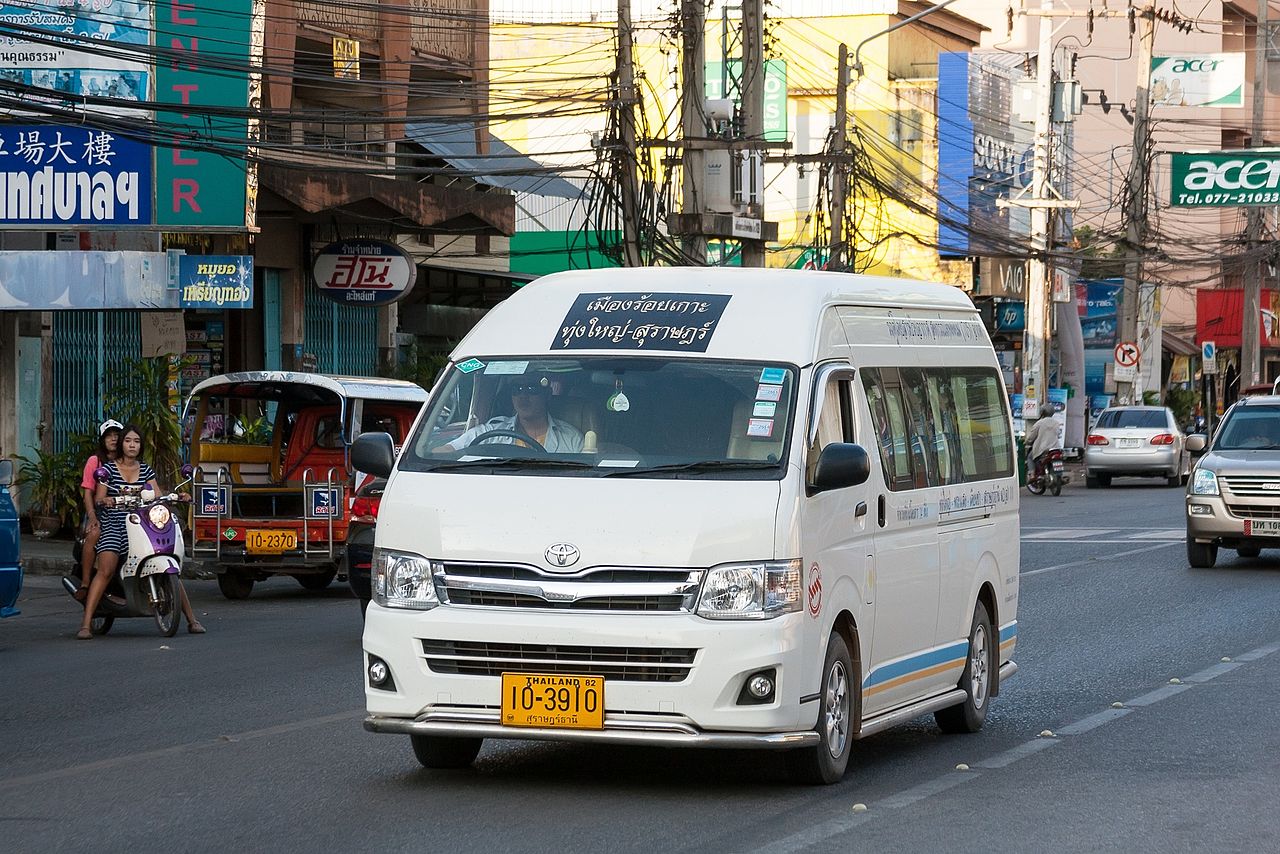
For travelers coming from Bangkok without a private car, public transport is still an affordable and workable option, but it helps to understand upfront that Uthai Thani is a small province with fewer direct routes from Bangkok than the bigger provinces. The common approach is to take a bus or van from the Mo Chit 2 bus terminal to Nakhon Sawan, a major hub with frequent, well-connected services, then transfer to a short van or bus ride from Nakhon Sawan into Uthai Thani town. Since the two provinces are adjacent and not far apart, this connecting leg doesn't take long, and the whole trip runs about 4-5 hours. The total fare including the connection falls in the low hundreds up to around four hundred baht per person depending on the operator and seat class.
At certain times there are also vans or buses that run straight into Uthai Thani town without changing vehicles, which is more convenient and faster, but these direct services tend to run less frequently than the routes via Nakhon Sawan, so check schedules and ask at the terminal or the operator's website in advance, especially during long holidays when demand is high and seats fill up quickly. The limitation of this approach is that once you arrive in Uthai Thani, you still need a way to get around, since out-of-town sights like Hup Pa Tat-Ban Rai are far away and not well served by public transport. Most travelers therefore stick to the old town along the Sakae Krang using bicycles or tricycles, and rent or charter a car separately if they want to reach the more distant spots. This suits travelers who plan to focus mainly on the old town and riverside life rather than covering the whole province.
- Works without a private car, cheaper than driving alone
- Nakhon Sawan is a major hub with frequent services, making the connection into Uthai Thani easy
- Some routes run direct into Uthai Thani town without a transfer
- Suits travelers focused mainly on the old town along the Sakae Krang
- Most routes require one transfer at Nakhon Sawan, adding time versus a direct ride
- Direct services into Uthai Thani are limited; check schedules in advance
- You'll still need a way to get around once there — distant spots require renting or chartering a car
Rent a car (for Hup Pa Tat-Ban Rai)

For travelers who arrived in Uthai Thani by bus or van but still want to visit sights outside town, renting a car locally is the most flexible solution, since many of Uthai Thani's highlights aren't in town but spread across the outlying districts. This especially applies to Hup Pa Tat in Ban Rai district, a limestone valley densely covered with cycad palms that feels like a prehistoric forest, and large temples like Wat Tha Sung and other temples in Ban Rai that sit dozens of kilometers from town. These spots aren't easily reached by public transport, so having your own car lets you go at your own pace and fit several stops into a single day. A standard sedan or eco car rents for about 1,000-1,600 baht per day plus fuel, and splitting the cost among several people still works out cheaper than chartering a ride each time.
One thing to know is that Uthai Thani is a small province, so car rental operators in town are fewer than in major tourist cities. Vehicles can get booked out quickly during long holidays, so it's worth arranging a rental in advance and clarifying insurance terms and the deposit clearly. Another option many people use is renting a car from Bangkok and driving it the whole way, then using it to get around the province — convenient if you plan ahead from the start. On the route itself, plan for the fact that some sections of the road to Ban Rai district wind up into hills and have patches of weak phone signal, so bring an offline map, fill up on fuel before leaving town, and set out early to leave enough time to see the sights and return before dark, since roads in the outer districts are dim and quiet at night.
- Reach distant sights like Hup Pa Tat-Ban Rai-Wat Tha Sung that regular buses can't access
- Freedom to fit multiple stops into a single day
- Good value when traveling with others by splitting rental and fuel costs
- You can rent locally or rent from Bangkok and drive the whole way
- Rental car supply in Uthai Thani town is limited; book ahead
- Some stretches of road to Ban Rai are winding with weak signal, so prepare accordingly
- Driving yourself is more tiring than being driven, especially on hill roads and at night
Grab / taxi (limited)

If you don't have a car and don't want to drive, Grab is often the first thing that comes to mind, but it's important to understand that Uthai Thani is a small province, not a major tourist city, and the number of Grab drivers in the area is so low that it's often nearly impossible to get a ride, especially outside town or at night. Planning to rely on Grab for the whole trip therefore doesn't really work. What's more practical in a provincial town like this is chartering a local car or taxi recommended by your accommodation or locals, usually a van, sedan, or motorized tricycle that takes passengers around by the trip or by the day. This works well for transfers from where the bus or van drops you off to your accommodation, or for visiting a handful of nearby spots in town.
For distant out-of-town sights like Hup Pa Tat or the temples in Ban Rai, the common approach is to charter a car round-trip with waiting time, agreeing on the total price, stops, and waiting time before setting off. The price depends on distance and number of stops, typically ranging from low hundreds up to low thousands of baht per trip. The advantage is having a driver who knows the roads, so you don't have to drive yourself on unfamiliar hill roads, and you can stop for photos as agreed. Things to watch for: use a service recommended by your accommodation or locals, agree on the price clearly in writing or with a firm verbal confirmation before getting in to avoid disputes over cost later, and if you're visiting several spots or going far, compare against the cost of renting a self-drive car too, since renting for the whole day sometimes works out cheaper than chartering trip by trip.
- No driving required, good for transfers from the drop-off point and a few in-town stops
- Round-trip local charters reach out-of-town sights with a driver who knows the roads
- Suits travelers without a car who don't want to drive unfamiliar hill roads
- Splitting the charter cost among a group brings the per-person cost down
- Grab has almost no coverage in Uthai Thani and is hard to hail, especially at night
- You'll need to rely on a locally recommended charter and must agree on the price clearly beforehand
- Chartering multiple stops trip by trip can end up pricier than renting a self-drive car for the day
Boat / houseboat on the Sakae Krang River

What sets Uthai Thani apart from other towns is the riverside life along the Sakae Krang, a small river flowing through the middle of the old town where both banks still have houseboats and old wooden homes where people have lived and raised fish in floating pens for generations. Experiencing this way of life doesn't call for a car but a boat instead. The most popular option is boarding a small boat to cruise past the riverside scenery, passing riverside temples like Wat Ubosatharam, houseboats, and people going about their riverside livelihoods, taking about an hour. Boat fares are either charged per whole boat or per person depending on the operator and group size, so ask about pricing and agree on the route and timing clearly before boarding. It's an activity that shows the town from an angle you can't see on foot or by car.
Another experience many travelers plan for is staying overnight on a houseboat in the middle of the Sakae Krang River. Several houseboat-style accommodations are available in town, offering a quiet, peaceful atmosphere where you can wake up to morning mist and riverside life right from your room. Rates are charged per night and should be booked in advance, especially during the cool season and long holidays when demand for this type of stay peaks. One thing to plan for: use boat and houseboat services recommended by your accommodation or locals, agree on the price clearly, wear a life jacket when boarding, and check the weather beforehand, since water levels and currents can change during the rainy season or flooding. Riverside activities suit early morning or evening when the weather is cool and the light is beautiful, while the midday sun is strong, so bring a hat and drinking water.
- Experience the riverside life along the Sakae Krang that's unique to Uthai Thani
- See the town from an angle you can't get on foot or by car, passing temples and houseboats
- Staying on a houseboat in the middle of the river gives a quiet, peaceful atmosphere with morning mist
- Flexible cost — choose a whole-boat charter or per-person rate to fit your budget
- Only covers riverside life in town, doesn't reach distant out-of-town sights
- Boat and houseboat prices need to be agreed on clearly beforehand, and it's best to use a recommended operator
- During the rainy season and flooding, check the weather and current conditions beforehand
Bicycle / tricycle in the old town

Uthai Thani's old town is compact and strung along the Sakae Krang River, with the main in-town sights like the morning riverside market, Wat Ubosatharam, old wooden houses, and old-town cafes all close enough together to reach comfortably by bicycle. Renting a bike to explore the town therefore suits this place's easygoing pace better than anything else. Many accommodations in town lend or rent out bicycles for tens up to a few hundred baht per day, letting you cycle along the river, stop at the market, visit temples, and pause for photos as you please, without worrying about parking or fuel. It suits travelers who want to soak up the old-town atmosphere slowly and as cheaply as possible.
Another option with a nostalgic feel is riding a hired tricycle around town, which can still be found in provincial towns like this. Drivers usually know the sights and stories of the town well and can take you to several spots without you having to pedal yourself, suiting travelers who can't walk or cycle far, or who want to hear stories from a local. Agree on the fare per trip or for a full charter tour clearly before getting on. The limitation to understand is that both bicycles and tricycles only cover the town and nearby areas — they're not suited for reaching distant out-of-town sights like Hup Pa Tat or Ban Rai, which require a car. Also, the midday sun can be quite strong, so it's best to explore in the morning or evening and bring a hat, drinking water, and sunscreen, then take it slow to soak up the atmosphere fully.
- The cheapest option — bike rental runs from tens up to a few hundred baht per day
- Matches the easygoing pace of the old town along the Sakae Krang perfectly
- Stop at the market, temples, and old wooden houses as you please without worrying about parking
- Riding a tricycle gives a nostalgic feel, with drivers who know the town well and can take you to several spots
- Only covers in-town areas, not suited for distant sights like Hup Pa Tat-Ban Rai
- The midday sun is strong — plan for morning-evening trips and bring sun protection
- Tricycle fares must be agreed on beforehand, and there are fewer of them than there used to be
Which one should you pick?
Simply put, it depends on your trip style: want to cover the whole province, both the old town and distant sights like Hup Pa Tat-Ban Rai — drive yourself, the most independent and popular choice, since Uthai Thani has no airport or main rail line · no car, coming from Bangkok — take a bus/van to Nakhon Sawan and connect into Uthai Thani (some routes run direct, check schedules first) · arrived and want to reach distant sights — rent a self-drive car for Hup Pa Tat-the temples in Ban Rai, book ahead since rental supply is limited · don't want to drive, visiting just a few spots — charter a local car round-trip (Grab has almost no coverage, don't rely on it) · exploring the old town along the Sakae Krang — cycle or ride a tricycle for the cheapest and most atmospheric option · and for riverside life, cruise by boat or stay on a houseboat in town.
Book transfers & activities in advance
Uthai Thani has no airport or main rail line, so most people drive or connect via Nakhon Sawan. Booking transport and activities online in advance helps lock in a vehicle and compare reviews beforehand, especially during the cool season and long holidays.
Where to stay in Uthai Thani?
Choose accommodation in the old town near the riverside market and temples for easy walking or cycling, or a houseboat-style riverside stay on the Sakae Krang for great atmosphere. Compare prices across 3 sites before booking.
Search hotels on AgodaGot your travel plan sorted? Now pick a well-located stay in the old town along the Sakae Krang so getting anywhere is easy.
See Uthai Thani hotels →