🔄 Updated 21 Jun 2026
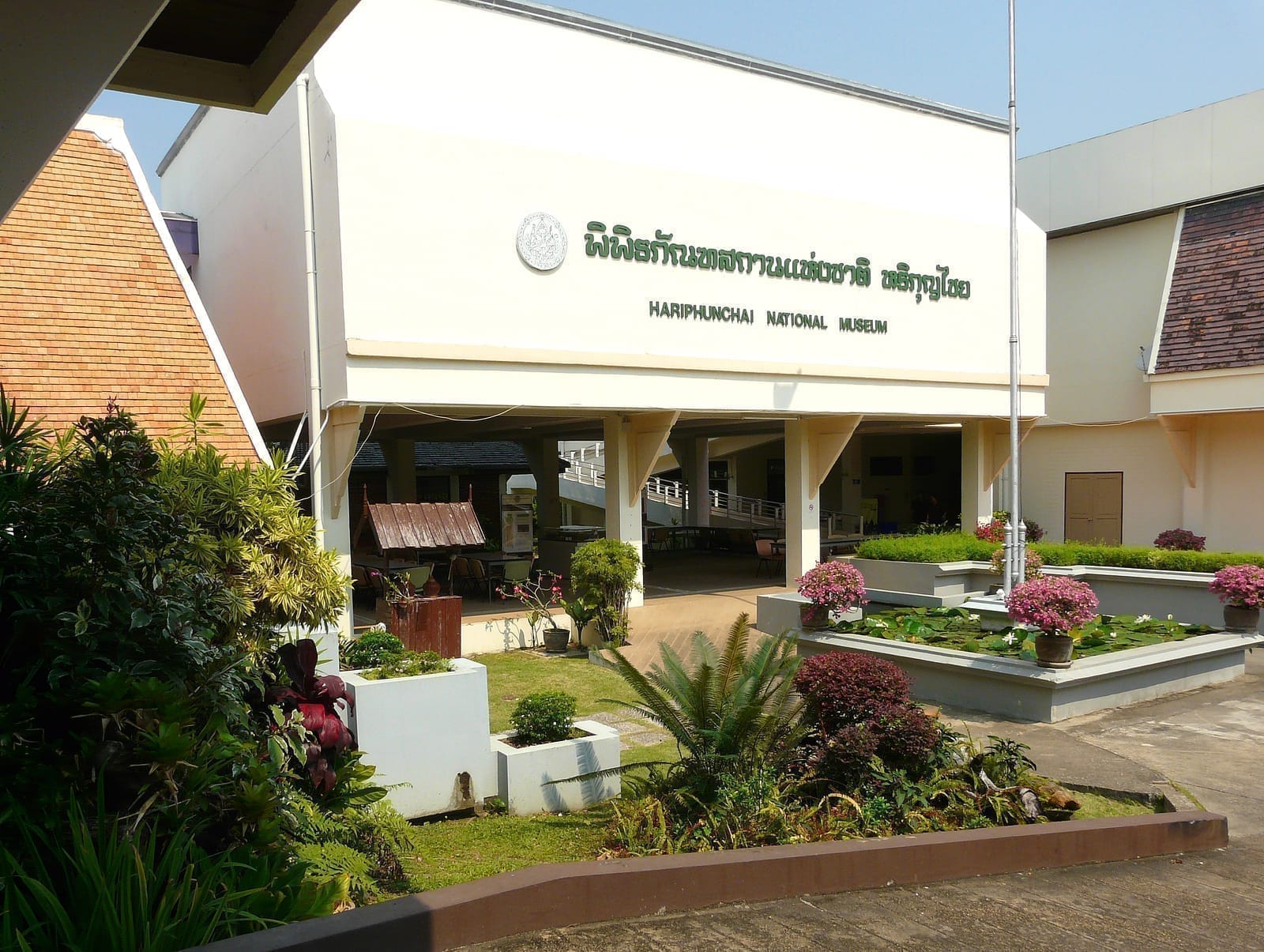
Most people come to Lamphun to pay respects at Wat Phra That Hariphunchai and then leave, even though the museum that holds the town's full story is just a few steps across Inthayongyot Road. It isn't a big place. A real walk-through takes about 45 minutes to an hour. But what's on display are genuine pieces unearthed in Lamphun itself, which makes it clear that this town was the center of the Hariphunchai kingdom long before Chiang Mai even existed.
Why this museum is worth a stop
The collection began when the last ruler of Lamphun started gathering the town's antiquities around 1910. The Fine Arts Department then raised it to national-museum status in 1927, the current permanent building was finished in 1974, and Princess Maha Chakri Sirindhorn officially opened it in 1979. What sets it apart from the usual museum is that nearly everything is genuinely local, found in temples and archaeological sites around Lamphun rather than borrowed for display.
- See three eras of art in one go — pre-Hariphunchai, Hariphunchai, and Lanna, laid out in sequence in one place.
- Right next to Wat Phra That Hariphunchai — directly across from the temple, so you can pair the two on one trip without driving.
- Not crowded — easy to wander, easy to photograph, no jostling for angles like at the famous temples.
- Cheap entry — just a few baht for Thai visitors, and the knowledge you get is well worth it.
Want more out of Lamphun? Book tours & activities
Booking online ahead on Klook or GetYourGuide is usually cheaper than the gate and skips the queue. Pick only the experiences you actually want — prices and availability are shown live on each site.
Highlights you shouldn't miss
Phra Rod amulet
One of the Benjaphakhi set of amulets that collectors across the country chase, with its origin at Wat Mahawan in Lamphun. The piece on display belongs to the Fine Arts Department, so you can see the genuine mold and terracotta up close. This is the one amulet enthusiasts come specifically to see.
Ancient Mon inscriptions
The inscription room holds Hariphunchai-period stone slabs written in ancient Mon script, dating to roughly the 12th century, alongside later Lanna Tham-script inscriptions. They're primary evidence that this town used Mon before the northern Thai language.
Hariphunchai-period Buddha images
Hariphunchai-style Buddha images and heads with a distinctive face and large hair curls, different from the later Lanna style. Seen side by side, it's easy to spot how the forms changed over time.
Dvaravati art before Hariphunchai
Pre-Hariphunchai pieces that reflect Dvaravati influence from central Thailand, showing how that culture flowed north along the rivers before Lamphun became a town.
Ancient ceramics and everyday objects
Ceramics, earthenware vessels, and household items excavated from the Ban Wang Hai archaeological site, which help you picture what daily life was like for people in the old town.
Lanna-period sculpture
Lanna-era Buddha images and carvings displayed along the long gallery, closing out the town's story as Hariphunchai becomes part of Lanna.
Viewing tips
Start with the inscription room, then move to the long gallery where pieces are arranged by era, and the town's story reads in order without confusion. The label text is in both Thai and English, but the print is small, so bring your glasses if your eyesight isn't great.
How the galleries are divided
The building isn't large, and the displays are arranged by era so you can walk through easily. It breaks down roughly into the zones below. Follow them in order and the town's story comes through most clearly.
Inscription room
Brings together Hariphunchai-period Mon-script stone inscriptions and Lanna Tham script. It's the heart of the museum, telling the town's language and religion.
Long gallery
Displays prehistoric tools from Ban Wang Hai, followed by Hariphunchai and Lanna Buddhist art arranged by era.
Special exhibition room
Rotating standout pieces and focused themes, such as Lamphun votive tablets and lesser-known works.
Hours, entry fees, and getting there
- Hours — Wednesday to Sunday, 9:00 AM to 4:00 PM. Closed Mondays, Tuesdays, and public holidays.
- Entry fee — around 20–30 THB for Thai visitors, 100–200 THB for foreigners (students in uniform and monks/novices enter free).
- Location — Inthayongyot Road, across from Wat Phra That Hariphunchai, in the heart of Lamphun's old town.
- Getting there — about a 30–40 minute drive from Chiang Mai, or take a songthaew/train into Lamphun town and then a tuk-tuk.
- Time needed — an easy 45 minutes to 1 hour for a full look.
Check before you go
The hours and fees at Fine Arts Department museums are fairly stable, but before a long trip it's worth calling 053-511186 or checking the museum's Facebook page again, in case it's closed for repairs or hosting a special event.
Pair it with nearby spots
The good thing about this place is that it's in the old-town area, all within walking distance. Plan a half day and you get the temple, the museum, and local food in a single trip.
- Wat Phra That Hariphunchai — directly across the road; just walk over to pay respects at the town's guardian stupa.
- Queen Chamadevi Monument — the first ruler who founded the town, not far from the town center.
- Lamphun markets and restaurants — you can hunt down khanom jeen nam ngiao and other local dishes around the temple.
Plan a full day in old-town Lamphun
See the Lamphun travel guide →