🔄 Updated 21 Jun 2026
Wat Phra That Hariphunchai Woramahawihan sits right in the centre of Lamphun town, ringed by roads on all four sides. This land was once the palace of King Adityaraj, ruler of the Hariphunchai kingdom, before it was given over to become a temple around the 12th century (legend dates the founding to roughly 1108 CE) to enshrine relics of the Buddha. That makes it the oldest and most important temple in Lamphun, and one of the principal chedis of the Lanna north.
The gold-clad bell chedi, the heart of the temple
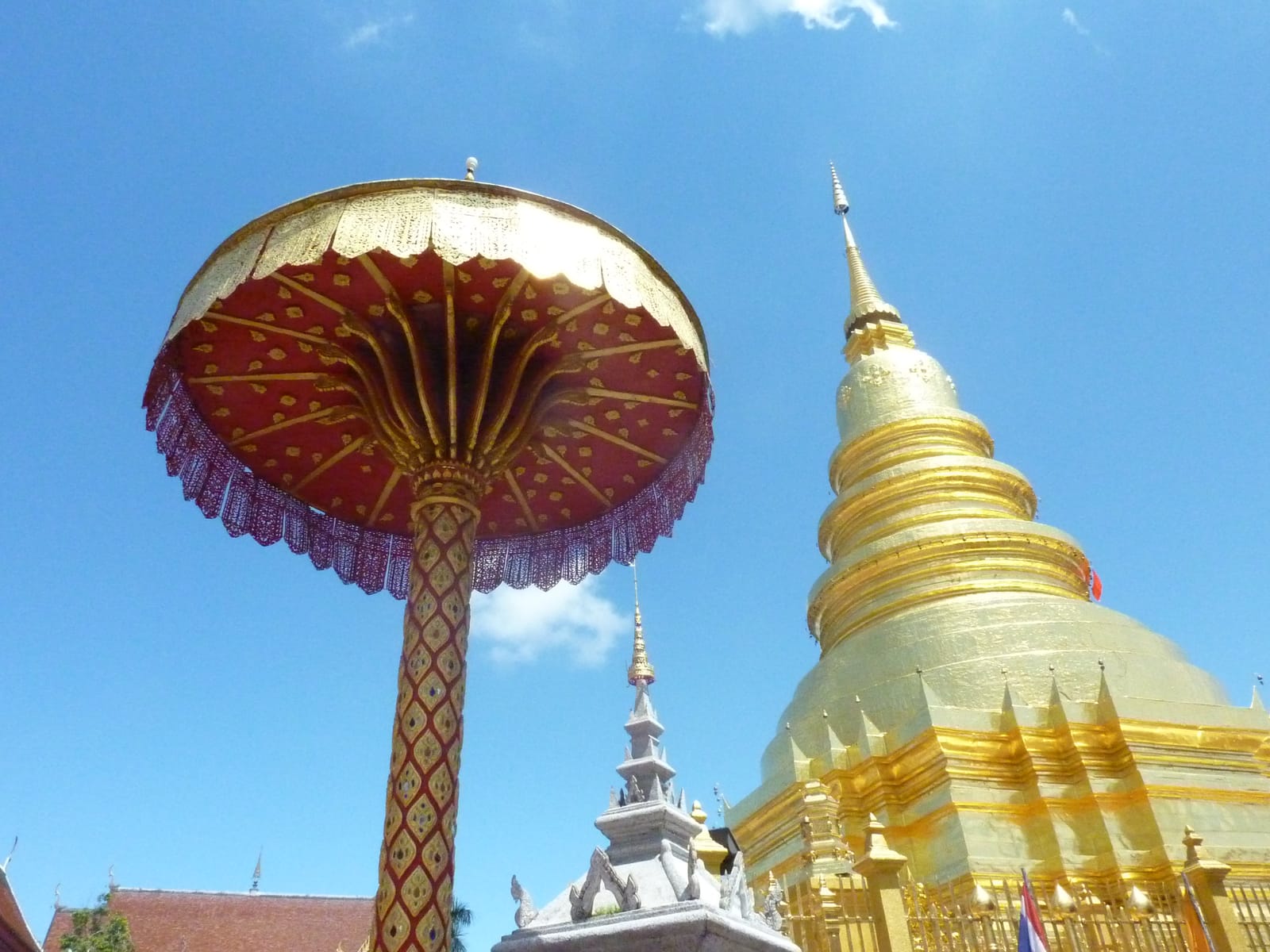
Walk past the main viharn and the first thing that pulls your eye is the gleaming golden chedi standing in the middle of the courtyard. It's a Lanna-style bell-shaped chedi: a stack of redented lotus tiers rising up to support a round bell, about 46 metres tall (old texts record it as 25 wa 2 sok). The chedi is sheathed in jangko gold plating and gilding, with a brass railing around the base and gilded ceremonial umbrellas planted at each of the four corners. When the morning or late-afternoon sun hits it, the chedi glitters and photographs beautifully from every angle.
Phra That Hariphunchai is the chedi of the Year of the Rooster. People born in the rooster year traditionally try to come and pay their respects at least once in their lives, but anyone born in any year is welcome to come, there's no restriction. According to legend the chedi enshrines a number of the Buddha's relics, including a crown-of-the-head relic, a breastbone relic, and many smaller ones.
Want more out of Lamphun? Book tours & activities
Booking online ahead on Klook or GetYourGuide is usually cheaper than the gate and skips the queue. Pick only the experiences you actually want — prices and availability are shown live on each site.
The lion gate, a photo spot people often walk past
At the front of the temple stands a brick-and-stucco gateway decorated with fine moulded patterns, its spire stacked tier upon tier in classic old-master craftsmanship. A pair of large stucco lions stands guard in front of the gate on a plinth about a metre high. They're said to have been sculpted back in King Adityaraj's time, when the palace was given over to become a temple. This pair of lions has become a symbol that almost everyone photographs themselves beside. Try walking in through this gate and then turning back to look, the frame of the arch and the lions set against the sky makes for a lovely shot.
Other spots in the temple worth a proper look
- Suwanna Chedi (Pathumwadi Chedi) — a square chedi built of laterite and brick to the northwest of the main gold chedi. Its form echoes the Ku Kut chedi at Wat Chamthewi, a piece of pure Hariphunchai-era art that's actually older than the gold chedi itself.
- Bell tower and gong — to the northeast, hung with a bell and a large bronze gong. If you'd like to strike it for good fortune, you're welcome to.
- The main viharn — the large hall in front of the chedi, home to the principal Buddha image and used for important ceremonies. It's cool and comfortable inside, a good place to sit and rest and pay your respects.
- The temple museum — keeps antiquities and treasures connected to the temple. Open roughly 09:00–16:00, closed Mondays and public holidays.
How to pay your respects, and where to start
Don't stress too much about the order. Most locals step into the main viharn to pay respects to the principal Buddha image first, then come back out and circle the chedi. If you'd like to follow tradition, walk clockwise around the chedi three times, keeping your mind on a quiet prayer as you go. Offering sets are sold at the shops in front of the temple, usually incense, candles and flowers for around 20–50 THB. Some people like to offer a ceremonial umbrella or a cloth to drape over the chedi, according to their faith.
A note on what to wear
This is a sacred temple, so dress modestly: no tank tops, no shorts above the knee. Women may find it handy to carry a shawl, and you'll need to take your shoes off before entering the viharn.
When's the best time to go
The temple is open every day, roughly 06:00–18:00. The prettiest and most comfortable windows are early morning before 9am and late afternoon into dusk, when the low sun turns the chedi a rich gold, the heat eases off and the crowds are still thin. Midday brings harsh sun and a hot courtyard underfoot, so if you're visiting in the hot season, skip the noon hours. The big annual event is the chedi water-pouring festival in May (Visakha Bucha by the Lanna calendar). If you happen to be here then, you'll see the whole town turn out for it.
Getting here
The temple sits in the middle of Lamphun town, about 26–30 km from central Chiang Mai. Driving from Chiang Mai takes roughly 40 minutes along the old Chiang Mai–Lamphun road, which is lined with tall rubber trees on both sides, a lovely stretch. If you don't have a car, take a songthaew or a van on the Chiang Mai–Lamphun route; get off and walk straight in, since it's right in the centre of town. You can come by train too: Lamphun station isn't far, just a short hop on a hired ride from there. There's parking around the temple, though on weekends you may have to circle a bit to find a spot.
As for entry: Thai nationals enter free, while foreign visitors pay a maintenance fee of around 20 THB. Walking the whole temple takes about 45 minutes to an hour, which is just right. From there you can easily carry on to lunch or stop by another temple in the old town.
What else is worth seeing nearby
Wat Chamthewi (Ku Kut)
The square Hariphunchai-style chedi that's the oldest in town. A few minutes' drive from Phra That, and a must if you're into history.
MuseumHariphunchai National Museum
Directly across from the temple, just walk over the road. Its Hariphunchai-era artefacts help you understand this town a lot better.
WalkingLamphun old town walk
The area around the temple is the old quarter, with the moat, old walls, cafés and local food shops. Easy to keep wandering on foot.
Plan a full day in Lamphun, with more places to stay and eat
See the Lamphun travel guide →