🔄 Updated 21 Jun 2026
Kaeng Saphue is a set of rapids in the Mun River that happens to sit right inside the town of Phibun Mangsahan — an easy walk from the market and the bridge over the river, with no trekking through forest or hills required. What stands out here is that it's an in-town rapid where nature and riverside life sit side by side. The municipality has turned the riverbank into a shady public park with walkways, salas, and shops, so it's easy to pull over and stroll. It suits anyone driving through on the way to Khong Chiam who wants to stretch their legs, eat something good, and then carry on.
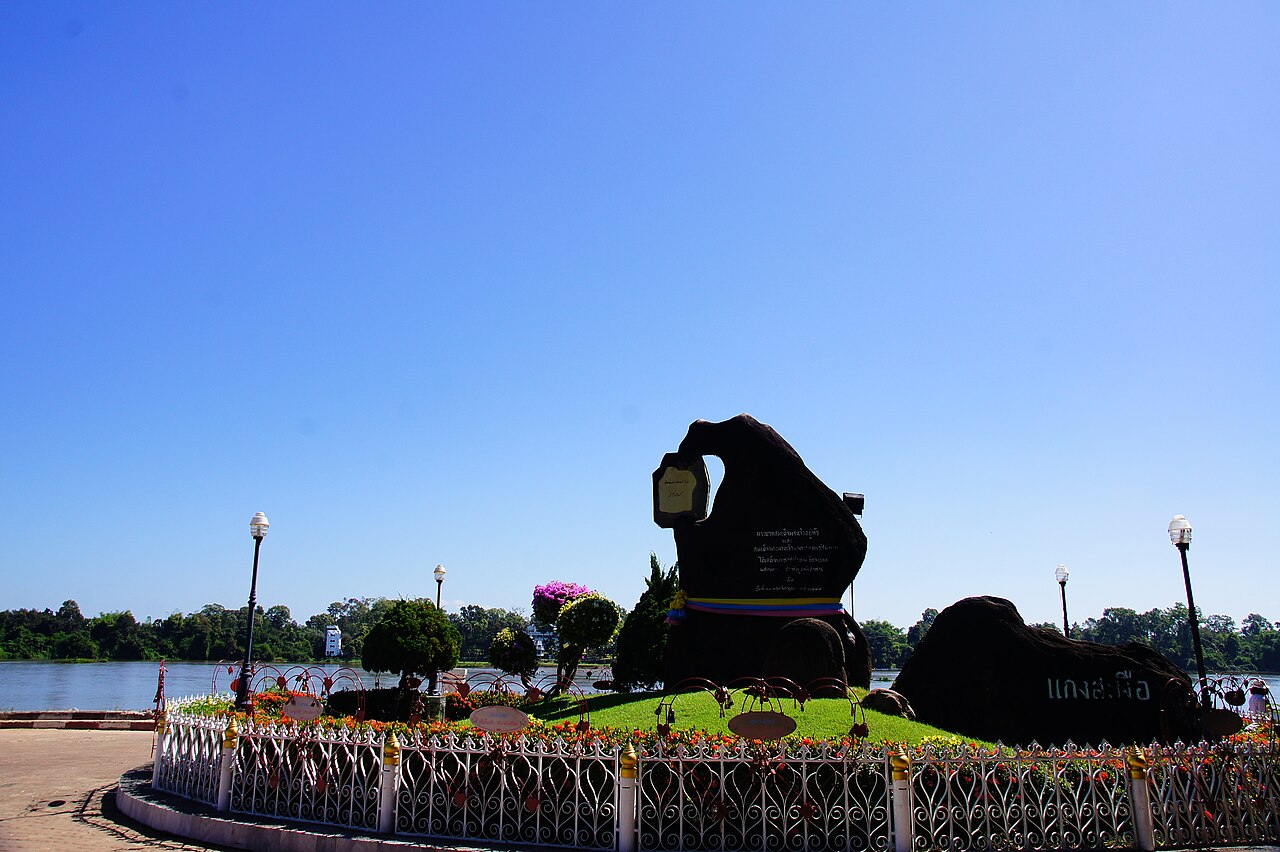
The name "Saphue" is a corruption of the Kuy word "sampoh," meaning "big snake," because the long, winding line of rocks down the middle of the river looks like a snake slithering through the water. It ties into the local naga legends of the Mun River that residents have passed down. There's also a rock inscribed with the royal cypher from when King Rama IX and Queen Sirikit visited Kaeng Saphue in 1955 — a small historical marker that the people of Phibun take pride in.
When it looks best, and when the water runs fast
The whole appeal of Kaeng Saphue is tied straight to the water level in the Mun River. The best time, when you can enjoy it fully, is the dry season, roughly January through May — the water drops, the rocks surface as a wide rocky flat, and you can walk across the boulders, sit with your feet dangling, or photograph the rushing current churning up white foam. Late in the dry season, around March–April, the water is even lower and more rocks emerge, but the sun is at its harshest too. Out of season, from the rainy months into early winter (June–December), the Mun rises and floods the rapids until you can barely see the rocks at all, and it becomes a fishing spot for locals instead. Come during that stretch and you'll see only a wide river, no rapids.
The peak season at Kaeng Saphue
Songkran is the busiest time of year. Phibun Mangsahan district regularly holds a water festival at Kaeng Saphue around 13–17 April, with crowds splashing about on the exposed rocks, live music, food stalls, and big crowds. Come now if you want a lively atmosphere — but if you'd rather wander and take photos in peace, skip Songkran and come in January–March, when it's far more relaxed.
Want more out of Ubon Ratchathani? Book tours & activities
Booking online ahead on Klook or GetYourGuide is usually cheaper than the gate and skips the queue. Pick only the experiences you actually want — prices and availability are shown live on each site.
How to get to Kaeng Saphue
Kaeng Saphue is in the town of Phibun Mangsahan, about 45 km from Ubon city. Drive along Highway 217 (Ubon–Phibun Mangsahan) and it takes roughly 45 minutes to an hour. Once you enter the district there are clear signs pointing to the rapids, since it's Phibun's main landmark. The rapids sit right by the bridge over the Mun River, with a car park and a riverside park where you can walk straight down.
- Private car / rental car — the easiest option, since Kaeng Saphue is on the same route as Khong Chiam, so it slots in nicely as a stop along the way.
- Songthaew / minivan — these run the Ubon–Phibun Mangsahan route from the bus terminal; get off in town and walk or take a motorcycle taxi to the rapids.
- Private car with driver / join a tour — good if you're carrying on to the Khong Chiam side of Ubon the same day, with Kaeng Saphue as your first stop.
The old market and riverside food
What makes Kaeng Saphue more than just a photo spot is the Phibun Mangsahan old market, set at the foot of the bridge over the Mun River, just up from the rapids. It's the district's old market, still lined with traditional shophouses and wooden homes along the road, selling food, household goods, farm supplies, and fishing gear. It's a pleasant place to wander and watch riverside life along the Mun — so much so that it's been named one of the Department of Internal Trade's recommended "Markets Worth Seeing."
Fried bananas (kluai brek taek) by the rapids
Phibun's most famous snack — fried fresh every day, crisp on the outside and sweetly fragrant, the kind you can't stop eating. Several vendors sell them at the stalls by the rapids and in the old market; grab a bag to munch on while you walk along the rapids. A popular thing to take home, too.
Mun River fish, grilled or blanched
Fresh freshwater fish from the Mun River — grilled whole, steamed, or in tom yum — found at the restaurants and floating rafts around the rapids. Bold Isan flavors with sweet, fresh fish; this is the main meal most people order when they stop at Kaeng Saphue.
Dried fish, grilled fish & pla som
Preserved goods from the Mun River sold around the old market — dried fish, grilled fish, and fermented pla som. They keep for a long time, so locals buy them to take home and cook with. Easy on the wallet.
Dried frog skin
An unusual specialty of Phibun market that people like to try and take home as a souvenir. Fry it up to eat with sticky rice or as a drinking snack — a local oddity that's hard to find in other towns.
Steamed buns & local sweets at the old market
Phibun's old market has hot steamed buns (salapao) and local sweets sold at the stalls — good for a quick bite in the morning before walking the rapids, or to keep for the drive on to Khong Chiam.
Som tam, larb & koi at the riverside spots
Bold Isan food to go with the river fish — papaya salad with pla ra, larb, koi, and bamboo-shoot soup, available at the restaurants around the rapids. Order it with hot sticky rice and take in the Mun River view.
How to eat well for less
If you arrive mid-morning to midday, walk the rapids first, then head up for lunch at a restaurant or floating raft. Order Mun River fish as your main, since it's the local star, then buy fried bananas and dried fish from the old market as souvenirs before you leave. Food by the rapids is cheaper than in Ubon city — you can eat your fill without spending much.
Restaurants and riverside cafes around Phibun
Beyond the market stalls, the Phibun Mangsahan area has restaurants and cafes along the Mun River where you can sit and relax after walking the rapids. The open setting looks out over the water — a good place to wait out the heat or sip a coffee before moving on.
Floating riverside restaurants on the Mun
Floating rafts and waterfront restaurants around Phibun where you can sit down to river fish and Isan food with a Mun River view. Some rafts have rooms to stay over — good for families or groups of friends.
Cafes on the Mun River
Easygoing cafes along the Mun River with coffee and cold drinks, opening in the morning around 09:30 — a good place to stop and rest after walking the rapids when the sun is strong.
Bakery cafes in town
Bright-toned cafes around Phibun with bakery items and photo corners; some have rooms to stay over, handy if you want to spend a night in Phibun before heading to Khong Chiam.
What to pair Kaeng Saphue with
The upside of Kaeng Saphue is that it sits right on the main route to Khong Chiam, so it works better as a stop than as a destination on its own. Most people pause for lunch and walk the rapids for an hour or two, then drive on to the Mekong riverside — an easy day trip if you have a car.
One day: Kaeng Saphue + Khong Chiam
Easy half-day, out and back from the city
An honest heads-up before you go
Kaeng Saphue isn't a grand attraction like Sam Phan Bok — it's a compact in-town rapid, and the actual walk doesn't take long. The charm is in the old-market atmosphere and the food more than the rapids themselves. Come outside the dry season and you won't see the rocks at all because of the flooding, so check the season first, and plan it as a stop on the way to Khong Chiam to get the most out of it.
Want a full day-by-day Ubon itinerary?
See the Ubon travel guide →