🔄 Updated 21 Jun 2026
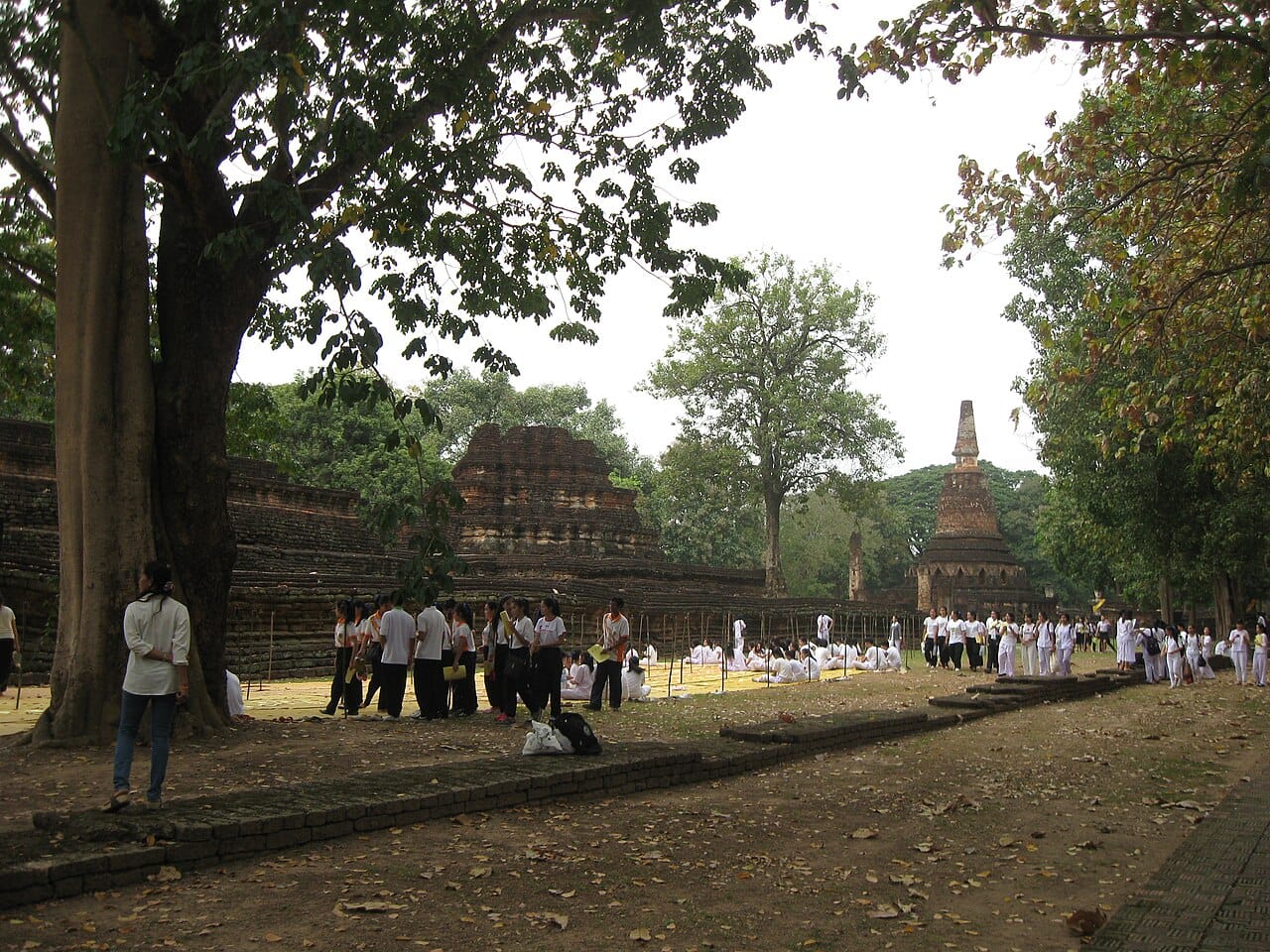
Kamphaeng Phet Historical Park was inscribed as a World Heritage Site together with Sukhothai and Si Satchanalai. What locals here are most proud of is that these ruins were built mainly from laterite rather than brick, which gives them a colour and texture quite different from Sukhothai. The old town splits roughly into three zones: the walled-city zone (Wat Phra Kaeo, Wat Phra That, the Shiva Shrine), the Arannik zone outside the city walls (Wat Chang Rop, Wat Phra Si Iriyabot, Wat Phra Non, Wat Sing), and the Nakhon Chum side across the Ping River (Wat Phra Borommathat, Pom Thung Setthi fort). Over these three days we'll work through one zone at a time so you're not doubling back.
Day 1 — Inside the walled city, starting in the heart of the old town
Day one stays inside the walled-city zone the whole time — you can walk from one temple to the next because they sit right beside each other. Start early when the park first opens, before the sun gets harsh.
Walled city + old town
Day-one tip
If you plan to walk the whole park, wear trainers and bring water — the ground alternates between grass lawns and gravel tracks, and the sun turns harsh quickly by mid-morning. Pay your respects and shoot Wat Phra Kaeo between 08:00 and 10:00 for softer light and fewer people.
Book the activities in your Kamphaeng Phet trip ahead
Booking online ahead on Klook or GetYourGuide is usually cheaper than the gate and skips the queue. Pick only the experiences you actually want — prices and availability are shown live on each site.
Day 2 — The Arannik zone and laterite stupas in the forest
The Arannik zone sits north of the walled city — a forest area where insight-meditation monks once spent the rains retreat. The temples here are scattered among the trees, with a clearly different feel from those in town: cooler and quieter. You'll need your own vehicle or a rented motorbike, as the temples are a fair distance apart.
Arannik zone, outside the city walls
What you need to know about tickets
Park tickets for the walled-city zone and the Arannik zone are charged separately by zone. If you're splitting the two zones across two days, budget for both fees — they're cheap, 20 THB per zone for Thais. Just ask the staff at the entrance which temples each zone covers.
Day 3 — Across the Ping to Nakhon Chum and Wat Phra Borommathat
On the last day you cross the Ping River to the Nakhon Chum side — a community over 700 years old that actually predates the eastern part of Kamphaeng Phet town. This side has temples that are still active, with resident monks you can pay your respects to, not just ancient ruins. A fitting way to close the trip on a note of merit.
Nakhon Chum side + wrapping up
Getting around and what to prepare
- Your own vehicle is easiest — the ruins are spread across several zones and public transport in town is limited. With no car, renting a motorbike in town is the nimble way to get around.
- Bicycles inside the park — the walled-city zone has bikes for rent to tour the temples, which saves you walking in the sun and covers a good distance.
- Dress modestly — Wat Phra Borommathat is still an active temple, so dress neatly, cover your shoulders, and skip very short shorts.
- Best time to go — Nov–Feb, when it's cool enough for walking. Avoid midday in the hot season, when the sun is harsh and the lawns and plazas radiate heat.
- Bring water and a hat — especially in the Arannik zone and the walled city, which are open plazas with few shops.
If you only have one day, what do you pick?
If time is genuinely tight, take the walled-city zone (Wat Phra Kaeo–Wat Phra That) in the morning, then follow with Wat Chang Rop and Wat Phra Si Iriyabot in the Arannik zone in the afternoon. That alone gives you the main images Kamphaeng Phet is known for — the laterite, the elephant-encircled stupa, and the four-posture Buddha.
The route at a glance
Day 1 · Walled city
Wat Phra Kaeo, Wat Phra That, the Shiva Shrine, the museum, finishing along the Ping — all walkable, close together, all day.
Day 2 · Arannik zone
Wat Chang Rop, Wat Phra Si Iriyabot, Wat Phra Non, Wat Sing — laterite stupas in the cool shade of the forest.
Day 3 · Nakhon Chum
Wat Phra Borommathat, Pom Thung Setthi, Trok Ban Chin — an active temple to pay respects to, closing the trip on merit.
Want a place to stay near the old town as a base for temple-hopping?
See the Top 10 Kamphaeng Phet hotels →