🔄 Updated 21 Jun 2026
Kamphaeng Phet National Museum sits on Pin Damri Road in central Kamphaeng Phet, just a few hundred metres from the old city walls and the entrance to the historical park. It opened officially in 1971, with King Rama IX presiding over the ceremony. The museum gathers antiquities unearthed across the old city of Kamphaeng Phet and the neighbouring town of Nakhon Chum, acting as a kind of memory vault for a place that flourished from the Sukhothai era into Ayutthaya times.
Plenty of visitors head straight into the park and end up confused about which stupa matters, or where all the principal Buddha images went. Part of the answer is in this museum, because the valuable pieces from the abandoned temples were brought indoors to be preserved, out of the sun and rain. Walk through here first, then go meet the real thing on site, and it all clicks much faster.
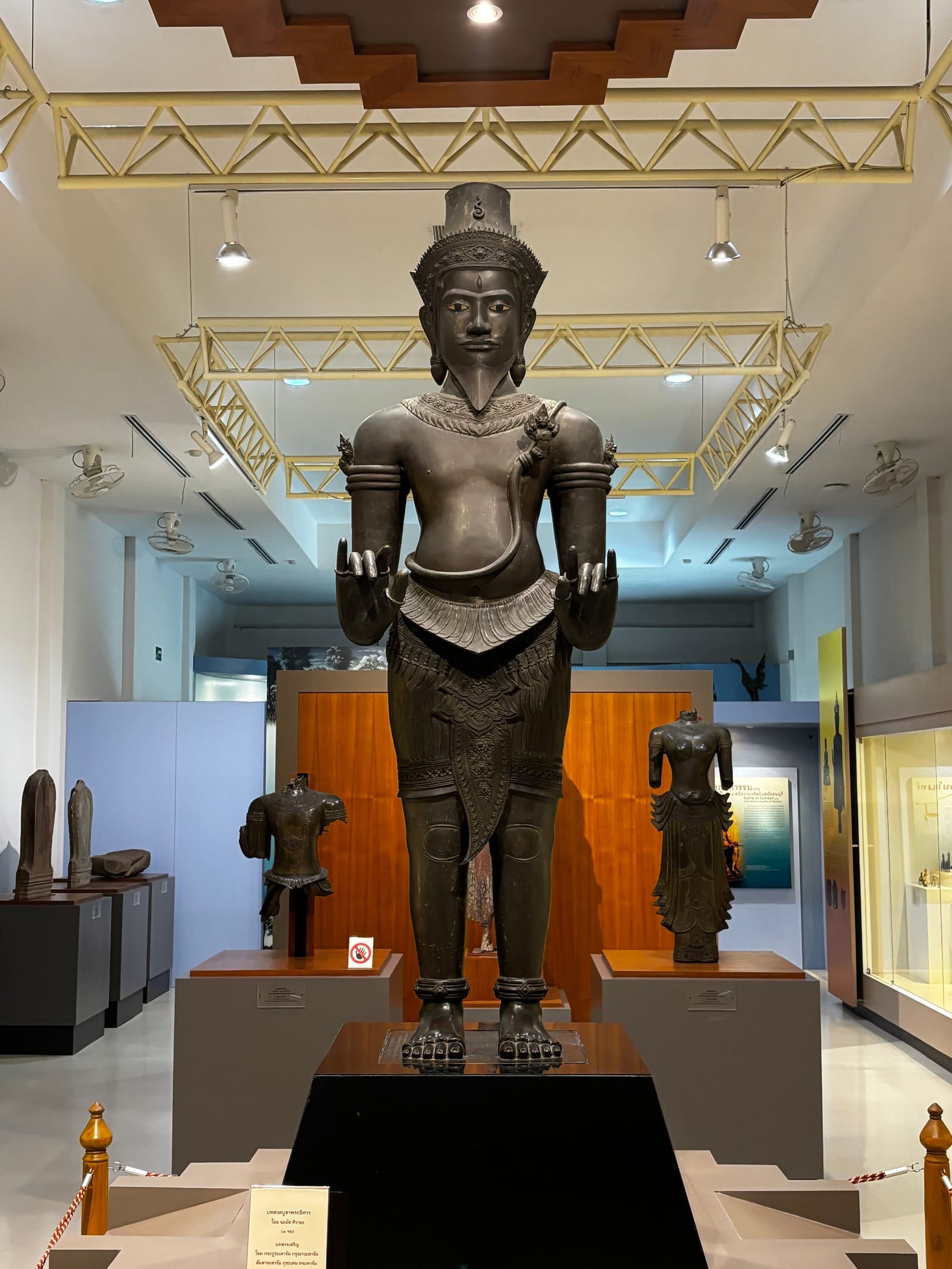
The highlight you shouldn't miss — the bronze Shiva statue
The single piece everyone talks about is the bronze statue of Shiva, cast in metal, standing full-figure, the work of early Ayutthaya-period craftsmen. It's one of the largest, finest and most complete bronze sculptures in Thailand. The one displayed inside the museum is the original; the one standing out in the open at the nearby "Shiva Shrine" is a replica. If you like a good backstory, this one delivers — over a century ago a foreigner smuggled the statue's head and hands out of the country, and they were only later returned and reattached to form the original figure again.
Tip
If you're looking at the original Shiva inside the museum, walk over and compare it with the open-air replica at the Shiva Shrine. They're less than 5 minutes apart, and you'll see how much sharper the detail is on the original.
Want more out of Kamphaeng Phet? Book tours & activities
Booking online ahead on Klook or GetYourGuide is usually cheaper than the gate and skips the queue. Pick only the experiences you actually want — prices and availability are shown live on each site.
What you'll see in each building
The museum is split into three exhibition buildings arranged along the historical timeline. Walk them in order and the story flows; you can follow the thread without reading every single placard.
- Building 1 — Prehistory to Sukhothai. It starts in the prehistoric period, moves through the Dvaravati and Lopburi eras, and ends in the Sukhothai period when Kamphaeng Phet and Nakhon Chum were thriving. There are plenty of Buddha images and stucco fragments from the old-city temples here.
- Building 2 — Ayutthaya to Rattanakosin. This is the home of the bronze Shiva statue, alongside Ayutthaya-era antiquities, Sangkhalok ceramics, and everyday objects that show how the city changed once the centre of power shifted south.
- Building 3 — Kamphaeng Phet today and its ethnic groups. This tells the story of the present-day people, their way of life, and the ethnic communities living in the province. It uses modern displays — video, touchscreens and dioramas — and is good for bringing kids along.
Buddha images moved from the old city
What makes this museum worth the stop is the group of Buddha images and sculptural fragments lifted from the abandoned temples in the park. Many are Sukhothai art in the distinctive Kamphaeng Phet style, with flowing lines and calm faces. Some were once the principal Buddha image in a temple that's now just a base. Seeing a walking Buddha figure and a bronze Buddha head up close helps you understand what those sun-baked altar platforms in the park once held.
Kamphaeng Phet-style Buddha images
Sukhothai Buddha images in the local Kamphaeng Phet school, with their own distinctive lines — easier to study indoors than out at the ruins.
Sangkhalok ceramics & pottery
Earthenware vessels and glazed pieces unearthed in the old city, telling the story of trade and daily life back then.
Stucco fragments from stupas
Stucco motifs and lintels that once decorated the stupas in the park, helping you imagine how the original monuments looked.
Opening hours, entry fees and getting there
- Opening hours Wednesday to Sunday, 09:00–16:00. Closed Mondays, Tuesdays and public holidays. Always check the hours before you go.
- Entry fee Normally around 20 THB for Thais and 100 THB for foreign visitors, but during building renovations entry has been temporarily free. It's worth checking the Fine Arts Department's page before travelling.
- Location Pin Damri Road in central Kamphaeng Phet, right next to the old-city zone and the Shiva Shrine, within easy walking distance of the historical park entrance.
- Getting there Driving or renting a motorbike is easiest, with parking in front of the museum. Without your own wheels, a songthaew or motorbike taxi in town will do the job.
See it before the park
Plan it well: spend about 45 minutes to an hour in the museum in the cooler morning, then cross over to walk the historical park. That way you get the full picture of the old city in a single trip.
Who it's for, and is it OK with kids?
This museum suits people who like history, enjoy seeing the real artefacts, and want a deeper read on the park. If you're with kids, Building 3 with its touchscreens and dioramas keeps them from getting bored. And if you're not all that into archaeology, half an hour on just the highlights — the bronze Shiva and the cluster of Buddha images — is already worth it. The air inside is pleasantly cool, making it a good place to escape the heat before heading out into the open park.
I'll be straight with you: this isn't a huge, grand museum. It's a local one that has kept some genuinely good pieces with real care. The charm is in the quiet — you get to study things up close without jostling anyone for a photo angle. If you're expecting the spectacle of a big Bangkok museum it might feel small, but if you came to understand the city, it does the job well.
Plan a full day in Kamphaeng Phet — see where to stay and what to do around the old city
See the Kamphaeng Phet guide →