🔄 Updated 21 Jun 2026
The Kamphaeng Phet–Tak route works best if you have your own car or a rental, because the sights are spread out and public transport between them is awkward. The town centres of Kamphaeng Phet and Tak sit about 65–70 km apart on Highway 1 (Phahonyothin), roughly an hour's drive. From Tak town over to Mae Sot you cross the Thanon Thang Sai range on Highway 105, a winding mountain road that takes about another hour and a half. This plan moves steadily from east to west so you never have to double back.
Trip overview: 3 days, 2 nights
- Day 1 — World Heritage Kamphaeng Phet: the historical park and the forest-temple (Aranyik) zone, overnight in Kamphaeng Phet town.
- Day 2 — Drive into Tak town, up to Doi Musoe and its hill-tribe market, then the Trok Ban Chin old quarter, overnight in Tak or push on to Mae Sot.
- Day 3 — Mae Sot: Wat Thai Wattanaram and the Rim Moei border market (or swap in Bhumibol Dam if you'd rather a water-and-nature day).
Pick your theme before you set off
Tak splits into two routes. There's the mountain-and-border line (Doi Musoe + Mae Sot + Rim Moei) and the water line (Bhumibol Dam, boat trips on the reservoir). They sit in opposite directions, so it's hard to do both in a short trip. With only 3 days, pick one line and you won't wear yourself out.
Book the activities in your Kamphaeng Phet trip ahead
Booking online ahead on Klook or GetYourGuide is usually cheaper than the gate and skips the queue. Pick only the experiences you actually want — prices and availability are shown live on each site.
Day 1 — World Heritage Kamphaeng Phet
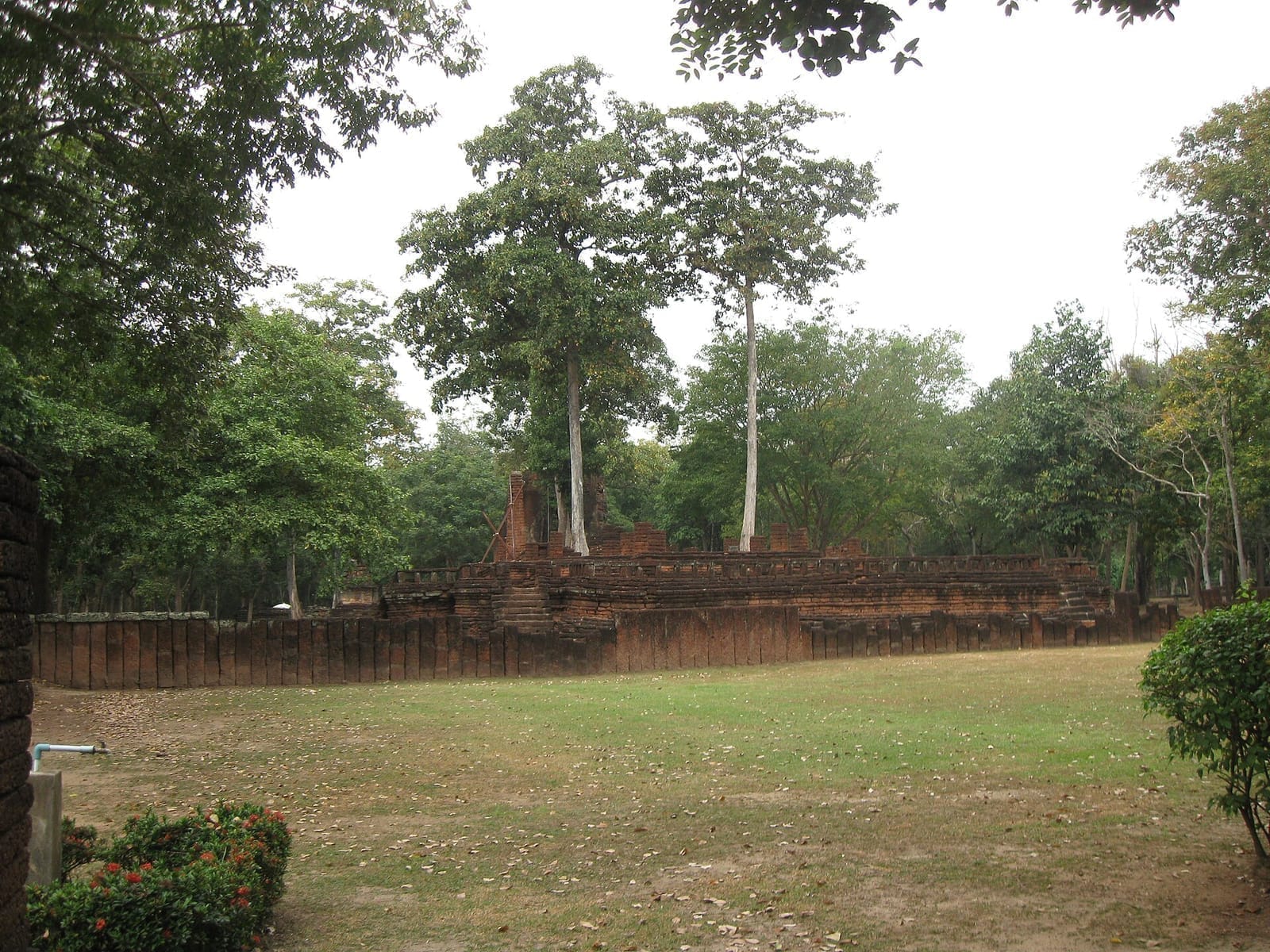
Start at Kamphaeng Phet Historical Park, a World Heritage Site that plenty of people drive straight past without realising what's there. The red brick and laterite among the big old trees give it a different feel from Sukhothai and Ayutthaya — quieter, with far fewer visitors.
World Heritage Kamphaeng Phet
Take home some Kamphaeng Phet kluai khai
Before you leave town, grab some kluai khai — the small egg bananas the province is known for. You'll find them fresh, candied and as dried banana paste at the roadside souvenir stalls along the Asia Highway.
Day 2 — Up to Doi Musoe and Tak old town
Leave Kamphaeng Phet early and drive north on Highway 1 for about an hour to reach Tak town, then turn onto Highway 105, the Tak–Mae Sot road, to head up the mountain. This stretch is winding and steep, so drive carefully — but the views on both sides are worth it.
Doi Musoe + Tak old town
Day 3 — The Mae Sot border, or Bhumibol Dam
The last day gives you two choices. If you want a taste of the Myanmar border, head to Mae Sot. If you'd rather have a nature-and-water day, swing by Bhumibol Dam on the way home. We'd point culture-and-market people towards the Mae Sot route.
Mae Sot, Rim Moei and the Myanmar border
The water alternative — Bhumibol Dam
If you swap Day 3 for Bhumibol Dam, drive from Tak town to Sam Ngao district, about 60 km. Bhumibol Dam is the largest curved concrete dam in Thailand, with a viewpoint along the crest and boat trips out on the reservoir. It suits anyone who'd take a lake setting over a border market.
Where to stay along the route
Stay in Kamphaeng Phet town (Night 1)
Pick a hotel near the town centre and the historical park, from around 600–1,200 THB, so you can walk the temples first thing in the morning.
Stay in Tak town (Night 2)
Hotels along the Ping River and in town, with easy onward travel to Mae Sot or Bhumibol Dam the next morning.
Stay in Mae Sot (optional)
If you drive up to Mae Sot on Night 2, you'll have an unhurried morning to see the temple and the Rim Moei market the next day.
Rough budget (for 2 people)
- Fuel + tolls — about 400–500 km in total, roughly 1,500–2,000 THB.
- 2 nights' accommodation — around 1,400–2,800 THB, depending on the hotel.
- Entry fees — historical park and museum, a few hundred THB per person in total.
- Food for 3 days — around 1,500–2,500 THB if you mostly eat at local spots.
- Rough total — this trip for 2 people comes to around 6,000–9,000 THB.
See where to stay and the full Kamphaeng Phet travel guide
Open the Kamphaeng Phet guide →