🔄 Updated 21 Jun 2026
Kanchanaburi's history sites are strung out in a long line along the Death Railway, running northwest from the town centre. Sequence them well and the whole story flows over about a day and a half. So we've set it up as 2 days, 1 night — the first day in town and along the River Kwai, the second day heading all the way out to Hellfire Pass and looping back. It's for people who want to understand how it all happened, not just snap a photo of the bridge and leave.
Before you set off
This route takes in several museums and cemeteries. Dress modestly and respectfully, especially at the war cemetery and Hellfire Pass, which are places of remembrance. Carry water — it gets hot out here and some stretches mean walking in full sun.
Day 1 — In town and along the River Kwai
Day 1
Cemetery, museums, and the Bridge over the River Kwai
08:30
Start at the Kanchanaburi War Cemetery (Don Rak)Open 08:00–17:00, free entry. This is the resting place of nearly 7,000 Allied prisoners of war who died building the railway. The lawns are immaculate, with stone markers naming each one. Half an hour of quiet walking is enough to take it in.
09:30
Visit the Thailand–Burma Railway CentreIt's directly across from the Don Rak cemetery. Open 09:00–16:00, entry around 160 THB for adults, 80 THB for children. The exhibits walk you through the railway's construction in chronological order, with models, maps, and real artifacts. A good place to get the background before you see the real thing outside.
11:00
Stop by the JEATH War Museum by the riverIt's near the town centre, about a 15-minute walk south from Kanchanaburi train station. It recreates the bamboo huts the POWs once lived in. It's small and won't take long.
12:30
Lunch break by the River KwaiAround the foot of the bridge there are plenty of riverside restaurants and cafes. Pick a spot with a view of the bridge itself.
14:00
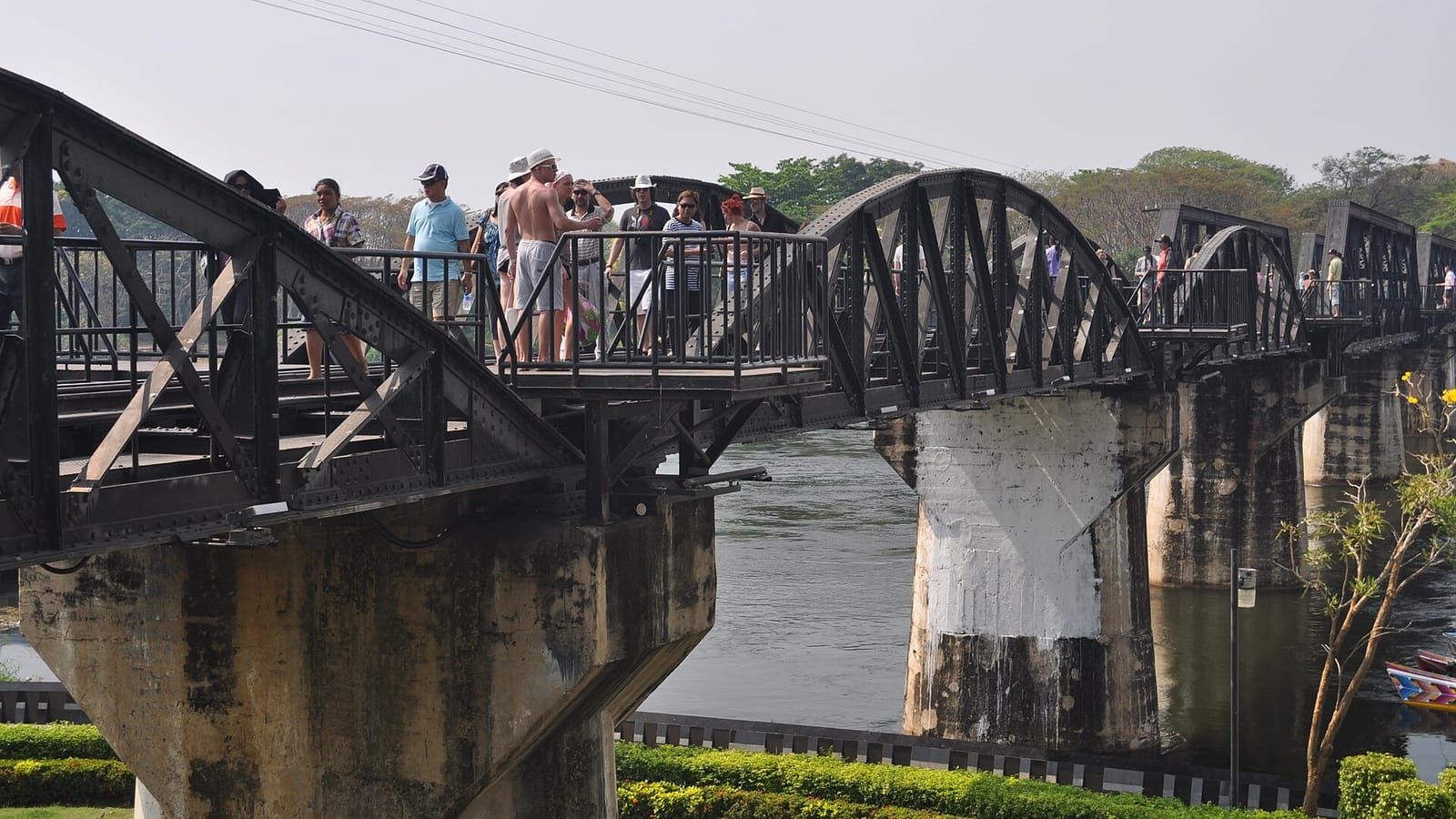
Walk across the Bridge over the River KwaiThis is the one most people picture first. You can walk right across the real steel bridge, with refuge bays to step into when a train passes. The afternoon sun is harsh — if you can hold out, late afternoon makes for better photos and thinner crowds.
16:00
Optionally catch the Art Gallery and World War II MuseumIt sits right by one end of the bridge. Open long hours, 08:00–18:30, entry around 20 THB for Thais and 40 THB for foreigners. It's a privately run museum with a jumble of different exhibits. Drop in if you have time to spare.
18:00
Check in to a riverside stay on the Kwai, then dinnerKanchanaburi has loads of floating raft houses and riverside resorts to choose from. Fall asleep to the sound of the water and save your energy — tomorrow you're heading far out.
Day 1 tip
Don Rak cemetery and the Thailand–Burma Railway Centre are right across the road from each other — just walk over. Pairing these two back-to-back saves the most travel time.
🎟️Book the activities in your Kanchanaburi trip ahead
Booking online ahead on Klook or GetYourGuide is usually cheaper than the gate and skips the queue. Pick only the experiences you actually want — prices and availability are shown live on each site.
🎟️ See all Kanchanaburi tours & activities (Klook) Day 2 — Death Railway, Tham Krasae, and Hellfire Pass
Day 2
Ride the railway along the cliff, ending at the deadly cutting
07:30
Head to the River Kwai Bridge station to catch the trainThe morning trains from the bridge station leave around 06:05 and 11:00. If the early start is too much, the later one works fine. The fare is dirt cheap, around 25 THB per trip. Double-check the schedule for your travel date with the State Railway of Thailand (SRT), as times can change.
08:30
Ride the train past Tham Krasae and its viaductThe highlight is the wooden trestle railway hugging the cliff above the Kwai Noi river. The train slows down so you can take photos. This is the stretch that makes it obvious why this line was so hard to build and cost so many lives.
09:30
Get off and walk at Tham KrasaeTham Krasae is open 09:00–16:00, free entry. You can walk along the wooden railway running along the cliff, and there's a small shrine in the cave. Watch the timing for passing trains — several run through here each day.
11:00
Continue by road to Hellfire Pass (Chong Khao Khat)It's further out toward Sai Yok district. If you're not driving yourself, hire a car or join a day tour, since public transport out here is awkward. It's about 80 km from the town centre.
12:30
Grab lunch on the way or pack suppliesThere aren't many places to eat around Hellfire Pass. Bringing water and snacks of your own will set your mind at ease.
13:30
Walk the Hellfire Pass trailThe Memorial Museum is open 09:00–16:00, free entry. You can borrow an audio guide at the counter (a deposit of around 200 THB, refunded when you return it). The trail leads down into the cutting the POWs dug by hand. The way back is uphill and fairly tiring — wear comfortable walking shoes.
15:30
Head back to town or on to BangkokAllow around 1.5–2 hours to get back to the town centre. End the history trip with a deeper understanding than you arrived with.
Sai YokChong Khao Khat (Hellfire Pass)
If you have time for the longer trail beyond the short loop, you'll see the original railway bed — rails long since removed — stretching off into the forest. The atmosphere is quiet and moving.
End of the lineWaterfall at the end of the line
The Death Railway terminates at Nam Tok (Waterfall) station, and a songthaew gets you to the falls without much trouble. A good add-on for anyone who wants to mix some nature into the trip.
RiversideRiverside temples
Along the way there are temples on the banks of the Kwai where you can pay respects and rest your eyes — a breather between the heavier history stops.
How to get around and time it so it flows
- Route order — knock out the in-town sites (cemetery–museums–bridge) on day one, then head far out to Hellfire Pass on day two, so you never have to double back.
- Death Railway — the fare is cheap, around 25 THB, but there are only a few trains a day. Check the schedule with the State Railway of Thailand (SRT) before your travel date, as times can shift.
- Getting to Hellfire Pass — it's far out and public transport is inconvenient. If you're not driving, hire a car or join a day tour from town.
- Opening hours — most museums close around 16:00–17:00. Slot the far-out stops into the morning and early afternoon — don't leave them for the end of the day.
- Special holidays — Hellfire Pass closes on certain key days, such as around Songkran and the long year-end break. If you're going during a festival, check first.