🔄 Updated 21 Jun 2026
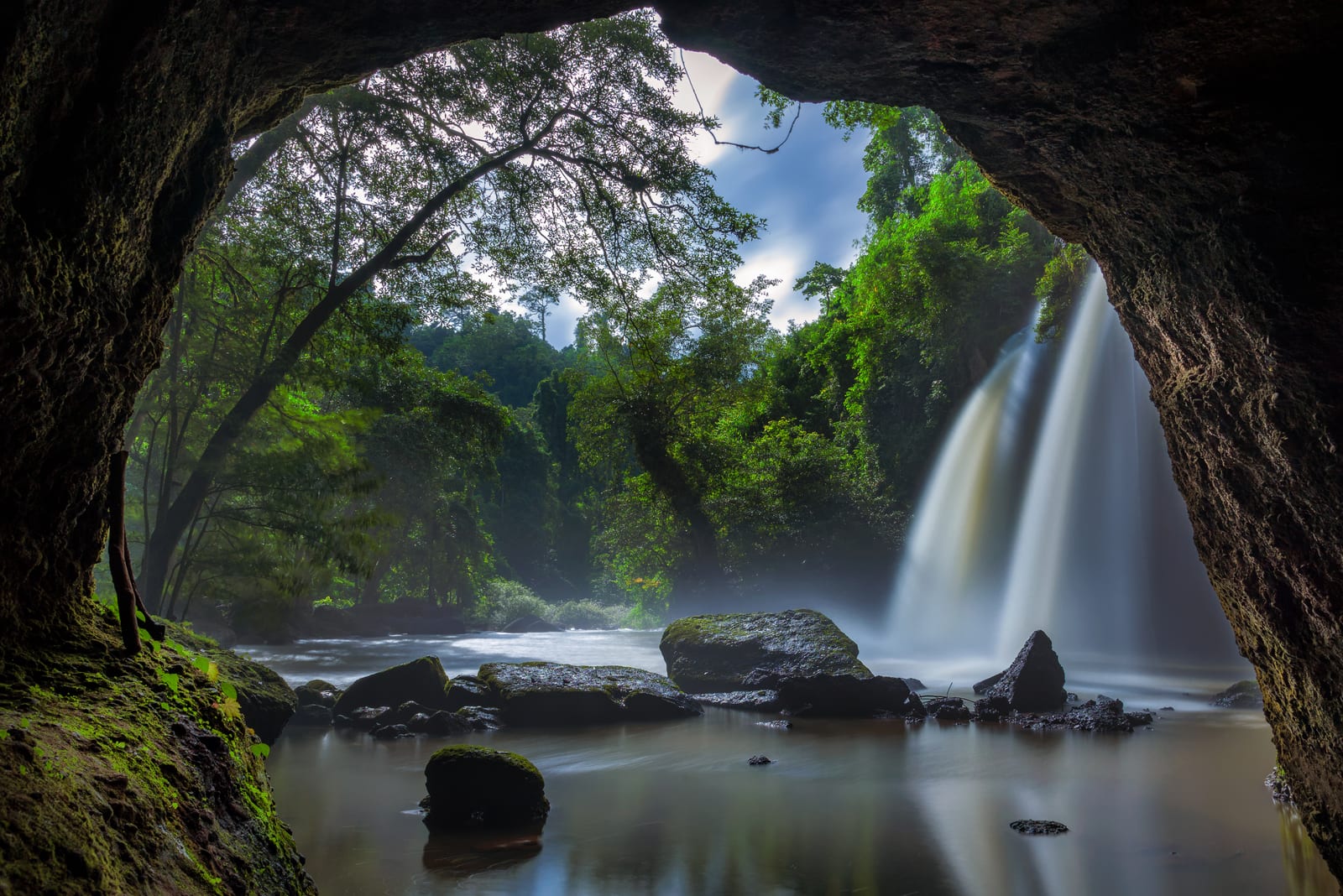
Haew Suwat Waterfall sits inside Khao Yai National Park, in Mu Si subdistrict, Pak Chong district, Nakhon Ratchasima province. It's one of the best-known falls in Khao Yai because it's so easy to reach — drive to the car park, walk a few hundred metres down the stairs, and the whole waterfall is right in front of you. That's a world away from Haew Narok, which takes a longer, steeper walk. This one suits families with small kids or older relatives along.
What Haew Suwat Waterfall is like
The waterfall is a curtain of water dropping over a rock cliff about 20 metres high, with a pool and a wide rock deck below. There are plenty of corners to sit and take photos. In the rainy season the water runs hard and loud, living up to its reputation; in the dry season it eases off but you'll still see a clear stream coming down. This is the waterfall that appeared in the film The Beach, so it has a bit of a name among foreign travellers too.
Straight talk
Swimming and cliff-jumping are banned here all year round. The water in this stretch has had reports of dangerous animals, and the current in the rainy season is stronger than it looks. Come for the view and photos on the rock deck — don't push your luck getting in the water.
Want more out of Khao Yai? Book tours & activities
Booking online ahead on Klook or GetYourGuide is usually cheaper than the gate and skips the queue. Pick only the experiences you actually want — prices and availability are shown live on each site.
How to get there and where it sits in the park
Haew Suwat is well inside the park, at the far end of Thanarat Road that cuts through Khao Yai. From the Khao Yai Visitor Centre, keep driving for about 10 kilometres to reach the turn-off for the waterfall — it's clearly signposted. Turn in and you'll find a large car park. From there it's a short walk of about 100 metres down stairs and a paved path, through big trees and a bamboo grove, to the waterfall itself.
- From the Pak Chong checkpoint (the Korat-side park entrance) — head up Thanarat Road, pass the Visitor Centre, then keep driving toward Haew Suwat Waterfall. It's several tens of minutes of driving inside the park, on a winding road up the mountain.
- Car park — large, with room for plenty of cars, plus toilets and stalls selling drinks and snacks near the lot.
- From the car park to the waterfall — a short walk of around 100 metres down the stairs. The slope and steps are paved and not too steep, so it's an easy walk.
Driving inside the park needs care
The roads in Khao Yai are winding, and wildlife can cross at any point — especially wild elephants and deer. Drive slowly, keep your lights on, don't honk to shoo animals away, and if you meet an elephant, wait at a distance and don't approach. Animals come out to feed more in the late afternoon and evening.
How much is the park entry fee?
Haew Suwat sits inside Khao Yai National Park, so you pay the park entry fee at the checkpoint first (the current rates can change per Department of National Parks announcements).
- Thai nationals — adults 40 THB · children 20 THB
- Foreign visitors — adults 400 THB · children 200 THB
- Vehicle fee — charged extra by vehicle type (sedans and pickups differ), paid at the checkpoint along with the entry fee
You can carry on along the Pha Kluai Mai–Haew Suwat trail
If you still have the energy and want to add a hike, there's a nature trail, Pha Kluai Mai–Haew Suwat Waterfall, about 3.4 kilometres long, linking Pha Kluai Mai Waterfall with Haew Suwat. Most of it is a paved concrete path running alongside the Lam Takhong stream, through evergreen forest and bamboo groves. It's an easy walk, and in the rainy season you hear running water the whole way.
Prep for the trail in the rainy season
In the rainy season the path is slippery and full of leeches. Wear closed-toe shoes, bring leech socks and drinking water, and don't make loud noise that disturbs the wildlife. If it rains hard the water rises fast, so stay away from going down near the stream.
When's the best time to go?
In the rainy season (roughly June to October) the waterfall is at its fullest and most impressive — but the path is slippery and there are leeches. Late rainy to early cool season (November to January) brings comfortable cool weather with a decent amount of water still flowing, and it's the most popular time to come. The dry season (March to May) sees lighter water, but easier walking and fewer people.
Long weekends get very crowded
Over New Year, Songkran and long weekends, traffic backs up from the foot of the mountain, the waterfall car park fills fast, and accommodation around Pak Chong–Khao Yai is booked out weeks ahead. If you're going then, book your stay in advance and leave home early.
Where else can you stop nearby?
Pha Kluai Mai Waterfall
A small waterfall on the same trail, linked to Haew Suwat by a walking path, with a shady forest feel.
Haew Narok Waterfall
Khao Yai's big three-tier waterfall. A longer, steeper walk, but far more dramatic — good for anyone who wants a proper hike.
In the parkPark viewpoints
Several spots along the Khao Yai roads, from grasslands to wildlife towers, worth a photo stop on your way out.
Plan your whole Khao Yai trip — things to do, where to eat, where to stay, all in one place
See the Khao Yai travel guide →