🔄 Updated 21 Jun 2026
Always check before you travel
The information here is general guidance for planning, not confirmation that the border will be open on the day you go. The Thailand-Cambodia border situation changes fast. Since late 2025 the crossing has gone through periods of total closure and periods of opening only for special cases. Before setting out, check the latest news, ask the Khlong Luek police station or local government pages, and have your documents ready (passport valid for at least 6 more months).
Where is Khlong Luek, and why does everyone talk about it
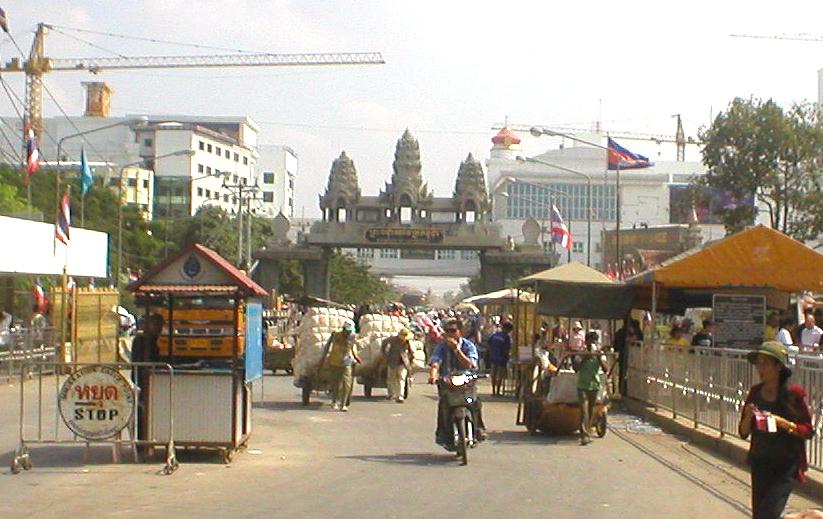
The permanent Ban Khlong Luek border crossing sits in Aranyaprathet district, Sa Kaeo, just a few kilometres from Aranyaprathet town. A canal called Khlong Luek forms the natural boundary line; cross the Friendship Bridge and you're in Poipet, in Cambodia's Banteay Meanchey province. Thais know this crossing for two reasons. First, it's the main overland route to Siem Reap and Angkor Wat. Second, it sits right next to Rong Kluea Market, a huge border market that draws crowds hunting for cheap goods.
Poipet is a border town that grew up around casinos and cross-border trade, and the atmosphere is clearly different from the Thai side. People heading to Angkor Wat usually don't stay overnight in Poipet — they catch onward transport straight to Siem Reap (Poipet to Siem Reap is about 150 km, a 2.5–3 hour ride).
Want more out of Sa Kaeo? Book tours & activities
Booking online ahead on Klook or GetYourGuide is usually cheaper than the gate and skips the queue. Pick only the experiences you actually want — prices and availability are shown live on each site.
Getting from Bangkok to Khlong Luek
The Thai side is easier to reach than you'd think — there are trains, minivans, and coaches. Your destination is Aranyaprathet or Rong Kluea Market, which is right beside the border.
Train: Bangkok–Khlong Luek (Rong Kluea Market)
The State Railway extended its ordinary trains all the way to Ban Khlong Luek border station, right next to Rong Kluea Market. Train 275 leaves Hua Lamphong/Bangkok around 05:55 and reaches Khlong Luek around 11:17; train 279 leaves in the afternoon and arrives in the evening. It's cheap and full of atmosphere, but it's the slowest option.
Minivan: Mo Chit 2 – Rong Kluea Market
Board at Mo Chit 2 bus terminal and get off at Rong Kluea Market, right by the border. Vans run from before dawn until evening. A popular choice because it drops you on the spot with no transfers.
Coach: Bangkok–Aranyaprathet
Air-conditioned buses run from Mo Chit 2 to Aranyaprathet bus terminal, then you grab a songthaew or tuk-tuk for the last few kilometres to the border. Good if you want a comfier seat than a minivan.
Driving yourself
From Bangkok take Route 33 (Suwannason) straight through to Aranyaprathet, around 255 km. There's parking on the Rong Kluea Market side. Good if you want to stop and explore Sa Kaeo along the way.
About the train
The ordinary trains are non-air-conditioned with hard seats and they're slow, but they're very cheap and the scenery on the way into Sa Kaeo is lovely. If you're travelling in the hot season, bring water and a fan.
The crossing, made simple
For Thais crossing over for a visit, the rough sequence is: clear Thai immigration to get your exit stamp, walk across the Friendship Bridge, then clear Cambodian immigration to handle entry. The walk isn't far, but when it's busy the queues can drag on.
- Documents — a passport valid for at least 6 more months is the baseline (a border pass only works in certain cases and certain areas, so check the current conditions).
- Cambodian visa — general foreign tourists can get a visa on arrival at the border, with a standard fee of around 30 USD; bring the exact amount in cash dollars plus a photo, or do an e-visa online in advance to cut down on haggling at the border.
- Thai nationals — entry conditions for Thais into Cambodia may differ from other foreigners and change with policy, so check with the Cambodian Embassy or the agencies at the border before you travel.
- Opening hours — the border normally opens during daytime (in the past, roughly 08:00–16:00, or longer per official notice), but during tense periods the hours change and closures are frequent, so check day by day.
Watch out for scams at the border
Poipet has a long-standing reputation for scamming tourists, from fake visa offices set up before the real checkpoint, to people who offer to help with your paperwork then charge way too much, to drivers who jack up the fare to Siem Reap. The defence is simple: don't rush, don't trust anyone who approaches you along the way, and only do your paperwork at the genuine government counters.
- Pay the visa only at the real counter — the standard visa fee is around 30 USD; if anyone tacks on odd extra 'fees,' be suspicious.
- Beware fake offices — some spots put up signs that look official before the real border to trick you into paying; walk straight to the official immigration building.
- Sort out transport to Siem Reap clearly — agree on the price before you get in, and if you can, book a vehicle through a reviewed company rather than flagging one down at the border.
- Never let anyone hold your passport — handle every step yourself and keep your important documents on you.
Rong Kluea Market — cheap finds beside the border
Even if you don't cross the border, Rong Kluea Market on the Thai side is a destination in itself. It's a huge border market selling second-hand clothes, bags, shoes, toys, household goods, and cheap imported used items. Some people buy by the sackful. You can spend a whole day here if you love a bargain and don't mind walking.
Second-hand clothing zone
The star of the market — fun to dig through, with prices starting in the tens of baht. If you've got a good eye, you'll find good-condition pieces for very little.
Bags & shoes zone
A mix of new and second-hand, good for budget everyday items. Bargaining is fair game.
Food in the market
There are made-to-order stalls, noodle shops, and border-style snacks to refuel as you walk.
Shopping at Rong Kluea
Go early — it's easier to walk before the sun gets harsh and while the stock is still full. Bring your own tote or a big bag, wear comfortable shoes, and bargain politely. Most stalls take Thai baht.
Continuing to Angkor Wat & Siem Reap — what to know
If the border is open and your documents are in order, the classic route is to cross into Poipet and catch onward transport to Siem Reap — about 150 km, a 2.5–3 hour ride on roads that are far better than they used to be. Once you reach Siem Reap you can plan your Angkor Wat–Angkor Thom trip, which requires buying a separate Angkor Pass in Siem Reap.
- Allow time for the crossing — daytime is busy and the crossing can take an hour, so leaving Bangkok early is the safer bet.
- Cash — Cambodia runs mainly on US dollars alongside the riel, so carry small dollar bills (1, 5, 10).
- Angkor Pass — buy it in Siem Reap; it comes in 1-day / 3-day / 7-day options, so match the pass to how many days you'll spend.
- Travel insurance — get a policy that covers Cambodia; it's safer for both health and lost belongings.
Easy trip plans
If things are normal and the border is open, here are two rough trip outlines. Adjust them to the days you have and the actual border conditions on the day.
One day on the Thai side (no crossing)
Cross to Angkor Wat — 3 days, 2 nights
Find a well-located place to stay in Sa Kaeo before tackling the border
See 10 stays in Sa Kaeo →