🔄 Updated 21 Jun 2026
Koh Kood isn't a party island — there's no buzzing walking street or beach club lined with bars. The appeal here is nature that's still intact: clear sea, green forest, and a slow rhythm of life. If it's your first visit and you want to cover the main sights, it helps to think of them in four simple groups: the waterfalls in the island's interior, the beaches around the coast, the giant tree and the fishing villages, and water activities like snorkeling. Plan it well and two or three days is enough to see most of it without rushing.
Khlong Chao Waterfall — the island's historic falls
Khlong Chao is the first thing most people picture when they hear Koh Kood. It's a mid-sized three-tier waterfall, around 10 metres in total height, where the water drops over rock cliffs into a wide pool deep enough to swim in. The water stays cool, clear, and flowing for most of the year, fed by the watershed forest in the centre of the island. What makes this one special is the history — King Rama VI once visited, and there's a large boulder near the falls inscribed with his royal cypher Wor Por Ror that you can hunt for. The waterfall is about 15 km from Ao Salat pier, roughly a 25-minute drive or motorbike ride.
- The walk in — from the car park it's a short, shady walk through the forest, mostly gentle and easy going, but the last stretch is rocky and can be slippery, so shoes with good grip give you more confidence.
- Kayaking to the falls — the way a lot of people prefer to walking is paddling a kayak from Khlong Chao beach up the canal, about 20–30 minutes through mangroves on both sides. Resorts around Khlong Chao beach rent kayaks, and some stays include them free.
- Best time for the water — flow is fullest and clearest at the end of the rainy season, around October to November. In the dry season there's less water, but there's still enough to splash around in.
Entry fee and when to go
Khlong Chao waterfall is free — it's pay-what-you-want in a donation box. It's open during daylight hours; we'd go mid-morning to early afternoon when the light is nice and the crowds are still thin. Bring shoes you don't mind getting wet and a waterproof pouch for your phone.
Want more out of Koh Kood? Book tours & activities
Booking online ahead on Klook or GetYourGuide is usually cheaper than the gate and skips the queue. Pick only the experiences you actually want — prices and availability are shown live on each site.
Khlong Yai Kee Waterfall — the quiet falls in the north
Khlong Yai Kee sits on the island's northwest side. It's smaller than Khlong Chao — about 5–6 metres high — with layered rock cliffs stacked up nicely and ringed by thick green forest. Far fewer people know about it, so it's a lot quieter, which suits anyone who wants to escape the bustle and just sit listening to the water. Getting in means climbing stairs and a stretch of rocky path that's fairly steep, so take it slow and watch your footing.
- Steeper than Khlong Chao — the last stretch is stone steps and slopes. If you genuinely can't manage the walk, it's worth skipping; otherwise wear shoes with grip and take it one step at a time.
- Go in the rainy season to early dry season — the water looks best after the rains. In the deep dry season there may be so little it's not worth the walk, so check with your accommodation before heading out.
- Come prepared — pack drinking water, mosquito repellent, and sun protection, because this really is the middle of the forest.
Honest take
If you're short on time and it's your first visit, Khlong Chao is the better value and far easier to reach. Khlong Yai Kee suits people with time to spare who want genuine quiet more than a dramatic waterfall. Don't force yourself to tick off both falls if your schedule doesn't allow it.
The 500-year-old giant Makha tree at Khao Din Daeng
In the middle of the island, around Khao Din Daeng, a giant Makha tree more than 500 years old stands tall in a quiet patch of forest. The trunk is so wide that several people linking arms still can't reach around it, and it tops 40 metres, with branches spreading out over everything below. Koh Kood locals revere this tree almost like a sacred guardian of the island — they call it The Old Tree. Walk in and stand beneath it and you feel small straight away; it's a quiet, almost solemn spot that feels different from anywhere else on the island.
- Getting there — it's in the forest in the centre of the island around Khao Din Daeng, and the final stretch is dirt track and forest trail. If you don't know the route well, ask your accommodation or go with a local tour.
- Pair it with Khao Ruea Rop — the Khao Din Daeng area also has a cluster of big rocks shaped like a warship and a viewpoint, so you can do both in one trip.
- Dress for walking — wear sneakers or hiking shoes, and bring water and mosquito repellent, because this is real forest, not a landscaped garden.
Beaches worth stopping at around the island
Koh Kood's beaches are spread all around the coast, and each one has its own feel. Some are packed with accommodation and restaurants; others are so quiet you'll barely see anyone. These are the beaches people come back loving.
Khlong Chao Beach (Ao Khlong Chao)
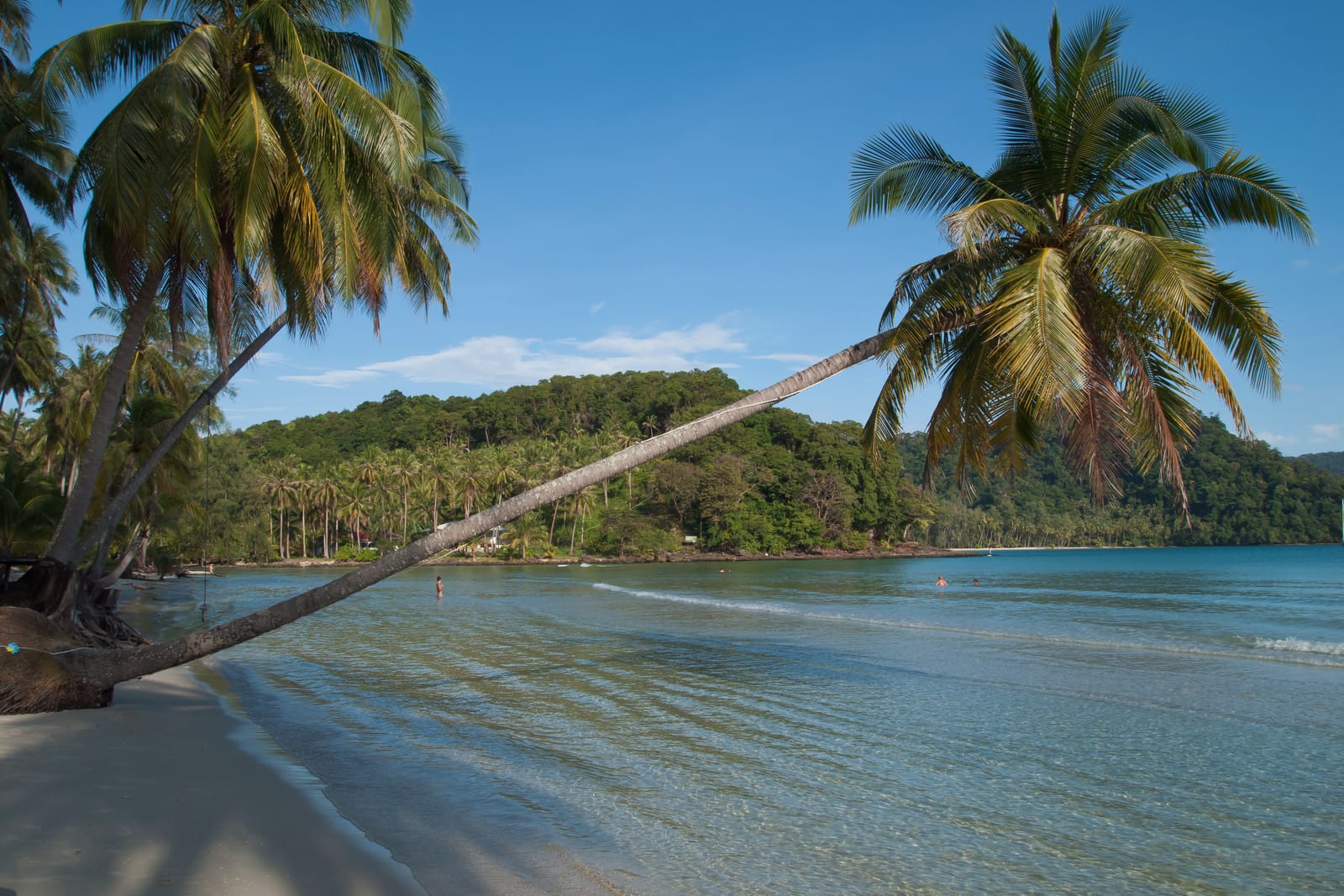
A shady white-sand beach lined with coconut palms, with shallow clear water that's easy for swimming. It's the densest stretch of accommodation and restaurants on the island, and the launch point for kayaking up to Khlong Chao waterfall. There's a leaning coconut palm dipping toward the sea that's a favourite photo spot.
Quiet/SnorkelingAo Tapao
A long white-sand beach shaded by coconut groves, with calm clear water that's great for swimming. In places you can spot shallow coral close to shore, so there's easy snorkeling, and the mood is quiet and peaceful.
SunsetAo Phrao
A beach nearly a kilometre long — reckoned to be the longest on the island — with a community village and Ao Phrao temple. It's one of the island's good spots to catch the sunset.
Photos/SunsetAo Bang Bao
A curved bay of golden sand around 800 metres long, with a seaside swing and a wooden pier stretching out over the water — great for photos and a vivid sunset view. On some Saturday evenings you can watch fireflies.
About the tides
On some beaches the tide drops a lot during the day, leaving the water shallow with rocks and coral poking out, which makes swimming awkward. Check the tide table with your accommodation first so you can time your swim or kayak right.
Fishing villages — Ao Salat and Ao Yai
If you want to see how Koh Kood people really live, head to the fishing villages. The two spots people stop at are Ao Salat in the north and Ao Yai in the east. Both are villages of wooden houses built on tall stilts over the water, with fishing boats moored in rows. You can stroll the wooden walkways, watch the fishermen mend their nets and head out to fish, and find fresh seafood to eat right by the water. The mood is quiet and slow, completely different from the main beach areas.
- Ao Salat — on the north of the island, this is a deep-water pier and fishing village with a viewpoint looking down over the wooden houses and fishing boats, plus waterside seafood restaurants to stop at.
- Ao Yai — a small, quiet fishing village on the east of the island, with wooden houses on tall stilts over the water. It's the island's main fishing base, and the atmosphere is raw and real.
- Local activities — at certain times there are sessions to learn the fishing way of life — coral planting, net mending, crab trapping. Ask the community or your accommodation when the next ones run.
About boats and timing
Ao Salat pier has boats leaving the island in the morning, some as early as around 8:30 a.m. If you plan to use this pier to come and go from the island, check the boat times with your accommodation well ahead. Things on the island cost more than on the mainland, so bring enough cash — some places only take cash.
Snorkeling — Koh Rang and spots around the island
The underwater world around Koh Kood is still in good shape. The most popular snorkeling spot is Koh Rang, a cluster of small islands to the south with colourful coral and clear water where you can clearly see schools of fish and sea life. Most people go on a boat tour leaving Koh Kood for a half- or full-day trip, stopping at several snorkeling points with all the gear provided. Beyond Koh Rang, there's also shallow coral close to shore at beaches like Ao Tapao, where you can do easy snorkeling on your own.
- Go with a boat tour — resorts and tour shops on the island offer half-day/full-day Koh Rang snorkeling packages including gear and lunch, and you can book ahead through your accommodation.
- Check the weather first — the sea here can change quickly. On rough days tours may cancel or switch spots, so listen to the boat crew first for your own safety.
- Best season to snorkel — the high season from November to April has clearer water and calmer seas, so the coral shows up well. During the monsoon the water turns murky and tours run less often.
- Look after the coral — don't step on or grab the coral, don't feed the fish, and use reef-safe sunscreen. Help keep it healthy so the next people get to see it too.
Planning a full trip in just a few days
Waterfall + main beaches
Giant Makha tree + fishing villages
Snorkeling at Koh Rang
Things to know before you go to Koh Kood
- It's a long trip — plan extra time — Koh Kood is at the far edge of Trat, so you'll take a vehicle down to Laem Sok or Laem Ngop pier and then a speedboat for about an hour and a half. Your first day is largely eaten up by travel, so build in plenty of time.
- Monsoon season May to October — the seas get rougher, boat schedules thin out, and many resorts close for renovations; at times boats stop running altogether. Always check with your accommodation and the boat company before booking.
- Getting around the island — renting a motorbike to explore on your own is popular, but some roads are narrow, steep, and winding. Ride slowly and carefully, wear a helmet, or use your resort's shuttle if you're not confident.
- Cash and signal — there are few ATMs on the island and many places only take cash, so bring enough. Mobile signal and power are limited in spots, so expect some corners where you can't get online.
- Things cost more on the island — drinking water, food, and equipment rentals are pricier than on the mainland because everything has to be shipped across the sea. It's not a rip-off — just budget a bit extra.
- Take your rubbish back — many waterfalls and beaches have no bins, so help out by carrying your rubbish back to dispose of at your accommodation, and keep the nature intact for the people who come after you.
Pull your Koh Kood trip together — see all the attractions, food, and places to stay across the island
See the Koh Kood travel guide →