🔄 Updated 21 Jun 2026
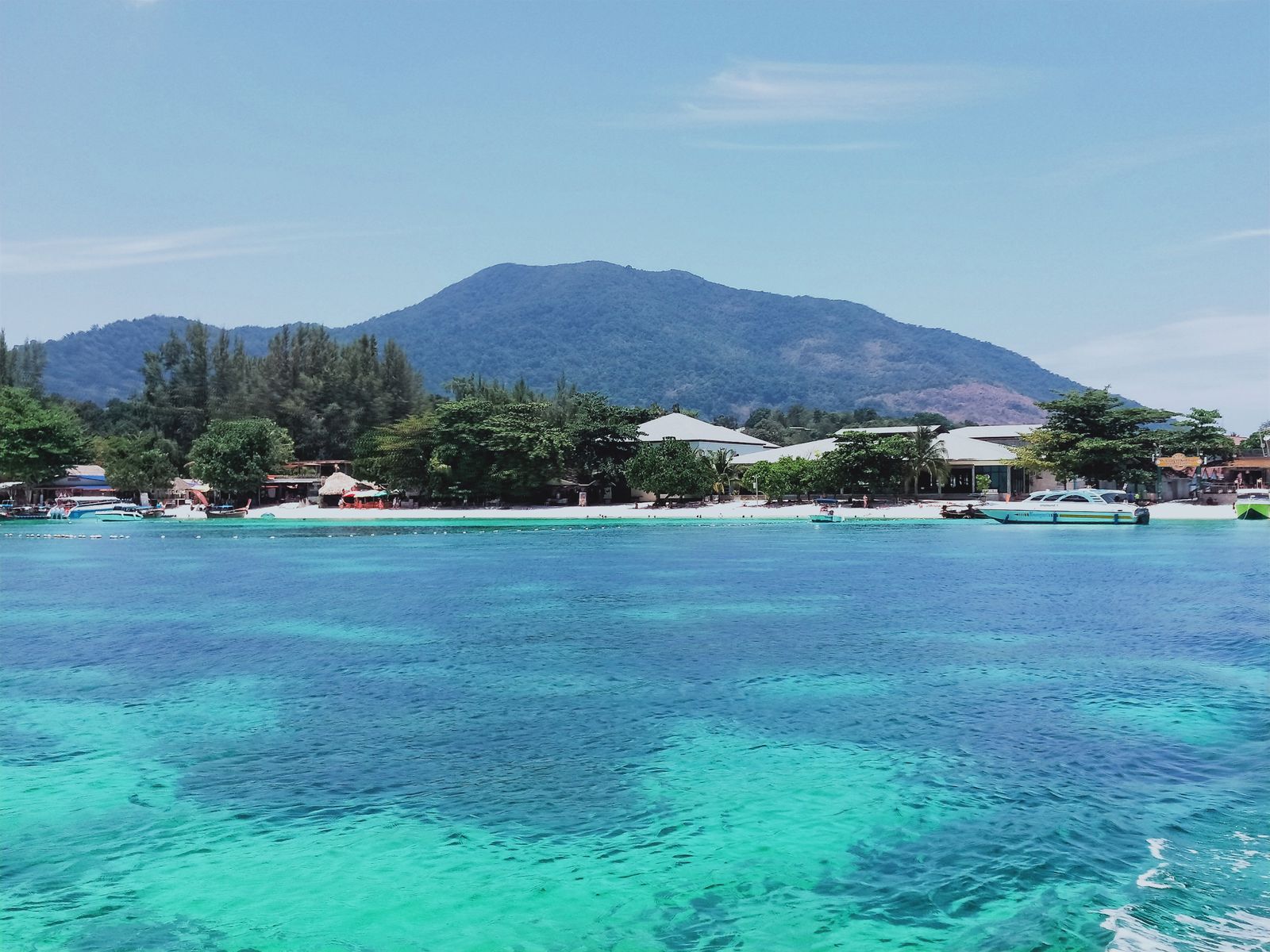
As the speedboat nears Koh Lipe, the sea slowly shifts from deep blue to emerald green until you can see the sandy bottom below. That's your sign you've entered Tarutao National Park. The Koh Lipe you came to relax on is just one small island within this larger park, and the fact that the whole area has been protected for more than fifty years is why the water here is still clear and the coral still healthy, unlike so many places that have faded under development.
What is Tarutao National Park?
Tarutao National Park lies in Satun province, at the very southern end of the Andaman coast, bordering the Strait of Malacca and Malaysian waters. It was established on 19 April 1974 as Thailand's first marine national park, covering around 51 islands across a mostly open expanse of sea. The main islands include Tarutao, Adang, Rawi, Lipe and Klang, plus many smaller ones. Its richness earned it status as an ASEAN Heritage Park back in 1984.
The park splits roughly into two island groups: the Tarutao group closer to the mainland (reached by boat from Pak Bara pier), and the Adang–Rawi group where Koh Lipe sits, further out in open water. Most visitors who come to Koh Lipe spend their time around the Adang–Rawi group, since it's closer and has the clearest water. Koh Tarutao itself is off in another corner and suits people who want history and nature more than clear-water beaches.
Want more out of Koh Lipe? Book tours & activities
Booking online ahead on Klook or GetYourGuide is usually cheaper than the gate and skips the queue. Pick only the experiences you actually want — prices and availability are shown live on each site.
Which islands are inside the Tarutao zone?
The islands people tend to visit or hear about on a Koh Lipe trip are nearly all inside the park. That means every time you set foot on one of these islands or snorkel these spots, you're in a protected area, you'll pay the park entry fee, and you're expected to follow the park's rules.
- Koh Lipe — the island with the hotels and shops, the main base for visitors, and inside the park zone too.
- Koh Adang — the park's second-largest island, directly across from Koh Lipe, with the Pha Chado viewpoint and a sub-station of the park office.
- Koh Rawi — Adang's big neighbour, with quiet white-sand beaches and snorkelling spots.
- Koh Hin Ngam — an island covered entirely in smooth, polished round stones, with a legend that curses anyone who takes a stone home.
- Jabang reef (Hin Jabang) — a submerged pinnacle covered in vivid soft coral, the headline snorkelling spot.
- Koh Yang, Koh Hin Son, Koh Dong — smaller snorkelling stops tours usually swing by.
- Koh Tarutao — the largest island and the park's namesake, over near the mainland, with a history as an old prison.
The short version
Put simply, almost everywhere a Koh Lipe snorkel tour takes you, Koh Lipe itself included, sits inside Tarutao National Park. The tour price usually does not cover the park entry fee, so set that cash aside separately.
Why is the water so clear and the coral so healthy?
People often ask why the sea around Koh Lipe is clearer than at many other islands. Part of the answer is location: this group sits far from the mainland and river mouths, so the water doesn't get clouded by sediment. The other part is being a protected park for more than fifty years, which has curbed construction, fishing and reef-damaging activity. The coral around Adang, Rawi and Jabang reef still shows both hard and brightly coloured soft coral, visible just below the surface.
But this richness is fragile. Coral grows incredibly slowly, taking years to gain just a little, and a single fin kick or one careless step can snap it in an instant. During busy periods, parts of the reef right off Koh Lipe have started to suffer from trampling and sunscreen. What keeps this place beautiful isn't just the park rules, but how each of us chooses to travel here.
How much is the Tarutao park entry fee?
Tarutao National Park charges an entry fee like most Thai marine parks. The current rate runs to roughly 40 THB for Thai adults and 20 THB for Thai children, while foreign adults pay around 200 THB and children around 100 THB. The ticket generally covers a single day or the period the park sets. Rates can change, so check at the fee collection point on the day.
This entry money isn't just a toll. It's the budget the park uses to look after the area: clearing rubbish off the islands, maintaining the reef, laying mooring buoys so boat anchors don't tear up the coral, and paying patrol staff. Paying the fee is part of keeping the sea you came to enjoy around for the future. Seen that way, the price is a real bargain.
- Thai nationals adults ~40 THB · children ~20 THB
- Foreigners adults ~200 THB · children ~100 THB
- Snorkel tour fees usually don't include the park entry fee, so keep separate cash ready
- No ATM on the island carry enough cash for the park fee, boats and food
Honest note on cash
Koh Lipe has no ATM and many shops take cash only. Prices on the island already run higher than the mainland because everything has to be shipped across the sea. Withdraw enough cash back at Pak Bara or Hat Yai to cover the park fee, tours, boats and food for the whole trip.
How to travel here without harming the reef
Tarutao still looks this good because there are rules and people working to protect it. As visitors, we can help too, starting with small things while snorkelling and walking around. Do these and the sea stays here for the next generation to enjoy.
- Don't touch, step on, or collect coral and stones coral grows very slowly and breaks easily, and at Koh Hin Ngam there's a strict rule against taking stones off the island.
- Don't feed the fish or wildlife feeding throws the ecosystem off, makes fish fight over food and changes their behaviour.
- Carry your rubbish back to Koh Lipe the small islands and many snorkel spots have no bins, so every piece of trash goes back in your bag.
- Use reef-safe sunscreen some ingredients in regular sunscreen harm coral; wearing a rash guard instead is even better.
- Don't stand on or kick the sand and coral with your fins floating still and just watching is safer for both you and the reef.
- Respect mooring buoys and no-entry zones the park places buoys and marks zones to protect the most fragile spots.
Koh Tarutao — the island that named the park
A lot of people don't realise that Koh Tarutao, the park's namesake, isn't the same island as Koh Lipe and sits in a different corner entirely. Koh Tarutao is the park's largest island, close to the mainland and a short boat ride from Pak Bara pier. It has a history as a prison and political detention colony before World War II. During the war, supply shortages even led to piracy here, which became part of the island's lore.
Koh Tarutao itself leans toward nature and history, with waterfalls, caves, mangroves, viewpoints and the ruins of the old prison to walk through. It suits people who want a learning trip more than white sand and clear water. If you have the time and an interest in history, you can plan a separate trip to Tarutao apart from Koh Lipe, but most people who stay on Koh Lipe never make it out there since the two are fairly far apart.
The park's open and closed seasons
The key thing to know before you plan: the Adang–Rawi group where Koh Lipe sits has a closed season roughly from 16 May to 15 November. This is the monsoon, with rough seas and high waves. Many speedboat ferries stop running, a lot of hotels and shops on Koh Lipe close, and the park shuts the snorkel spots and islands in the zone for safety and to let nature recover.
The best and safest time to visit is the dry season, roughly mid-November to mid-May, when the water is clear, the waves are calm, and the boats are all running. If you're aiming for true high season, that's December to April, though it's busier and accommodation costs more. Anyone who can take the gamble at the start or end of the season will find fewer people and lower prices.
Honest note on weather and safety
Even in the open season, the sea can turn rough on a given day. Before every boat trip or snorkel tour, check that day's weather and sea conditions. If the boat operator or the park says the sea is too rough to go out, listen and don't push it. Safety always comes before a nice photo.
Getting here and where you enter the park from Koh Lipe
Starting from the mainland, most people take a speedboat from Pak Bara pier in Satun, which takes about 1.5 hours to Koh Lipe. Some routes run from Tammalang pier or connect from Langkawi in Malaysia. When you reach Koh Lipe, the boat moors off Pattaya Beach and you transfer to a longtail to shore. This is usually where you pay the park entry fee and the Pattaya Beach fee.
Once you're on Koh Lipe, getting to the other islands in the zone like Adang, Rawi, Hin Ngam or Jabang reef works two ways: chartering a longtail boat and picking your own stops, or joining a set snorkel tour arranged by zone (inner and outer zones). The tour is easier and better value if you're travelling solo or as a pair, while chartering suits groups who want to set their own schedule.
- Speedboat from Pak Bara to Koh Lipe ~1.5 hours · several runs a day in open season
- Entering Koh Lipe via Pattaya Beach transfer by longtail from the mooring · the park fee point is usually here
- Inner/outer zone snorkel tours the per-person price beats chartering for 1–2 people
- Charter a longtail choose your own islands and timing · suits larger groups
Sample itinerary — exploring the Tarutao islands from Koh Lipe
Inner-zone snorkel tour
Climb Koh Adang for the high view
Beach day + morning market
Plan your whole Koh Lipe trip — hotels, beaches and snorkel trips inside the park
See the full Koh Lipe travel guide →