🔄 Updated 21 Jun 2026
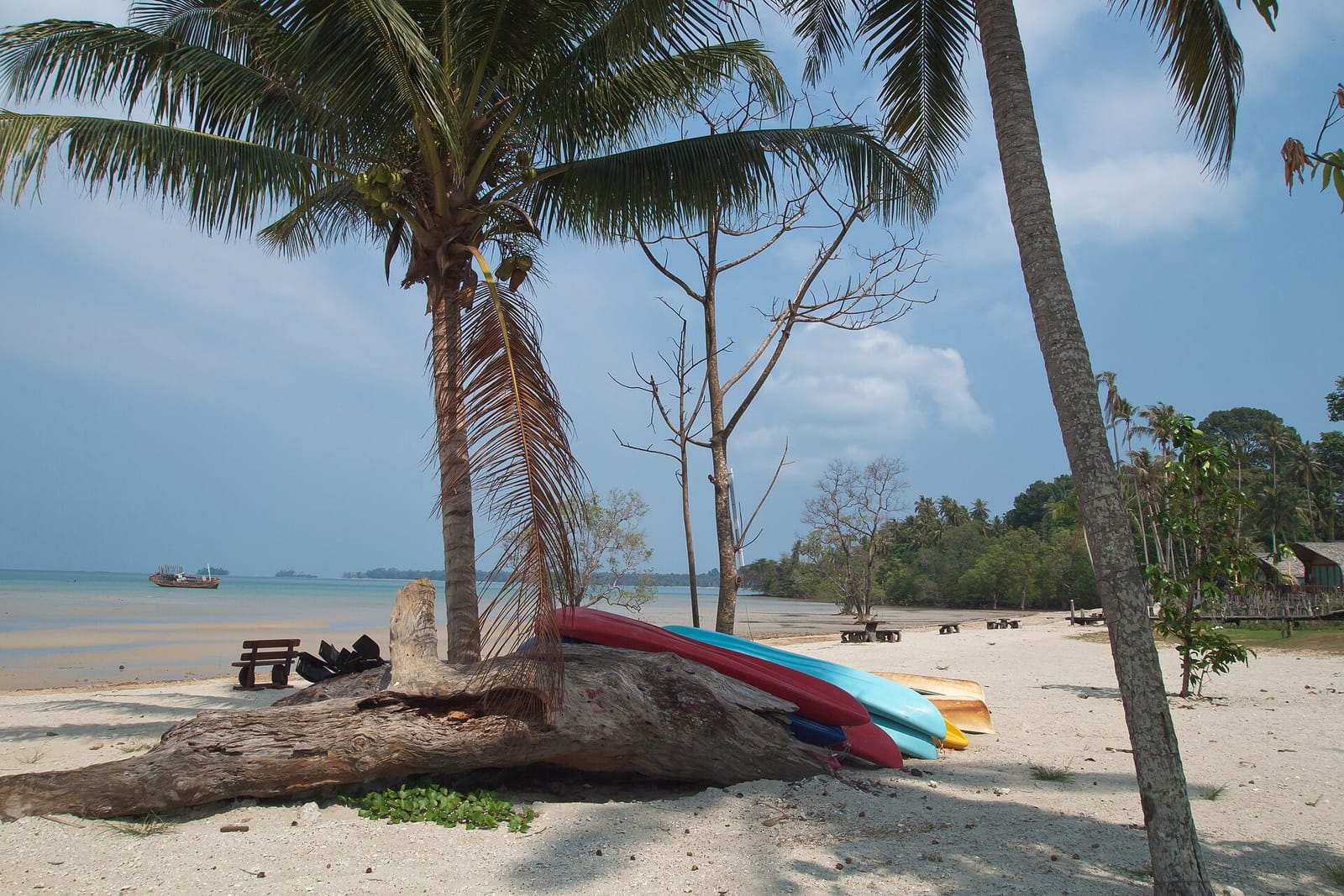
Koh Mak is small enough to cycle right around in a single day, but it has more going on than you'd expect. The two main beaches sit on opposite shores with completely different moods, the waters around the island have plenty of little islets you can paddle out to and snorkel, and the roads inland are made for unhurried riding. The real draw of Koh Mak is the quiet — if you want a beach that isn't packed with people, this one delivers.
Read before you plan
Koh Mak's main tourist season runs November to April. During the monsoon, May to October, the swell picks up, and several ferry and speedboat operators cut their runs or stop altogether. Some hotels and restaurants close for the whole stretch. If you're going in the rainy season, always check the boat schedule and your accommodation in advance.
The two main beaches — Ao Kao and Ao Suan Yai
Koh Mak's two main beaches sit on opposite sides of the island and feel clearly different. Most people pick one side to stay on, then cycle or scooter across to the other for the day. It's not far — only a few minutes either way.
Ao Kao — southwest shore
The island's longest stretch of sand, with clear water you can swim in, and the liveliest part of the island. Resorts, restaurants, cafes, and beach bars line up here, and in the evening some bars put on live music. Good for anyone who wants a pretty beach with food and things to do close at hand.
Ao Suan Yai — northwest shore
A long curving beach with calm water, quieter than Ao Kao. Looking out you can see Koh Kham and Koh Kradat, and it's the best sunset spot on the island. There are bars by the pier where you can just sit and unwind — good for anyone after some peace and quiet.
Beyond these two, there's also Ao Pra and Ao Lom on the west side, both quiet and very lightly visited — good if you want to escape the bustle a step further. And Laem Son on the northeast is still almost entirely natural; it's harder to reach but the quietest of the lot.
Which side to stay on
Want restaurants, bars, and cafes near your room? Stay at Ao Kao. After quiet and sunsets? Stay at Ao Suan Yai. Either way, you can cycle between the two on the same island.
Want more out of Koh Mak? Book tours & activities
Booking online ahead on Klook or GetYourGuide is usually cheaper than the gate and skips the queue. Pick only the experiences you actually want — prices and availability are shown live on each site.
Snorkeling at Koh Kham and the islets around it
Koh Mak's main draw on the water is the cluster of little islets floating around it. You can paddle out by kayak or take a boat and snorkel easily — the water is shallow and clear, which makes it good for beginners and families. You'll spot clownfish, butterflyfish, and damselfish without much trouble.
Koh Kham
A small island off Ao Suan Yai, with black volcanic rock against white sand, clear water, and a lovely view. You can kayak out from Ao Suan Yai or take a boat. It's the most popular snorkeling spot on Koh Mak.
Koh Rayang Nok and Koh Rayang Nai
Two small islands off Ao Kao that you can kayak out to from the beach. Clear water with shallow coral, good for an easy snorkel in the calmer morning hours.
Koh Pii
A small island to the west, near Ao Lom, with good coral, clear water, and few people. Most visitors get here on a half-day boat trip.
Koh Rang islands — national park
The best snorkeling spot in this area, inside Mu Ko Chang National Park. The water is very clear and the coral is healthy, but it takes a full-day boat trip to get out there, with a park fee on top.
If you want to scuba dive, the island has dive shops like Koh Mak Divers, Thai Ocean Academy, and Wayloon that run courses and fun dives from around 3,100 THB. Wreck dives on the HTMS Koh Chang start around 3,900 THB (these usually need a minimum group size).
Check before you board
Snorkeling around Koh Mak depends heavily on the weather. In the monsoon the swell is strong, underwater visibility is poor, and many operators stop running. Before you book, check the forecast and ask the operator straight what the water is like — better than turning up only to have it canceled.
Cycling around the island
Koh Mak is fairly flat, the roads are quiet, and there's little traffic, which makes it one of the most enjoyable islands in Thailand to cycle. The routes run through coconut and rubber plantations and quiet fishing villages. Riding around the island at an easy pace takes about half a day if you stop for photos and water breaks.
- Bike rental — around 200–250 THB/day; many places to stay lend or rent them on site.
- Scooter rental — around 250 THB/day, handy if you'll be crossing the island a lot or want to skip the heat.
- Inland roads — a mix of paved and dirt tracks, with the odd hill, so wear shoes you're comfortable riding in.
- Top up on water — shops on the island are limited, so carry water with you, especially in the strong afternoon sun.
When to ride
Riding in the morning before 10am or in the late afternoon before sunset is far more comfortable. Avoid midday, when the sun is fierce and there's not much shade along the way.
Sunset spots
Koh Mak's west side faces the open sea, so the sunset is lovely from almost any beach, but there are a few spots the locals like to sit and wait for it.
Laem Tukata
A viewpoint on a rocky headland looking out toward Koh Rayang. You can cycle or scooter out to it, and it's one of the prettiest sunset spots on the island.
Ao Suan Yai pier and beach bars
Sip a drink by the pier on the Ao Suan Yai side and watch the sun drop straight into the sea. Quiet, easygoing atmosphere.
Ao Kao beach bars
The Ao Kao side has beach bars with live music in the evenings — good for anyone who wants their sunset with a drink and a slightly livelier scene.
Visiting Koh Mak the low-carbon way
Koh Mak has positioned itself as a Low Carbon Destination for years. The community and the businesses on the island work to cut waste and keep the nature intact, so it's not hard to visit here with a light touch.
- Choose a bike over a car — the island is small and flat, so you can ride to nearly everywhere, cutting both cost and fumes.
- Bring a water bottle and a cloth bag — to cut down on plastic bottles and bags. Shops on the island are limited anyway, so it's easier to bring your own.
- Carry your trash back out — especially on boat trips and kayak runs to the little islets. No one collects rubbish out there, so whatever you bring, you take back.
- Don't step on or take the coral — watch your feet so you don't touch the coral when snorkeling, and don't take shells or coral home as souvenirs.
Bring cash
There are few ATMs on the island, and they sometimes run out of cash. Many small shops take cash only, and prices here run higher than on the mainland because everything has to be shipped across the sea. Bring enough cash for the whole trip and you'll have an easier time of it.
A short 2-day, 1-night plan
If you're short on time, you can cover Koh Mak in a 2-day, 1-night window. Here's a rough plan you can adjust around wherever you're staying.
Arrive — two beaches — sunset
Snorkel at Koh Kham — head back
If you have more time, it's easy to add days. Koh Mak is the kind of island that gets better the longer you stay, because its rhythm is slow and unhurried — riding bit by bit, lying on the beach bit by bit.
See where to stay and the full Koh Mak travel guide
Open the Koh Mak guide →