🔄 Updated 21 Jun 2026
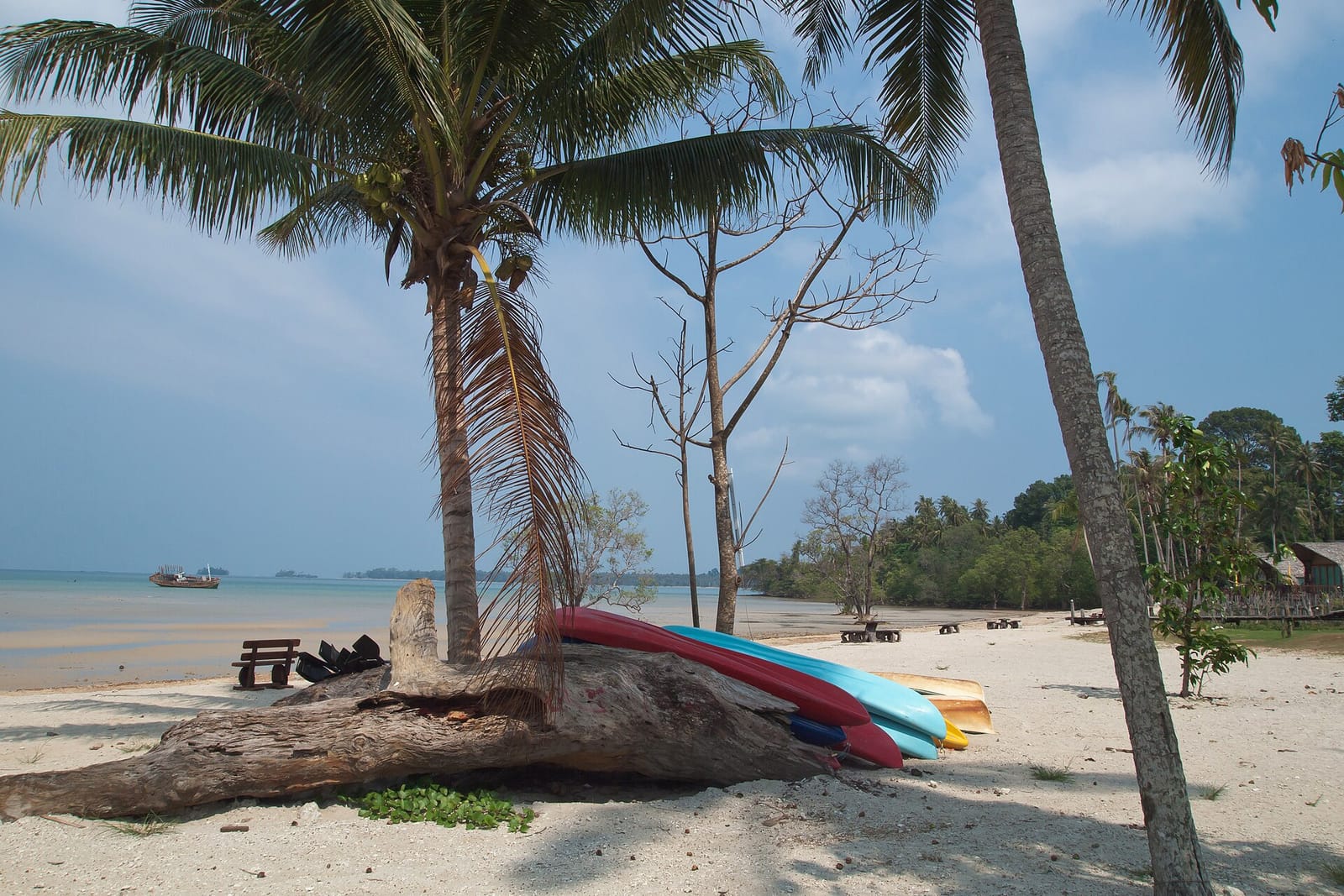
Koh Mak is a medium-sized island in Trat province, sitting between Koh Chang and Koh Kood. The island is flat, easy to cycle around, and the vibe is a quiet beach spot where people actually come to rest — not to party. It's known as a Low Carbon island that takes the environment seriously, with locals sorting waste and cutting down on energy use. Get a feel for the island's rhythm before you go and your first trip will run a lot smoother.
How to get to Koh Mak
Koh Mak has no airport, so you first travel to Trat by road, then catch a boat at Laem Ngop pier (Krom Luang Chumphon pier), about 20–30 minutes by car from Trat town and Trat airport. From Bangkok it's roughly a 5–6 hour drive or bus ride to Trat, or you can fly into Trat airport and continue to the pier by car.
- Speedboat — the fastest option at around 50 minutes, roughly 450 THB per adult one way (about 1,100 THB round trip). The main operators are Leelawadee (docking at Makathanee, Ao Kao) and Panan (docking at Koh Mak Resort, Ao Suan Yai).
- Boonsiri ferry — slightly slower at about 1 hour, around 400 THB. Good if you're hauling a lot of luggage.
- Koh Mak has several piers — Ao Kao, Ao Suan Yai, and Ao Nid. Each operator docks at a different pier, so check which one matches your accommodation before booking, and you'll avoid a long ride across the island.
Check before you book
Boat schedules change with the season. In high season there are several runs a day, but in monsoon season it drops to 1–2 runs daily and depends on the weather. Always call to confirm the boat times with the operator or your accommodation before you travel — don't rely on an old schedule from a website.
Book the activities in your Koh Mak trip ahead
Booking online ahead on Klook or GetYourGuide is usually cheaper than the gate and skips the queue. Pick only the experiences you actually want — prices and availability are shown live on each site.
When to come, and when the boats stop
The best time for Koh Mak is November to April: clear water, light waves, plenty of boat runs, and hotels and restaurants fully open. May to October is monsoon season — bigger waves, heavy rain, and some operators cut runs or stop altogether. The routes linking Koh Chang–Koh Mak–Koh Kood often shut down during this stretch, and many hotels and restaurants close for the season, reopening around early November.
Straight talk
If you come during monsoon season, be ready for fewer open restaurants and activities. Snorkeling trips can get cancelled when the waves pick up, and if it rains hard the boat back to the mainland may be delayed. Build in a buffer day before any flight or important appointment.
Money and what to pack
Koh Mak is a small island with limited shops and services, and a lot of goods have to be shipped over by boat. That makes prices higher than on the mainland — water, food, and vehicle rentals all cost more. Come prepared on the cash front.
- Bring extra cash — there are ATMs on the island but only a few, and they sometimes run out of money. Many small shops take cash only, so withdraw enough on the mainland to cover the whole trip.
- Prices run higher than the mainland — made-to-order dishes start around 60–250 THB, Western menus around 150–400 THB, and bottled water and everyday items cost more than usual too.
- Medicine and essentials — bring your own prescription meds, sunscreen, and mosquito repellent. Pharmacies on the island are few and far between.
- Power strip and a power bank — some places have unstable power at night, so having these on hand gives you peace of mind.
Getting around the island the easy way
The island is fairly flat and the main road isn't long, so most people cycle or rent a motorbike to explore on their own. Many places lend bikes for free or rent them out, which fits the Low Carbon island concept nicely. If you ride a motorbike, watch out for stretches of sandy road — they get slippery in the rain.
Ao Kao
A white-sand beach on the south side with shallow, rock-free water that's easy to swim in. This is where you'll find the most accommodation, restaurants, and beach bars.
Ao Suan Yai
The island's longest beach, on the north side, with shady coconut palms and a lovely sunset view. Great for an easy evening hangout.
Ao Nid
Over by the pier, with seafood spots and rice-dish eateries at friendly prices. Quieter than the other sides.
Koh Mak 3-day, 2-night plan
This plan is built for first-timers: mostly relaxing, with one day of sea activities, plenty of buffer for travel, and nothing crammed too tight. Adjust it to which side you're staying on and the weather.
Arrive, settle in, get to know the beach
Sea day — snorkeling around nearby islands
Soak up the last of it, then head back
Etiquette on a low-carbon island
- Take your trash with you — it's a small island with a limited waste system. Carry your own trash bag, dispose of it in the right place, or bring it back to the mainland.
- Cut single-use plastic — bring your own water bottle and cloth bag to reduce waste at the source.
- Cycle instead of driving — the island is flat and easy to ride, which lowers your carbon footprint and lets you soak up the island vibe.
- Respect the coral and sea life — don't step on or grab coral while snorkeling, and use reef-friendly sunscreen.
Looking for a beachfront stay on Koh Mak? See our hand-picked options.
See the Top 10 Koh Mak stays →