🔄 Updated 21 Jun 2026
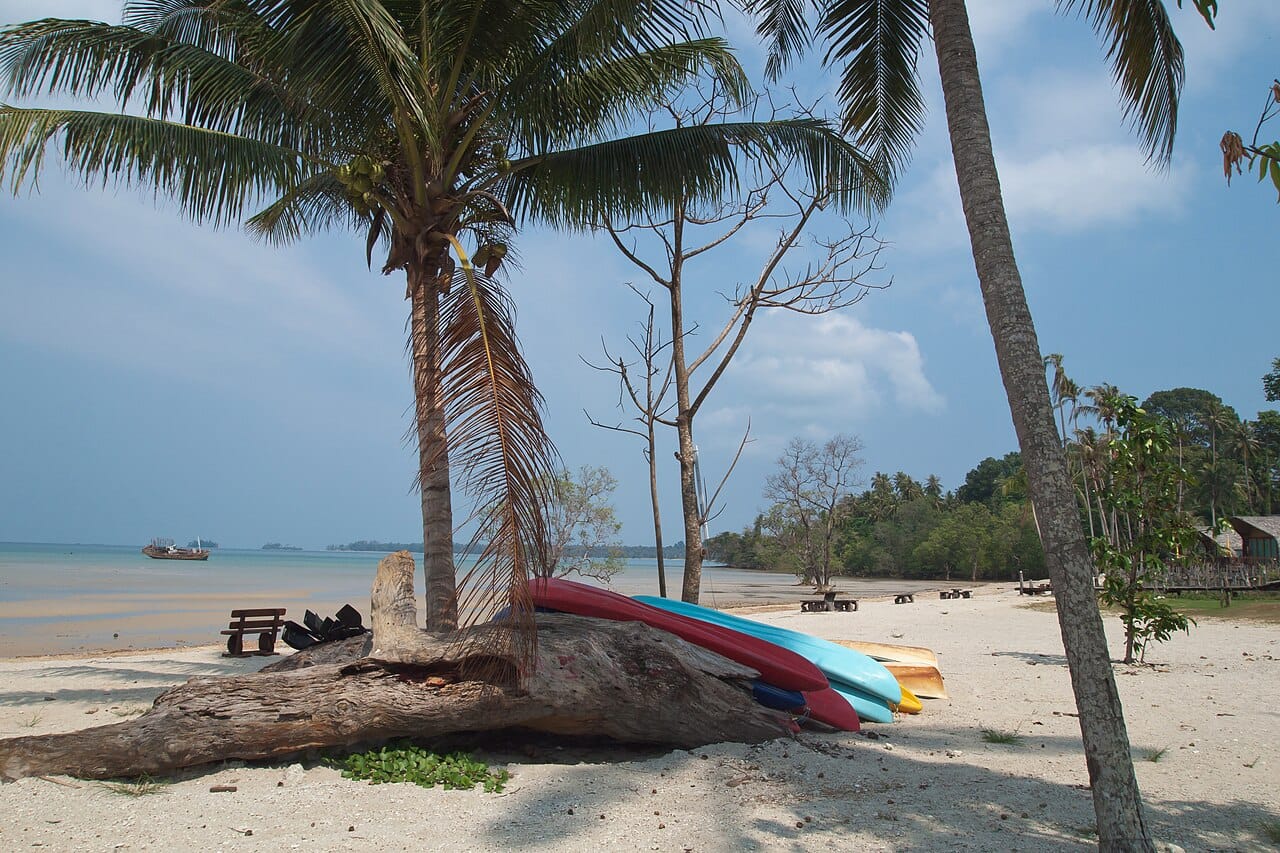
Koh Mak sits in the eastern Gulf of Thailand, between Koh Chang and Koh Kood. It's the private island of an old local family, and villagers still work rubber and coconut plantations here, so the mood is far quieter than Koh Chang or Koh Samet. No big clubs, no buzzing walking street. The appeal is the calm, the clear water, and cycling along the beach. But being a small, far-off island, the travel logistics, the seasons, and your prep matter more than you'd expect. We'll walk through it one piece at a time.
Open season Nov–Apr is the best time to go
Koh Mak is at its best from November through April. The northeast monsoon blows gently, skies are clear, the sea is calm and clear — great for snorkelling over the coral and swimming off the beach. Every ferry operator runs a full schedule, all the accommodation is open, and restaurants and rental shops are operating as usual. This is the island's true high season: room rates peak and the good places fill up fast, especially over New Year and Songkran.
- Nov–Feb — the best stretch. Clear skies, calm seas, cool and comfortable, ideal for snorkelling and cycling around the island. It gets busy over the long holidays.
- Mar–Apr — the sea is still lovely but it turns very hot, Songkran is crowded, and this is the last window before the island closes down.
- May and Oct — the shoulder. Rain alternates with sun, prices start dropping, some ferries begin to stop, and a few places start closing.
- Jun–Sep — full monsoon. Lots of rain, strong swells, most accommodation and shops shut. Not recommended for a first visit.
Straight talk
Koh Mak isn't a year-round island like Phuket. If you're planning a trip, aim mainly for Nov–Apr. Anyone booking May–Oct should phone the accommodation and the ferry company every time to confirm they're actually still open — don't just trust an online booking page.
Monsoon May–Oct: resorts and ferries really do close
This is the part to be clearest about, because people get caught out a lot. Koh Mak enters its low season from mid-May right through to late October. The wind and swell pick up, heavy rain comes in spells, and crucially, a lot of accommodation closes for the season because there are too few visitors to make staying open worthwhile. Many resorts shut from around mid-May to 31 October, then reopen in early November. The inter-island ferries thin out a lot too.
- Inter-island ferries stop — the Koh Chang–Koh Mak–Koh Kood route doesn't run from around mid-May to 31 October. To island-hop you have to backtrack to the mainland first.
- Mainland ferries cut back — from Jun–Oct it's mostly just the big boats like Boonsiri still running. Many small speedboat operators stop, and trips may be delayed or cancelled depending on the swell.
- Many places close — lots of resorts shut for the whole season. The ones that stay open usually slash prices, but your choices shrink a lot.
- Restaurants and rental shops close too — the island goes very quiet, and some days it's hard to find an open eatery. You'll lean mostly on your accommodation's kitchen.
If you want to try the monsoon anyway
Cheap prices and an island at its quietest are genuine upsides — but accept the risks: ferries may be delayed, it can rain all day, and shops are shut. Book accommodation that confirms it's open and has its own kitchen, keep some spare cash and time in case the ferry is delayed, and don't build your plans around snorkelling.
Getting to Koh Mak — piers and ferry prices
Koh Mak has no airport, so you ride to Trat first, then catch a ferry from the mainland. It's about 350 km from Bangkok to the pier — roughly 5–6 hours by car or minivan — then another 50 minutes to an hour by boat. There are two main piers: Laem Sok Pier (the big Boonsiri boats) and Krom Luang / Laem Ngop Pier (speedboats). Boats arrive at Ao Nid Pier on the island.
Boonsiri ferry — Laem Sok Pier
A big two-deck catamaran, the most comfortable ride: air-con on the lower deck, open-air up top. It's the only operator still running through low season, and it offers connecting minivan transfers from Bangkok. Best for first-timers and rougher seas.
Speedboats from Krom Luang (Laem Ngop)
Several small operators — Panan, Leelawadee, Suansuk — with multiple departures a day. A touch faster than the big boats and good if you're in a hurry, but they bounce more in the swell, and many stop running during the monsoon.
Inter-island ferries (from Koh Chang / Koh Kood)
If you're touring several Trat islands, boats link Koh Chang–Koh Mak–Koh Kood, but only in high season, Nov to mid-May. Outside that, you have to backtrack to the mainland before crossing to another island.
Book the ferry ahead
Boats fill up fast over long holidays, so reserve your seat and a parking spot at the pier in advance, especially if you're driving and need to leave the car on the mainland. Parking at the pier runs about ฿70–100 a night. Check the last ferry of the day carefully, since most stop running by mid-afternoon — miss it and you're spending a night in Trat.
Island goods cost more, shops and services are limited
Koh Mak is a small island where everything has to be shipped over by boat, which makes prices on the island noticeably higher than on the mainland — drinking water, food, fuel, and everyday supplies alike. The island's convenience stores are little minimarts; there's no 7-Eleven. When something sells out, it's gone until the next boat. Restaurants and rental shops are limited too, opening and closing with the season. Set your expectations: it isn't as convenient as the city.
- No 7-Eleven — just small minimarts selling water, snacks, mosquito repellent, sunscreen, prepaid SIM top-ups, and basic essentials.
- Water and food cost more than the mainland — a bottle of water and a plate of food run higher than in town, because of the cost of shipping it across by boat.
- Fuel comes from bottles / hand pumps — you can fill up, but it costs more than a standard mainland station. Fill the tank in Trat before crossing and you'll save.
- Power cuts in spells — the lights flicker or go out briefly at times, so it's worth carrying a power bank.
Bring enough cash — ATMs are hard to come by
Get this wrong and you'll really struggle. On Koh Mak, ATMs are very scarce and tend to run out of cash fast. Many shops and rental places take cash only. Some mid-range and up accommodation can take cards, but you can't count on all of them. The advice is to withdraw enough cash back in Trat before boarding the boat — enough to cover accommodation, ferries, rentals, food, and snorkelling tours for the whole trip.
- Withdraw in Trat before crossing — Trat town and the area near the piers have ATMs for every bank, the safest place to load up on cash.
- Bring more cash than you think you'll need — pad it for emergencies like medicine, a delayed ferry, or tours you pay for in cash.
- Split your cash in two places — in case a bag is lost or gets wet, keep some of it stashed separately.
- Check with your accommodation about cards — if they take cards you can carry a bit less cash, but don't rely on cards alone.
Getting around the island — bicycle or scooter
Koh Mak has no buses or public transport. Getting around relies on two main options: a rented bicycle or scooter. The island is small and the roads are fairly flat, so cycling is an easy way to get around and fits the low-carbon vibe. If you don't fancy long rides, rent a scooter. Some places have electric golf carts and small songthaews running shuttle runs now and then.
- Bicycle about ฿150–200/day — easily covers the main beaches and suits this island best.
- Scooter about ฿250–300/day — faster and reaches the farther beaches. You'll need a licence and a helmet.
- Kayak about ฿150/hr or ฿500/day — paddle along the beach over shallow, clear water.
- Songthaew / golf cart about ฿50/person — runs in spells, not all the time. Ask your accommodation.
Check the vehicle before you rent
Photograph the whole vehicle before you take it every time, check the brakes and lights, and fill up beforehand since fuel on the island costs more. Some roads are gravel and turn slippery after rain, so ride slowly and always wear a helmet.
Snorkelling — check the weather first
Koh Mak's highlight is the snorkelling tours around the nearby islands — Koh Rang, Koh Kradad — where the water is clear and the coral is lovely when skies are open. But these small-boat tours depend entirely on the wind and swell. On rough-sea days, tours are cancelled outright for safety. A snorkelling tour runs about ฿800–1,000 per person, with gear and lunch included on some packages.
- Check the forecast and ask the tour operator before you pay. On rough-sea days, don't push it.
- Pick a boat with enough life jackets and a skipper who knows the spots. Wear a life jacket the whole time, even if you can swim.
- Use reef-safe sunscreen — it helps protect the coral, and Koh Mak takes its environment seriously.
- Don't touch or step on the coral and don't feed the fish. Keep the reef healthy for the people who come after.
Travel low-carbon — pack out your trash
Koh Mak has billed itself as one of Thailand's low-carbon islands for years now. The community works to keep it clean and cut plastic waste, because a small island can't easily handle its own rubbish — everything has to be shipped back to the mainland. As a visitor, you can help in simple ways: reduce the waste you create and pack out your own, instead of leaving it on the beach or in the sea.
- Carry your own water bottle — refill at your accommodation instead of buying plastic bottles, cutting waste at the source.
- Pack out your own rubbish — especially anything that won't break down. Bag it and carry it back to the mainland if you can't find a bin.
- Say no to plastic bags and straws — bring your own cloth bag and reusable straw.
- Cycle instead of taking a scooter for short trips, cutting fumes and fitting the island.
Small island, big heart
The reason Koh Mak stays quiet and clean day to day is a community that looks after it together. Visitors who respect these small rules are why the island is still beautiful. No loud noise late at night, no littering, and supporting local shops — that's what genuinely sustainable travel looks like.
Daily budget — a realistic 2026 estimate
Koh Mak isn't a cheap island, because everything has to be shipped across and the cost of getting there is high too. But with good planning — leaning on a bicycle and your accommodation's kitchen — you can keep it in check. Here's a rough per-person, per-day range (not counting the road/ferry cost of getting to the island).
Budget
Stay in a simple guesthouse or bungalow, eat at local spots and your accommodation's kitchen, get around by bicycle, and skip a daily snorkelling tour.
Mid-range
A beachfront resort with breakfast, the odd seafood meal, a rented scooter, and one day out on a snorkelling tour.
Comfort
A private-beach resort with a good room, the best seafood, a private snorkelling tour, all about relaxing fully.
- Round-trip ferry about ฿800–1,100/person depending on operator and season — the first chunk to budget for.
- Pier parking about ฿70–100/night if you drive yourself.
- Snorkelling tour about ฿800–1,000/person, gear included.
- Meals a bit higher than the mainland; eating at your accommodation's kitchen or local spots helps you save.
Checklist of what to pack
- Enough cash for the whole trip (withdraw in Trat before the ferry)
- Power bank + charging cable (power cuts in spells)
- Reef-safe sunscreen + hat / sunglasses
- Personal medication, seasickness tablets, mosquito repellent, basic first-aid
- Personal water bottle + cloth bag to cut plastic waste
- Foldable rain jacket, if you go early or late in the season
- Strap-back sandals + a waterproof case for your phone
- A copy of your ID/passport + emergency numbers, saved somewhere
Ready? Let's plan a full Koh Mak trip
See the Koh Mak travel guide →