🔄 Updated 4 Jun 2026
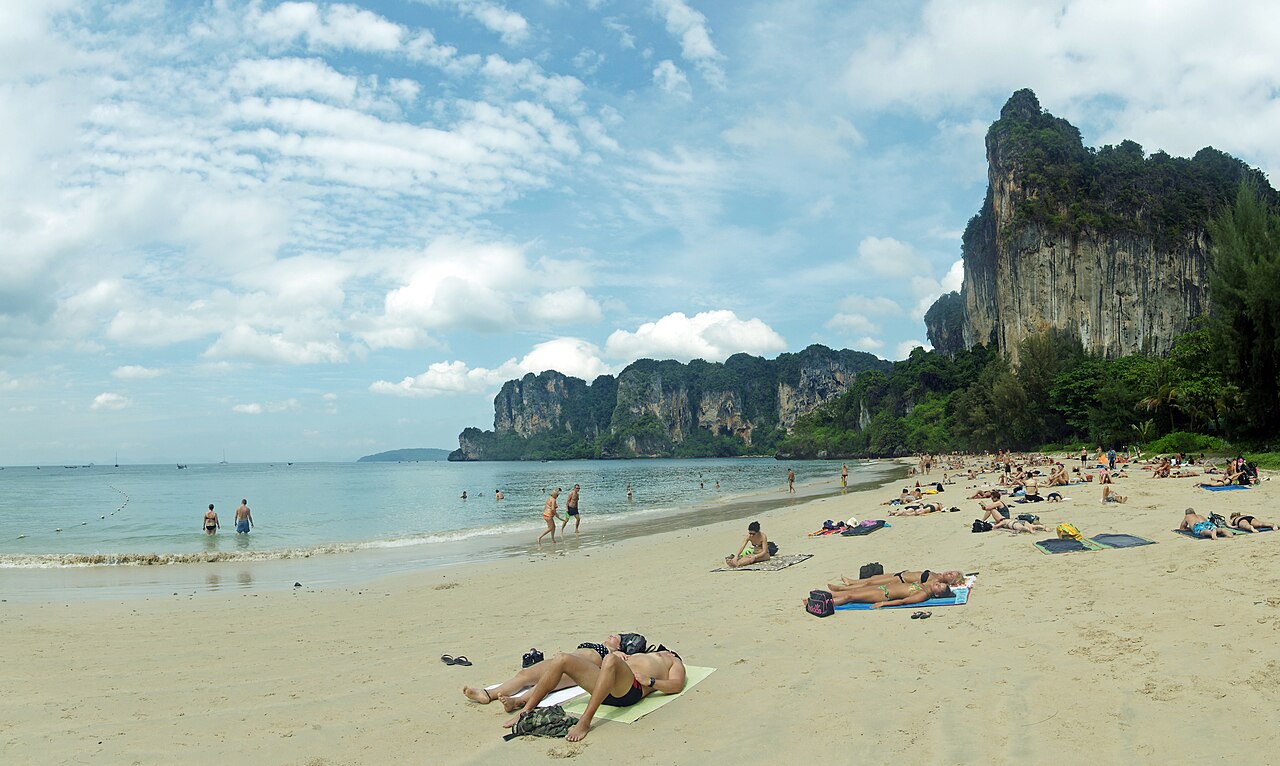
Krabi and Phuket are Andaman beach towns on opposite sides of Phang Nga Bay, and they look nothing alike. Krabi is all about tall limestone cliffs and quiet, clear water, while Phuket is a big island with beaches, an old town and a real nightlife scene. Putting them in one trip gives you two very different moods. The key to this plan is to base your first two nights on the Ao Nang side of Krabi, because that's exactly where the ferry to Phuket leaves from — no need to double back into Krabi town and waste time.
On the order of the towns, we start in Krabi and finish in Phuket because Phuket has an international airport with far more flights, so flying home is easier. If your tickets land in Krabi and leave from Phuket (or the other way around), this plan flips with no trouble, since the ferry runs both directions every day.
Trip overview and where to sleep each night
- Nights 1–2 — Ao Nang, Krabi. This is Krabi's main accommodation area, with a beach, restaurants and convenience stores, and it's the launch point for boats to Railay and the Separated Sea, as well as the ferry pier across to Phuket.
- Night 3 — Phuket Old Town. Great for anyone who wants to wander and photograph the Sino-Portuguese shophouses, eat local food, and stay close to the Sunday walking street.
- Night 4 (if you continue) — Patong / Karon / Kata side. If you want to close out the trip with the beach and nightlife, move over to the west coast for your last night. But if the trip is only 3 nights, you can stay on in the Old Town and do the beaches as a day trip.
Pick your season carefully
On the Andaman coast, the clear-water season runs roughly November to April — calm seas, all the boats running. May to October is the monsoon rainy season, with rough waves, and the ferry and island tours may be cancelled on some days. If you come in the rainy season, build in a backup plan and always check the weather with the pier first.
Book the activities in your Krabi trip ahead
Booking online ahead on Klook or GetYourGuide is usually cheaper than the gate and skips the queue. Pick only the experiences you actually want — prices and availability are shown live on each site.
Day one — arrive in Krabi, Ao Nang and Tiger Cave Temple
Mainland Krabi + Ao Nang in the evening
Day two — Railay, Phra Nang Cave and a half-day at the Separated Sea
Today is the sea highlight of the Krabi side. In the morning you head to Railay and Phra Nang, reachable only by longtail boat (there's no road in), then in the afternoon you do the 4 Islands and Separated Sea tour — the sandbar that surfaces at low tide and lets you walk between the islands. If you'd rather not wear yourself out, doing just one of the two is plenty.
Railay in the morning + Separated Sea in the afternoon
Book island tours with a reliable operator
Krabi has plenty of island-tour operators, with prices that vary by boat type and number of islands. Choose one that provides life jackets for everyone, states clearly whether the national park fee and food are included, and don't board if the sea is unusually rough. Safety always comes first.
Day three — cross from Krabi to Phuket and walk the Old Town
Today is the moving day. There are two main ways to do it: the ferry (the sea mood, island views along the way) and a van / overland transfer (faster and more punctual, not at the mercy of the waves). We've made the ferry the main plan because it fits the coast-hopping theme, but we'll give you the road option too.
Ferry: Ao Nang → Rassada Pier, Phuket
The boat leaves Ao Nang Beach around mid-afternoon, stops at Railay, then crosses Phang Nga Bay to Rassada Pier in Phuket by early evening. It takes about 2–2.5 hours, with tickets around 800–900 THB/person, and you get island views out in the open sea along the way — best in the clear-water season.
Van / overland transfer: Krabi → Phuket
Runs several times a day, taking about 2.5–3 hours across the Sarasin Bridge, with tickets from around 250–550 THB/person. Fast and not dependent on the waves, so it's good in the rainy season or if you get seasick — it can drop you at Patong or the Old Town depending on what you book.
Cross to Phuket + Phuket Old Town
If your trip lands on a Sunday
Phuket Old Town has a Sunday walking street (Lard Yai) on Thalang Road, open from evening into the night on Sundays only, with local food, handmade goods and live music. If the night you're staying in the Old Town falls on a Sunday, make that night the highlight.
Local Phuket dishes worth trying
Phuket is a food town with a Hokkien-Chinese flavour mixed with southern Thai, and several of the local dishes you can really only find here. We've picked the ones people talk about and the old shops still open, ordered by how distinctive the dish is — which doesn't mean the ones lower down aren't good.
Hokkien mee
Yellow noodles stir-fried with seafood, pork and vegetables in a thick gravy — a Hokkien-Chinese dish Phuket families have cooked for generations. The standout is Mee Ton Poe near the Clock Tower roundabout, open since the 1940s.
Moo Hong
Pork belly braised in soy sauce and five-spice, Hokkien-style — tender and falling apart, balanced sweet and salty, eaten with hot rice. It's a local home dish you'll find at rice-soup spots and old restaurants.
O-Aew
A cold dessert unique to Phuket — jelly made from banana seeds and grass jelly, topped with red syrup over shaved ice. Cools you down after walking the Old Town; find it at the old shops around Thalang Road.
Phuket morning dim sum
The Hokkien tradition of eating dim sum for breakfast — har gow, dumplings, steamed buns, with hot tea. The morning dim sum shops in town open before dawn and the locals genuinely go.
Roti and pulled tea
Roti, crisp outside and soft inside, with hot pulled tea — a southern Muslim influence. Find it at morning shops and tea houses in town, a light breakfast before you head out.
Nam chup yam / bold southern food
A southern-style chilli dip tossed with fresh vegetables, eaten with rice and fried sides — bold, spicy and sour. It's a home-style spread you can try at the southern curry-rice shops in town.
Day four — west-coast beaches, the Big Buddha and a viewpoint
On the last day you round out the lasting images of Phuket: the west-coast beaches (Patong, Karon, Kata), the Big Buddha on Nakkerd Hill, and the Karon viewpoint that takes in three beaches in one frame. If your flight home is in the evening, you can do all this comfortably in a day. If you fly out in the morning, trim it to 1–2 spots near the airport.
Big Buddha + viewpoint + beach
Getting around Phuket
Phuket has limited public transport and the sights are spread out. The easiest option is renting a car or motorbike (carry an international driving permit and ride carefully), or using a ride-hailing app that works in Phuket. Taxis and private cars are fairly pricey and you should agree the fare first. Group your southern sights into one zone to save time and money.
Rough budget per person (4 days, 3 nights)
- Krabi–Phuket crossing — ferry around 800–900 THB, or a van 250–550 THB, plus another 150–300 THB for the onward ride into town.
- Island tours / longtail boats — Railay around 100–150 THB per trip; the 4 Islands and Separated Sea tour 400–1,200 THB depending on the boat type, plus the national park fee on top.
- Site entry — Tiger Cave Temple, the Big Buddha, Wat Chalong, Karon Viewpoint and Phra Nang Cave Beach are mostly free; set aside some money for donations as you wish.
- Food — local meals and southern curry rice 50–120 THB, beachside seafood 150–400 THB a dish; budget around 500–800 THB a day.
- 3 nights' accommodation — guesthouses and hostels start in the low hundreds, while mid-range hotels around Ao Nang or the Phuket Old Town run from the low thousands up. Book ahead in high season.
See well-located places to stay for this trip — near Ao Nang Beach and the ferry pier
See the Top 10 Krabi hotels →