📝 Written 1 Jul 2026 · ✅ Fact-checked 3 Jul 2026 · prices and schedules can change — check with the operator before booking
The limestone cliffs at Railay and Ton Sai have hundreds of climbing routes spanning every difficulty level, from very easy to pro-level, which means this destination welcomes both first-timers and serious climbers chasing real routes. The courses on offer vary in length, number of routes climbed, climbing style, and price. This article isn't here to push everyone toward the same course, it's here to help you match yourself to the right one.
Before we get to the table and cards, there are two things worth knowing upfront. First, Railay-Ton Sai can only be reached by longtail boat, so some courses include the boat fare and some don't, worth checking before you book. Second, the hot, humid air makes hands sweat and slip easily, especially in the afternoon, and this affects every course, not just beginners.
| Course | Level | Duration | Best for | Price range | What's included |
|---|---|---|---|---|---|
| Half-day beginner | Beginner | ~3-4 hrs | First-timers who've never climbed before | ฿1,000–1,500 | Instructor · full safety gear · easy routes |
| Full-day | Beginner-intermediate | ~6-7 hrs | Those wanting multiple routes, building on the basics | ฿1,800–2,500 | Instructor · full gear · multiple routes · lunch on some packages |
| Deep water soloing | Intermediate (must be able to swim) | Half-day ~3-4 hrs | Adventure lovers who want to climb above the sea and jump in | ฿1,000–1,800 | Boat to the sea cliff · guide · life jacket (no rope used) |
| Multi-day/private | Intermediate-advanced | 2+ days, or one-on-one with an instructor | Those wanting to build real skills, learning lead/multi-pitch | From ฿3,000/day | Private instructor · lead/multi-pitch curriculum · full gear |
Half-Day Beginner Rock Climbing Course (Railay-Ton Sai)

The half-day course is the first door in for anyone wanting to try climbing at Railay-Ton Sai, designed for people who have literally never touched rock before. What makes the cliffs here so beginner-friendly is the rough-textured limestone, which grips well and is full of pockets and holds, so beginner-level routes aren't nearly as hard as people fear. The course is booked as a package that includes an instructor and a full set of safety gear, climbing shoes, a harness, a helmet, and rope. The instructor starts with ground training, covering how to tie in, how to use belay equipment, and foot and hand placement, before letting you attempt an easy route via top-rope, where a rope looped from above takes your weight, so it's safe even if you slip.
According to real reviews on GetYourGuide, the recommended half-day course averages around 4.8 out of 5, with consistent feedback praising close instructor attention and a low instructor-to-student ratio, meaning personalized guidance and a sense of safety. Many first-timers say their instructor encouraged them until they reached the point they'd set out to reach. The view of the sea cliffs over the Andaman is also a backdrop hard to find anywhere else. On the downside, popular beginner routes get queues during high season, and arm and finger fatigue sets in faster than expected during the last hour.
- Close instructor attention with a low instructor-to-student ratio, personalized guidance
- Full safety gear included, ideal for those without their own equipment
- Top-rope climbing with a rope taking your weight from above, safe for beginners
- Grippy limestone cliffs with a stunning Andaman sea view hard to find elsewhere
- Hot, humid air causes heavy sweating and slippery hands, especially in the afternoon
- Popular beginner routes get long queues during high season
- Uses more arm and finger strength than expected, worth checking that each operator's gear/instructor standards vary
Full-Day Rock Climbing Course (Railay-Ton Sai)
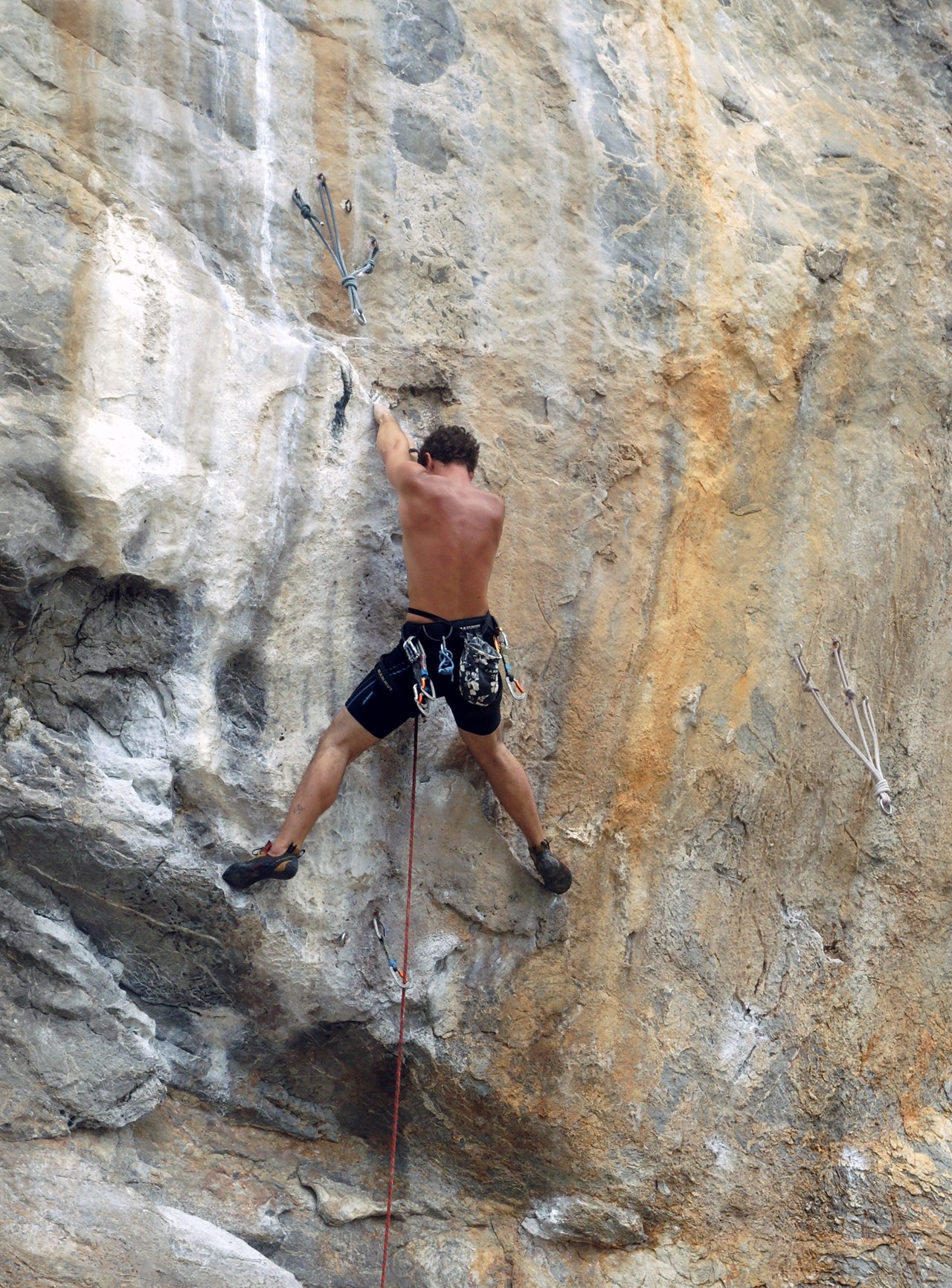
The full-day course suits anyone who's confident they'll enjoy climbing and wants more time than a half-day allows, since there's enough time to tackle several routes, progressing step by step from easy to harder, and to actually drill your skills until they stick. Many operators combine a morning session at the popular cliffs with a quieter afternoon session at a less crowded wall. Instructors have time to fine-tune footwork, weight transfer, and resting on the wall, things a half-day rarely gets to in any depth. Some packages include lunch and drinking water throughout the day, and since Railay-Ton Sai is boat-access only, it's worth checking whether the price already includes the boat transfer from Ao Nang or town.
We haven't pinned an overall review score to the full-day course here, because formats and providers vary so widely that an aggregate figure could be misleading. We recommend reading the latest reviews for whichever operator you're booking before you commit. What we can say based on the course structure is that value comes down to "how many routes you get to climb per day" — if you're comparing against a half-day and want quantity plus skill progression, a full day usually pays off better. The trade-off is cumulative fatigue, especially finger and forearm strength by the afternoon, and sun and heat that drain energy faster than expected.
- Enough time to climb multiple routes, progressing through difficulty more continuously than a half-day
- Instructors have more time to refine footwork and weight transfer in depth
- Better value when measured by the number of routes climbed per day
- Many packages include lunch and drinking water throughout the day
- Cumulative fatigue, finger and forearm strength runs out fast by the afternoon
- Sun and humid heat drain energy faster than expected
- Worth checking before booking whether the Railay-Ton Sai boat transfer and lunch are included
Deep Water Soloing Course — Climb Above the Sea Then Jump In (Ton Sai)

Deep water soloing (DWS) means climbing a cliff that overhangs the sea without using ropes or belay equipment. Once you reach the point you're aiming for, or simply feel you've had enough, you let go and jump into the sea below instead of rappelling down. This kind of course involves a boat taking you out to sea cliffs around Ton Sai-Railay where the water is deep enough to be safe, with a guide watching the water conditions and choosing jump points for you. Its charm is the freedom, no rope weighing you down, climb as far as you like, then finish by jumping into the sea, a completely different feel from a top-rope course on land, which is why it's a favorite among adventure seekers.
The key thing to say plainly is that DWS suits people who can swim and aren't afraid of heights, since you have to jump from a height into the sea and swim yourself back to the boat. While it looks fun and can feel more accessible than roped climbing, it carries its own risks, including landing badly from a height, impact with the water surface, and wave/water-level conditions that change with the time of day. Safety standards and supervision vary a lot by operator, so choose one with a dedicated guide per group, check the depth and jump points beforehand, and make sure life jackets are provided. We haven't listed an aggregate review score here since data is scattered and varies by operator, we recommend reading the latest reviews for the operator you're considering before booking.
- Free-form climbing with no rope weighing you down, finishing with a jump into the sea, fun and different from courses on land
- No need to learn belay equipment first, more accessible for adventure lovers
- Includes a boat ride to the sea cliffs and a guide to help choose jump points
- A sea-cliff climbing atmosphere over the Andaman that's hard to find in a standard course
- You must be able to swim and not fear heights, since you jump from a height into the sea and swim back yourself
- Carries risk from landing badly and impact with the water surface, unlike roped climbing
- Safety standards vary widely by operator and depend on the day's waves and water level
Multi-Day / Private Instructor Course (Lead & Multi-Pitch Skill Building)

If your goal isn't just a fun day out but actually learning to climb properly and progressing continuously, a multi-day course or private instructor is the most fitting choice. This format is usually a curriculum of 2+ days, or a daily one-on-one hire with an instructor. The content goes much deeper than a general course, covering lead climbing, where the climber clips into protection points themselves while ascending rather than having a rope looped from above like top-rope, and multi-pitch climbing, which strings together several long sections up a tall cliff face and requires systematic rope management, setting up rest points, and communicating with your climbing partner.
The advantage of a private instructor is a curriculum fully tailored to each person's level and weak points, with enough repeated practice to build real confidence. It suits anyone planning to keep climbing long term. The trade-off is a noticeably higher price than group courses, especially one-on-one, and you need a certain baseline of fitness or foundation before you can get the full benefit, since lead and multi-pitch climbing carry more risk than top-rope. Choose an instructor with proper certification and ask clearly about their experience before booking. We haven't listed an aggregate review score here since this is a highly individualized service and figures vary by instructor/school, we recommend checking reviews and the instructor's qualifications before deciding.
- Curriculum fully tailored to each person's level and weak points
- Learn serious skills like lead climbing and multi-pitch that general courses don't teach
- Enough time to practice repeatedly until confident, ideal for those committed to climbing long term
- One-on-one instruction means close attention and greater safety on difficult routes
- Noticeably higher price than group courses, especially with a private instructor
- Requires a certain baseline of fitness or foundation before you get the full benefit
- Lead and multi-pitch carry more risk than top-rope, choose a certified instructor and ask about experience clearly
Summary: which course should you pick
If you've never climbed before at all, start with the half-day beginner course, it's the answer: safe, instructor-supervised, full gear, and the lightest on price. If you try it and get hooked, or you're confident you'll enjoy a full day, the full-day course pays off better measured by the number of routes climbed and time spent drilling technique. Adventure lovers who can swim and aren't afraid of heights will find deep water soloing gives an experience of climbing over the sea and jumping in that you can't get from a course on land, but you need to pick an operator that takes safety seriously. For anyone who wants to climb for real over the long term and learn lead or multi-pitch, skip straight to the multi-day/private instructor course. Every course deals with the same heat, humidity, and slippery hands, so morning sessions are always more comfortable, and operator standards vary, so read the latest reviews before booking every time.
Book activities & tickets in advance
Krabi's most popular activities fill up fast during high season, booking online ahead of time is more convenient.
Visiting Krabi, where should you stay?
Pick a well-located hotel near Ao Nang and the boat piers to Railay, compare prices across 3 sites before booking.
Search hotels on AgodaGot your climbing course sorted, all that's left is where to stay, pick a spot near Ao Nang and the boat piers to Railay, compare prices across 3 sites before booking.
See Krabi hotels →