🔄 Updated 21 Jun 2026
First thing to understand before you plan: Krabi sits on the Andaman coast, and the weather splits cleanly into two phases. The dry season (roughly November–April) brings calm seas and clear skies, while the rainy monsoon season (roughly May–October) brings strong wind, swell and frequent rain. Whether the island you want is reachable, and whether room rates are cheap or steep, comes down almost entirely to which phase you land in. Match the timing to your trip style first and everything else gets a lot simpler.
Best Months to Visit Krabi
The sea is at its clearest and most reliable from November to March: clear skies, calm wind and swell, every island open, and boats running on schedule almost every day. The catch is that this is high season, the busiest stretch with the year's highest room rates. If you can handle the heat, April to early May still has calm seas and thinning crowds.
November–February (high season · best of all)
Krabi's golden window: clear skies, glassy sea, sharp coral visibility for snorkelling, and every island open. Ideal if you want a sea trip that's a sure thing with no rain gamble. The one trade-off is crowds and surging room rates, especially around New Year and Chinese New Year, so book several months ahead.
March–early May (hot but seas still calm)
The sea stays calm and most islands are still open, with crowds thinning out once high season ends and room rates easing back a bit. The trade-off is serious heat, especially in April, so pack sunscreen and plenty of water. Songkran brings the crowds back for one short stretch.
October (late monsoon · worth a gamble)
Late in the rains, the monsoon starts easing off and some weeks open up to several clear days in a row. The marine parks around Lanta reopen mid-month, room rates are still low, and it's good value if you're willing to risk a bit of rain. Go in the second half of the month for better odds of a good day.
May–September (full monsoon · take care)
Proper rainy season with strong wind and swell, heaviest in September. Many offshore islands close, and boat tours are often cancelled or pushed back. The upside is the year's cheapest rooms and very few people. Better suited to town, cafés, waterfalls and hot springs than to chasing the outer islands.
Straight talk on timing
If the heart of your trip is boat trips out to the islands and snorkelling over coral, don't force a monsoon visit: the water turns murky and boats can get cancelled at short notice. But if you're coming for the town, cafés, waterfalls, Tiger Cave Temple and the hot springs, the rainy season is still plenty of fun and far cheaper. Just keep a backup plan ready for the wet days.
Monsoon Season May–Oct: Which Islands Close
This is where a lot of people slip up, assuming Krabi's islands are open year-round. The reality is that some marine national parks have an annual monsoon closure for safety and to let the coral recover. The one to remember is the cluster of islands in Mu Ko Lanta National Park.
- Koh Rok Nok–Koh Rok Nai, Koh Haa, Koh Ngai, Hin Daeng–Hin Muang — these sit inside Mu Ko Lanta National Park and close annually around 16 May–14 October every year. Rok/Haa tours don't run during this window.
- Phi Phi Islands + Maya Bay — within Hat Noppharat Thara–Mu Ko Phi Phi National Park, open year-round in principle, but during monsoon some boat trips may be dropped when swell is high. Maya Bay also still has visitor caps and is occasionally closed for recovery, so check every time before you go.
- Hong Islands (Koh Hong / Lao Bileh) — within Than Bok Khorani National Park, accessible year-round in principle, but in monsoon it depends on the day's swell. The lagoon is at its best in the dry season.
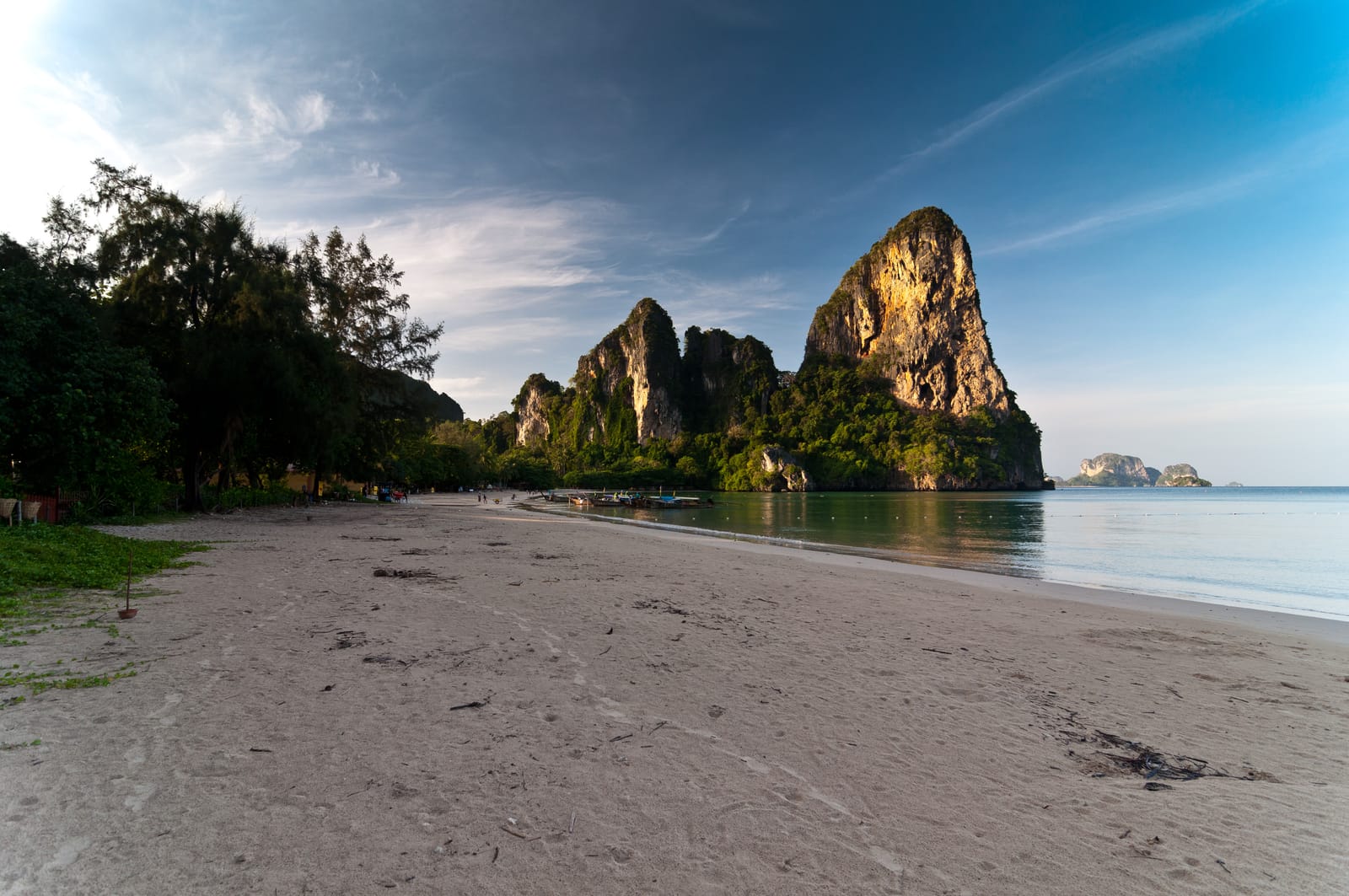
- Talay Waek (separated sea), Koh Poda, Chicken Island, Railay — the near-shore cluster off Ao Nang, visitable almost year-round, though in the rainy season the water is murkier and swell is rougher, and tours may reroute with the tides.
Closure dates can shift
16 May–14 Oct is the framework the parks department has used consistently, but some years they may announce a shift based on actual conditions. Before booking a Rok/Haa tour near the season changeover (mid-May or mid-October), ask the tour operator or check the latest park announcement again. Don't treat the dates as set in stone.
Krabi Daily Budget — Real Estimates
Budget swings hard with the season and your trip style, especially room rates, which run several times cheaper in monsoon than in high season. The figures below are rough costs per person per day in 2026 (not counting flights to Krabi), based on actually getting around and eating out, not bare survival.
Budget (backpacker)
Guesthouses or hostels in Ao Nang or town, eating at local spots and markets, getting around by songthaew or on foot, and joining shared longtail island tours. Lean on the free stuff like beaches and Tiger Cave Temple. Best value in the rainy season when rooms are cheap.
Mid-range (comfortable)
A 3-star hotel with a pool in Ao Nang, a mix of sit-down restaurants and street food, some Grab or hired cars, and shared or speedboat island tours. Most of the budget goes on island tours and the room. This is where most people actually land.
Comfort/luxury
Beachfront or hillside resorts around Railay, Klong Muang or Tubkaak, good restaurants, a private boat charter or premium tours, and a private transfer car. The budget stretches a lot further depending on the resort tier, and rates spike in high season.
- 4 Islands + Talay Waek longtail tour — around 700 THB for Thai adults, around 500 THB for kids (including insurance and life jacket). Speedboat runs higher, from around 1,000–1,500 THB up.
- Ao Nang rooms in monsoon — guesthouses start around 400–500 THB/night, hotels with a pool start around 800–1,500 THB/night. In high season expect roughly double.
- Songthaew fare Ao Nang–town — around 50–60 THB/person · a hired Grab or private car costs several times more, since few cars are on the platform here.
- Marine park entry fees — tens of baht for Thais, hundreds for foreigners, varying by park. Usually bundled into tours already, but ask to be sure.
Water Safety — What to Know Before You Board or Swim
Krabi's sea is beautiful but not to be taken lightly, especially in monsoon when wind and swell are strong and currents shift fast. Most water accidents come from small, avoidable lapses. These few points go a long way toward keeping a sea trip safe.
- Wear a life jacket every time on the boat and in deep water — even if you can swim, because waves and currents in open sea are nothing like a pool. A good tour provides enough life jackets for everyone; if they don't, treat that as a red flag.
- Watch the warning flags and listen to the guide — a red flag means no swimming. Some beaches have rip currents that pull you out to sea; if one catches you, don't fight it by swimming straight back, swim parallel to shore until you're free, then head in.
- Take a morning boat — the sea is usually calmer in the morning; wind picks up in the afternoon, raising the odds of higher swell and a rougher ride, especially in the rainy season.
- Check the forecast and be willing to cancel — if the weather department warns of strong wind and swell, or your tour calls it off, don't go hunting for an unlicensed boat to take you out anyway. Safety beats a nice photo.
- Coral and slippery rocks — wear water shoes to avoid cuts, and don't step on or grab coral; it's both dangerous and against park rules.
- Swim near a group and watch kids constantly — tides at Talay Waek and rocky beaches change fast, and the water level can shift a lot in the time you look away.
Emergency numbers to save
Tourist Police hotline: 1155 · general emergency/rescue: 191 and 1669 (emergency medical) · save them on your phone before the trip, and jot down your hotel address in Thai in case you need to show someone helping you.
SIM, Data and What to Pack Before You Fly
In Krabi town, Ao Nang, Koh Lanta and Phi Phi, the main carriers AIS and True work well in tourist areas, but on offshore islands and far-from-shore dive spots dropping signal is normal. Having data ready the moment you land makes it easy to book a ride, check the map and book tours on the spot.
- Tourist SIM — buy one at the airport or a 7-Eleven, starting in the low hundreds, e.g. an 8–15 day tourist pack around 299–599 THB with plenty of data. Good if you want a Thai number to take calls from tour operators and hotels.
- eSIM — handy if your phone supports it, buy online before flying and activate the moment you land, no SIM swapping. Price depends on duration and data.
- What to keep in your bag — sunscreen (go reef-safe so you don't harm the coral), a hat, sunglasses, sandals with heel straps or water shoes, insect repellent, motion-sickness pills, and a waterproof phone pouch.
- Cash on hand — local shops, markets, songthaews and many small tour operators run mainly on cash. QR PromptPay is around as backup but not as widespread as in big cities.
- A foldable umbrella or rain jacket — especially from May–October, where rain that blows in and out fast is just normal.
Getting In from Krabi Airport (KBV)
Krabi Airport (KBV) is about 15 km from Krabi town and about 28 km from Ao Nang. The main options from the airport are below, with rough 2026 prices.
- Shuttle bus / shared van — around 100 THB/person into Krabi town · around 150 THB/person to Ao Nang. Cheapest, but most leave only once the vehicle is full, so you may wait.
- Pre-booked private transfer — someone waits with a name sign, fixed price, good for families, lots of luggage, or late arrivals.
- Airport taxi — flat fare by zone, convenient but pricier than the shuttle.
- Grab in Krabi — available, but few cars are on the platform, especially outside town and late at night. You may get no driver or a long wait, so don't plan to rely on Grab alone; keep a shuttle or pre-booked car as backup.
Straight talk on transport in Krabi
Krabi isn't Phuket: public transport and Grab don't cover everywhere, and songthaews run limited routes and stop in the evening. If you plan to hit several spots a day and you're comfortable driving on the left, renting a car is usually better value and more flexible. Save motorbikes for experienced riders with an international driving permit.
Quick Recap Before You Book
- Want a clear sea with every island open — come Nov–Mar, accept the higher prices and book ahead.
- Want to save money with fewer crowds — come late monsoon (Oct) or in the rainy season, but focus on the mainland and keep a backup plan for wet days.
- Planning a Rok/Haa tour — avoid 16 May–14 Oct when the park is closed, and always check the latest announcement.
- Safety — wear a life jacket, take a morning boat, listen to the guide, and save 1155/1669.
- Prep before flying — have a SIM/eSIM ready, carry cash, pack reef-safe sunscreen, and don't rely on Grab alone.
Ready to go? Let's plan a full Krabi trip, from where to stay to what to see.
See the Krabi travel guide →