🔄 Updated 21 Jun 2026
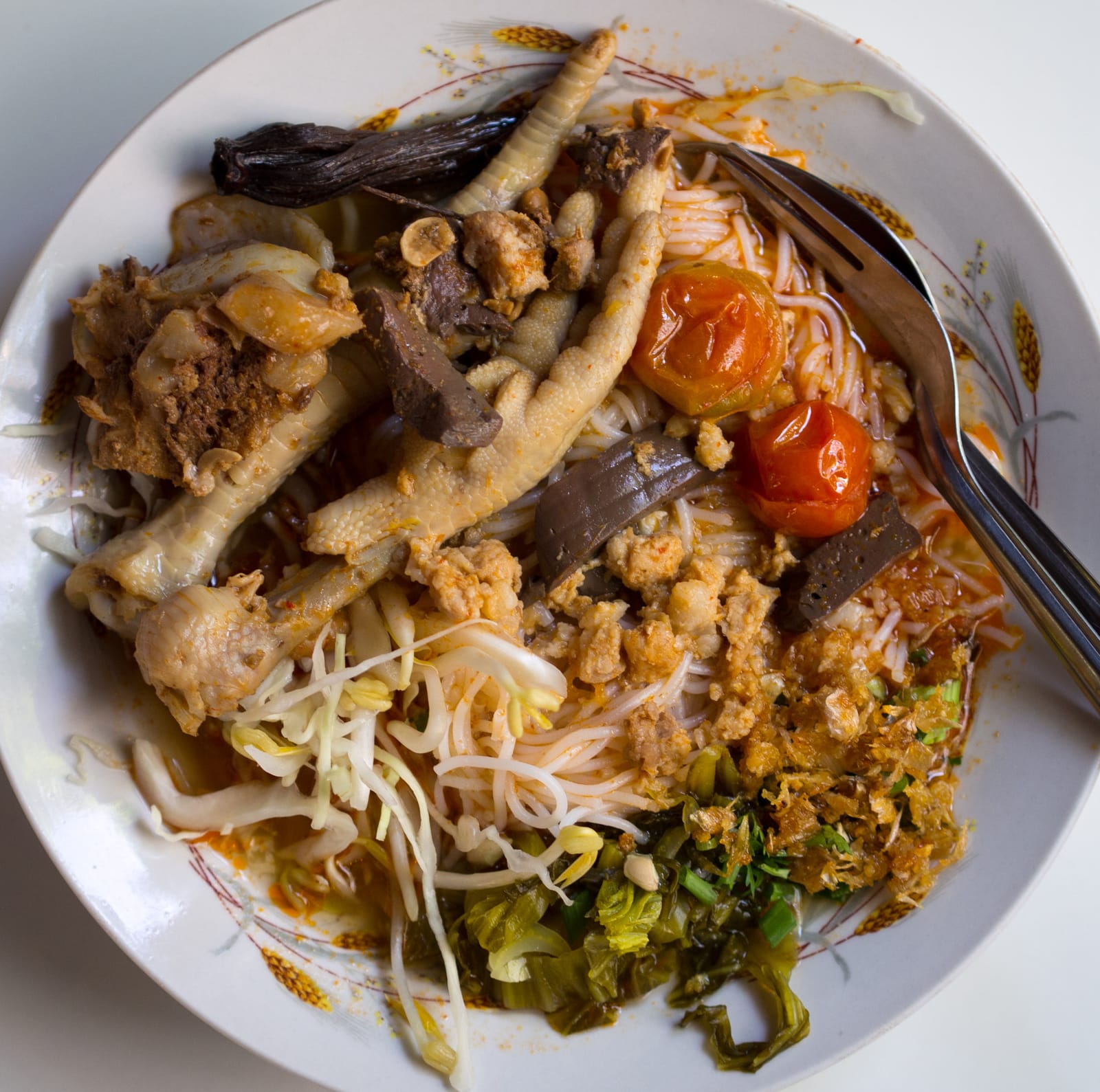
Nam ngiao is a northern Thai broth eaten with either rice noodles or wheat noodles. Its heart is dried kapok flowers, which give the broth its aroma and a soft, silky texture, plus small cherry tomatoes for natural sourness. The curry paste is pounded by hand, with minced pork and clots of pork blood. At a truly northern shop the flavor isn't sweet-forward — it's a balanced sour and salty, moderately spicy. Locals in Lampang usually eat it for breakfast or a late-morning meal: one bowl is filling and easy on the wallet.
What takes khanom sen nam ngiao to the next level is the condiments. Every shop sets out a plate of greens to help yourself — pickled greens, shredded cabbage, raw beansprouts, and fried chili topped with crispy garlic. Squeeze in a little lime, then crumble in pork crackling for crunch to cut the richness. Want more noodles? Just ask for extra.
9 khanom jeen nam ngiao shops the locals go to
Ordered from the shops people mention most and that are easy for visitors to find, down to the humble neighborhood places locals stop at regularly. Most prices run 35–60 THB a bowl, and nearly every shop is cash only.
Khanom Jeen Pa Boonsri (Kad Kong Ta)
A Lampang institution that has been around for over 40 years. It moved from the old Chinese market to the head of Nawarat Bridge, next to Kad Kong Ta and near Ratsadaphisek Bridge. The nam ngiao is well balanced, and you can also get khao soi, noodle soups, khao kan jin and egg-noodle wonton all at one shop. A good stop while wandering the old quarter.
Khanom Jeen Nam Ngiao So Kai
A nam ngiao shop Lampang locals know by name. The broth is rich and well seasoned, just bold enough, with a full spread of greens and crispy pork crackling. It opens early and has plenty of regulars — a good breakfast before you head out.
Pa Wai (on the way to Wat Phra Chedi Sao)
A homey shop run single-handedly by the owner, who makes only khanom jeen nam ngiao. She pounds her own curry paste rather than using ready-made, so the broth is fragrant and well rounded, not too salty or too spicy. This is the place people seek out when they want simple, genuine northern flavor.
Khanom Jeen Kad Tong @ Kong Ta
A shop in an old building in the middle of Kad Kong Ta with a big khanom jeen menu — pork nam ngiao, chicken nam ngiao, chicken-foot nam ngiao and nam ya pa. Prices are easy and the old-building setting is a nice place to sit. Good for anyone who wants to try several styles of nam ngiao.
Khanom Jeen Yai Ruay
A shop Lampang locals talk about a lot on social media, with nam ngiao, nam phrik and tilapia nam ya. The northern flavors are bold and the portions are generous — good if you want to try several broths in one meal.
Kin Lam Nam Ngiao
A nam ngiao shop in the Chomphu area, near the O-Pan Crepe shop, focused mainly on nam ngiao. The northern flavor is on the mild side and easy to like — good if you're staying on the edge of town or driving past, and they do delivery too.
Nam Ngiao Pa Suk
A small, budget-friendly shop with khanom jeen nam ngiao at 35 THB a bowl, with small pieces of meat and a homey-tasting broth. This is where locals stop for a quick bite in the morning, with portions just right.
Kin Kap Sen (Phra Bat) — Chiang Rai recipe
Khanom jeen nam ngiao made in the Chiang Rai style in the Phra Bat area, for anyone who wants to compare nam ngiao from a different region. The broth leans toward a thicker curry paste, with a full set of condiments — a nice alternative to the traditional Lampang recipe.
Khanom Sen Nam Ngiao at the morning markets (Asawin Market / Lak Mueang Market)
If you'd rather not pin down one specific shop, just walk into a morning market in town and you'll find stalls selling khanom sen nam ngiao by the bag, or dished up to eat there. The flavor is homey, fresh in the morning and cheap — the most genuine way to eat it like a Lampang local.
How to eat it
Nam ngiao at a genuine northern shop won't be sweet-forward. If you like it more sour, squeeze in lime; if you like it spicy, spoon on the fried chili with crispy garlic. And don't forget to crumble the pork crackling in right when you're about to eat — it stays crunchier than if you let it sit.
Want to taste deeper? Try a Lampang food tour or cooking class
Half a day with a local who knows the lanes — or cooking a dish yourself — teaches you more than just eating. Book ahead on Klook or GetYourGuide.
The condiments you can't skip
The fun of khanom sen nam ngiao is building your own bowl. Each shop sets out greens and condiments to take as you please. Try everything and you'll understand why northerners never get tired of this dish.
- Pickled greens — sour and salty, cutting through the broth. The star of the condiments.
- Raw beansprouts + shredded cabbage — add fresh crunch; toss them into the bowl and mix with the broth.
- Pork crackling — crumble it in for crunch to cut the richness; a Lampang must.
- Fried chili with crispy garlic — spoon on as much as you like for heat and aroma.
- Lime — a small squeeze rounds out the sourness.
When and where to go
Khanom sen nam ngiao is a morning to late-morning meal for northerners. Most shops open early and sell out by the afternoon, so if you want a famous spot, go before noon. And if you're exploring the old quarter and want something easy, Kad Kong Ta has several shops within walking distance of each other.
Kad Kong Ta area
Several khanom jeen shops within a short walk, such as Pa Boonsri and Kad Tong. Good to pair with a wander through the old riverside buildings along the Wang River.
Morning markets in town
To eat like a local, walk into a morning market and you'll find fresh khanom sen nam ngiao stalls at cheap prices. Go a little early while everything's still in stock.
Good to know before you go
Most khanom jeen shops in Lampang are cash only, so it's easier to carry small bills. Many are home kitchens with limited seating, and on weekend mornings you may have to wait a little for a table.
Plan a full eat-and-explore trip to Lampang — see where to stay and what to eat across the city
See the Lampang travel guide →