🔄 Updated 21 Jun 2026
Talad Kao Road runs parallel to the Wang River in Suan Dok subdistrict, Mueang Lampang. It's a short street — strolling from one end to the other takes around 20–30 minutes. But once you start ducking into shops, taking photos, and looking at the buildings, half a day disappears easily. The draw is the mix of architecture: Lanna teak houses, Chinese shophouses, Burmese gingerbread homes, and European-style masonry buildings all within a few steps of each other, the style shifting as you go.
Worth knowing before you go: on a weekday daytime the street is quiet and cars run as normal, which suits anyone who wants to look at the buildings and shoot photos without crowds in the frame. On Saturday and Sunday evenings, the road closes to traffic and becomes the Kad Kong Ta Walking Street from roughly 5pm to 10pm, lined on both sides with food and souvenir stalls — a completely different atmosphere.
The walking route — where to start, where to finish
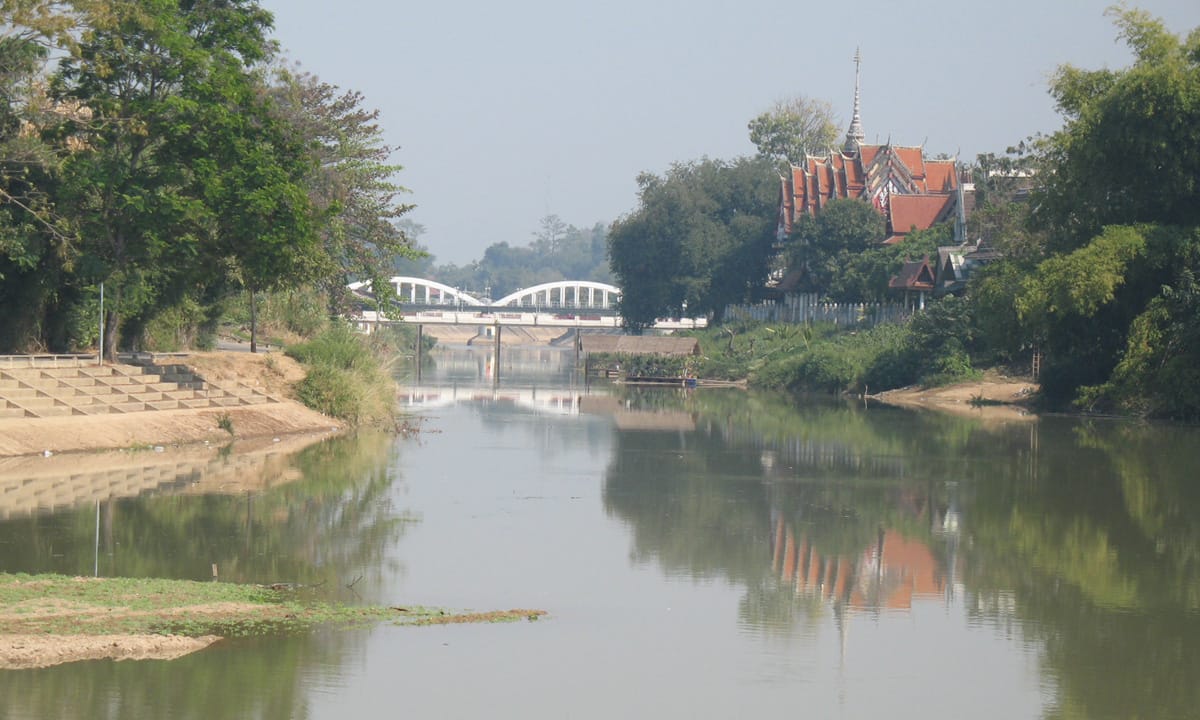
The route that works best is to start at the Ratsadaphisek Bridge (the White Bridge), the city's landmark, then walk along Talad Kao Road toward the far end, picking off the standout buildings one by one. This way you finish near the cafes at just the right time, and if you come in the late afternoon you'll catch the golden light hitting the White Bridge and the surface of the Wang River.
- Start — Ratsadaphisek Bridge: a white arched bridge over the Wang River, built back in the reign of King Rama V. It's the signature photo spot of Lampang, at its best in the late-afternoon light.
- Midway — Talad Kao Road: wooden houses, shophouses, street art, and cafes in heritage buildings line both sides. Walk slowly and drop into whichever shops catch your eye.
- Finish — the cafe stretch at the end of the road: rest with a coffee inside an old wooden house — a fitting way to close out the walk.
Pick the day that matches your vibe
Want clean photos of beautiful buildings with no crowds? Come on a weekday during the day. Want the market atmosphere — food, souvenirs, a lively crowd? Come on a Saturday or Sunday evening when the walking street is open.
Want more out of Lampang? Book tours & activities
Booking online ahead on Klook or GetYourGuide is usually cheaper than the gate and skips the queue. Pick only the experiences you actually want — prices and availability are shown live on each site.
Heritage houses and old buildings worth photographing
This is the heart of Lampang's old town. Many of the buildings are listed as conservation buildings, and some are over a hundred years old. Look out for the small plaques in front of them — they give you a short history of each one.
Baan Boriboon
A white European-style masonry building on a street corner, with clean, elegant lines. It's one of the most photographed spots on Kad Kong Ta — come early when the light is good and the crowds are still thin.
The Gingerbread House (Ruen Mae Daeng)
A wooden house with intricate gingerbread fretwork showing Burmese influence. This kind of woodwork is hard to find anywhere in Thailand now — it's the craftsmanship highlight of the street.
Former Chinese-market wooden houses
Two-storey Chinese-style wooden shophouses that once served as warehouses and stores for Chinese merchants during the teak boom. Many are now open as shops and cafes.
Photo etiquette
Many of these houses are still people's homes. You're free to shoot the exteriors, but if you want to step inside the grounds or photograph the people living there, always ask the owner first — it's the polite thing to do.
New-generation shops inside old buildings that are still open
The charm of this quarter is the new wave of shops that moved into the old wooden houses without tearing them down — keeping the original frame and giving the interiors a contemporary touch. We've picked shops that really are inside heritage buildings and still open for business, with approximate hours and prices (double-check each shop's page before you go, since some close on their own days off).
Moungngwezin
A cafe inside an antique wooden house in the middle of Kad Kong Ta, decorated with old photographs and artwork and plenty of photo corners. It's one of the first names that comes to mind when people talk about heritage-building cafes in Lampang.
Memory Cafe & Guesthouse
A two-storey vintage-style wooden house — cafe downstairs, guesthouse upstairs. Good coffee and homemade baked goods like their own scones. Open daily, and an easy place to linger.
Chaosua Tea Room
A tea room inside a Chinese house over a hundred years old, serving traditional Chinese tea paired with salted-egg-filled pastries. Genuinely period atmosphere — great for tea lovers and anyone after old-mood photos.
Pang Suree Art Home
A white house dressed in local artwork. The ground floor is a breakfast and Northern-Thai eatery, with standout dishes like spicy mineral-water egg salad; upstairs is accommodation. A good spot for breakfast before you set off through the old town.
Na Hiran Cafe
A coffee shop in the old building at 278 Talad Kao Road, with a simple, old-town mood. Open through the day — a handy rest stop while you walk and shoot photos.
Papacraft
A craft and homeware shop in the old building at 268. Fun to browse for handmade goods and small souvenirs — one for the handmade crowd (closed Wednesdays).
Mee Kiao Ma Kong Ta
An egg-noodle-and-wonton shop with a recipe over 50 years old, set up on the Kad Kong Ta walking street and decked out in antiques for a retro feel. A light meal mid-walk that locals vouch for.
Keep cash on you
Many shops in this quarter still mainly take cash, especially the food stalls on the walking street. Bring small notes and you'll move along faster.
Street art and photo spots along the Wang River
Beyond the old buildings, the Kad Kong Ta quarter has street art tucked along walls and side lanes. Many of the pieces tell the story of Lampang life in the logging and horse-cart days. Follow the small alleys and you'll come across charming pieces here and there — they shoot beautifully for the feed. And the one spot you can't miss is the Wang River with the White Bridge.
- Ratsadaphisek Bridge (the White Bridge) — Lampang's iconic angle, the white arch set against the sky, at its best around sunset.
- Street-art walls in the lanes — paintings of old-town life scattered across building walls and small alleys; you'll keep finding them as you walk.
- Balconies and fretwork wooden windows — the craftsmanship details of the old houses; shoot them close up for a vintage feel.
- The Wang River bank — a wide angle that captures both the wooden houses and the water; best in the soft late-afternoon light.
The golden hour for light
Between 4:30pm and 6pm the light is at its softest, and both the old buildings and the White Bridge take on a warm tone — far better for photos than the harsh midday sun.
Where to head next from the old town
Lampang's old town sits within the city, so it's easy to walk or take a horse cart on to other spots. If you've still got energy to keep exploring, try pairing it with these nearby places.
Take a horse-cart city tour
Lampang is the only city in Thailand that still runs horse carts. A loop around the old town and the White Bridge gives you a retro feel that fits this quarter perfectly.
CultureTemples in the city
It's not far to walk on to old city temples like Wat Phra Kaew Don Tao — you can take in both the cultural side and the photo side in one trip.
Want a full half-day plan for walking Lampang's old town? Check out the old-town cafe plan.
See the Lampang old-town cafe plan →