🔄 Updated 21 Jun 2026
Lamphun isn't a place you need to plan around for days, but it's also not somewhere you can show up totally unprepared and still hit everything, because the charm here is tied to the seasons more than you'd expect. Longan season is when the town is at its liveliest, while the cooler end of the year is perfect for long, slow walks around the old temples. This article will help you decide which month to go, how to get there, and how much cash to bring.
The Best Time to Visit Lamphun
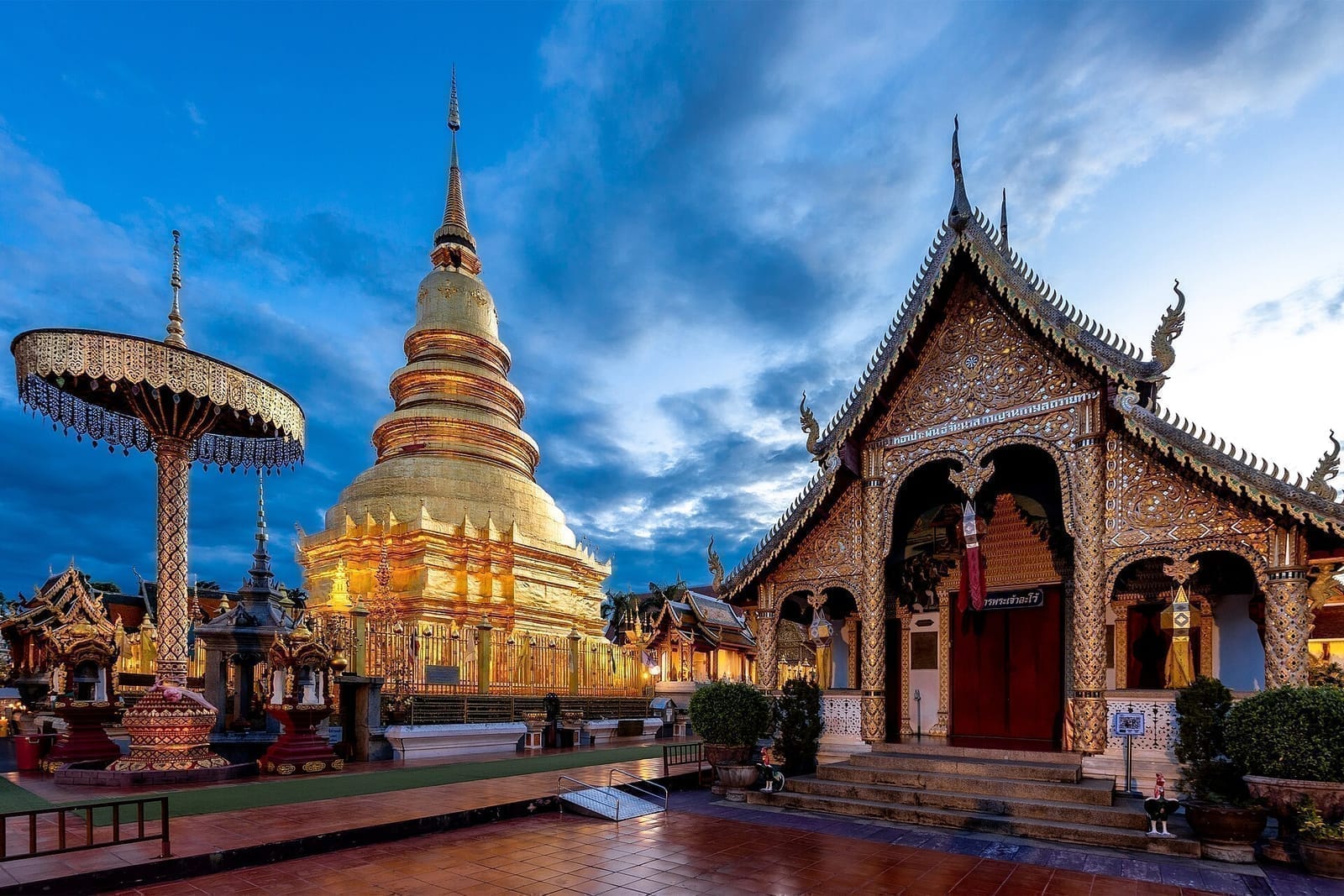
If we had to pick one stretch with the best weather, it's November to February. It's cool and comfortable, around 25°C in the daytime and dropping to 18–20°C in the mornings and evenings — so you can walk around Wat Phra That Hariphunchai or Wat Chamthewi under the sun without it being miserable. This is also the most popular time with visitors, and the cafés out in the rice fields are open and catching the cool breeze just right.
Meanwhile, June to August is the rainy season — hot and humid, averaging 28–29°C, with rain coming in spells. The upside is the rice fields turn green, the longan is ripening, and there are fewer crowds than in the cool season. If you don't mind the rain you'll be fine; just pack an umbrella and shoes you don't mind getting wet.
- Nov–Feb (cool) — best weather, great for temple walks, photos, and cafés. A bit busier, but the atmosphere is worth it.
- Mar–May (hot) — strong sun, so duck into the shade around midday. Stick to the in-town temples and air-conditioned cafés.
- Jun–Aug (rain + longan) — lush and green, longan in season, the longan festival is on, and fewer crowds — just build in some buffer time for rain.
Straight talk
Lamphun works year-round, because the main sights are in-town temples that don't depend much on the weather. If you really can't decide, look at your own calendar first, then adjust your activities to the season.
Longan Season — Why August Is Special
Lamphun is Thailand's longan capital, and the harvest peaks in July and August. The whole province fills up with cheap, fresh longan, and roadside stalls sell big clusters for a fraction of what you'd pay in a major city. If you love longan, this is the time to come.
The highlight of this season is the Longan and Agricultural Fair – Chamber of Commerce Fair, held in early August every year (recent years have run roughly August 1–12) at the Ban Mae San Pa Dat grounds on the Lamphun–Doi Ti road. The fair has a longan cluster contest, vendors selling fresh and dried longan, local food, and a performance stage. The vibe is like Lamphun's big annual temple fair.
Tip for buying longan
Big clusters with the leaves still attached stay fresher and keep longer than loose, picked-off fruit. If you're carrying them a long way home, go for the Ee-Daw variety — its thick flesh and hard shell handle transport better than the others.
How to Get to Lamphun — A Day Trip from Chiang Mai
Lamphun is only about 26 km from central Chiang Mai — roughly a 30–40 minute drive, which is why a lot of people base themselves in Chiang Mai and hit Lamphun as a day trip. You've got several ways to get there depending on budget and convenience.
Private car / rental
The most convenient option if you want to hit several spots, since some temples and cafés are outside town. Take Route 106 (the old road) for the gorgeous rows of yang na trees lining both sides, or take the superhighway if you're in a hurry.
Chiang Mai–Lamphun train
A ride a lot of people love — a third-class fare costs just a few baht, and you get 30–40 minutes of rice-field views. Get off at Lamphun station, then hop on a songthaew or motorcycle taxi into town. Great if you're in no rush.
Songthaew (blue/red truck)
The local bus running Chiang Mai–Lamphun. Catch it near Chiang Mai Gate or the bus terminal. Cheap, but it stops to pick up and drop off along the way, so it's slower than a private car.
Taxi / ride-hailing app
Good for groups or anyone with luggage — book from the airport or anywhere in Chiang Mai. It costs more, but takes you door to door. Agree on the price upfront if you're chartering it.
Tip
Central Lamphun is tiny — Wat Phra That Hariphunchai, Wat Chamthewi, the museum, and the market are all close together. You can easily walk or cycle around. If you come by train you don't need to rent a car; just grab a motorcycle taxi between stops.
How Much Does a Lamphun Trip Cost?
Lamphun really is a place you can do on a budget. Most temples don't charge admission (donate as you wish), the Hariphunchai National Museum costs just a few tens of baht, and local food is easy on the wallet. Here's a rough budget for a one-day trip from Chiang Mai.
- Round-trip transport — train/songthaew about THB 30–80 per person, or car rental/fuel THB 300–500 per vehicle
- Admission fees — Hariphunchai Museum about THB 20–30; most temples free, donate as you wish
- 2–3 meals — khao soi, khanom jeen nam ngiao, noodles, about THB 120–250 per person
- Café / dessert — coffee/cake THB 60–150 per stop
- Souvenirs — up to you; dried longan THB 80–200 per bag, cotton textiles starting in the low hundreds
Budget summary
A budget day trip runs around THB 400–600 per person, covering transport, food, and admission. Add a nice café and some souvenirs and you'll be comfortable budgeting around THB 800–1,200 per person.
Lamphun Souvenirs Worth Buying
Lamphun has genuinely distinctive souvenirs, not the generic stuff you can find anywhere. The two standouts are dried longan and handwoven Pa Sang cotton; beyond those are local snacks you can easily grab on the way.
Golden dried longan
Lamphun's most famous product — chewy flesh with just the right sweetness. A well-known brand like Longan Thung Thong is a five-star OTOP product. You'll find it at souvenir shops and at the longan festival.
Handwoven cotton from Ban Don Luang, Pa Sang
A cotton-weaving village in Pa Sang district, with fabric by the yard, shirts, and scarves in beautiful, hard-wearing local patterns. Prices start in the low hundreds — a souvenir with a story behind it.
Sai ua, kaep mu & nam phrik
Northern snacks that are easy to take home — find them at Nong Dok Market and souvenir shops in town. Great with sticky rice or as a gift for family back home.
Fresh longan (in season only)
Come in July–August and you'll find big, cheap clusters of fresh longan. Buy from roadside stalls or at the festival, and pick the Ee-Daw variety if you're carrying it far.
What to Pack — A Checklist
- Cool season (Nov–Feb) — a light jacket for mornings and evenings, sunscreen for the daytime
- Rainy season (Jun–Aug) — an umbrella or rain jacket, shoes you can wade in, a waterproof bag for your camera/phone
- Visiting temples — dress modestly: sleeved tops, knee-covering pants or skirts, and remove your shoes before entering the prayer hall
- Cash — many local shops and market stalls only take cash, so small bills come in handy
- Water bottle — bring water for temple walks in the sun; refill at convenience stores in town
All set? Dive into the full guide to Lamphun's sights and places to stay
See the Lamphun travel guide →