🔄 Updated 21 Jun 2026
Loei's attractions spread across three main zones. The Chiang Khan zone is an easygoing Mekong riverside town with a walking street, Phu Thok, Kaeng Khut Khu, and the skywalk. The Phu Ruea–Dan Sai zone to the west has cool mountains, beautiful temples, and the Phi Ta Khon Museum. Phu Kradueng and Suan Hin Pha Ngam sit in the south of the province. Each zone is a fair drive apart, so the trip is most enjoyable if you tackle one zone at a time rather than darting back and forth in a single day, since many of the roads climb up mountain passes.
Best Loei Attractions (ordered by how often people mention them)
The order below isn't a ranking of which place is better than another — it follows how often first-time visitors to Loei tend to include each spot. Pick whatever fits your style and build your own days. Prices and opening hours can shift with the season, so it's worth checking again before you go.
Phu Kradueng National Park
A flat-topped mountain you have to climb on foot — about 5.5 km up to Lang Phae, then several more kilometers across the plateau to viewpoints like Pha Nok An and Pha Lom Sak. It gets seriously cold in winter, and it's the bucket-list trek for travelers who like a challenge.
Chiang Khan (Mekong Road–Walking Street)
An old Mekong riverside town with a slow-life feel: sticky-rice alms-giving in the morning, cycling along the river at midday, then walking the night street in the evening to eat and shop for crafts. It's the zone most Loei visitors use as their home base.
Phu Thok (Chiang Khan)
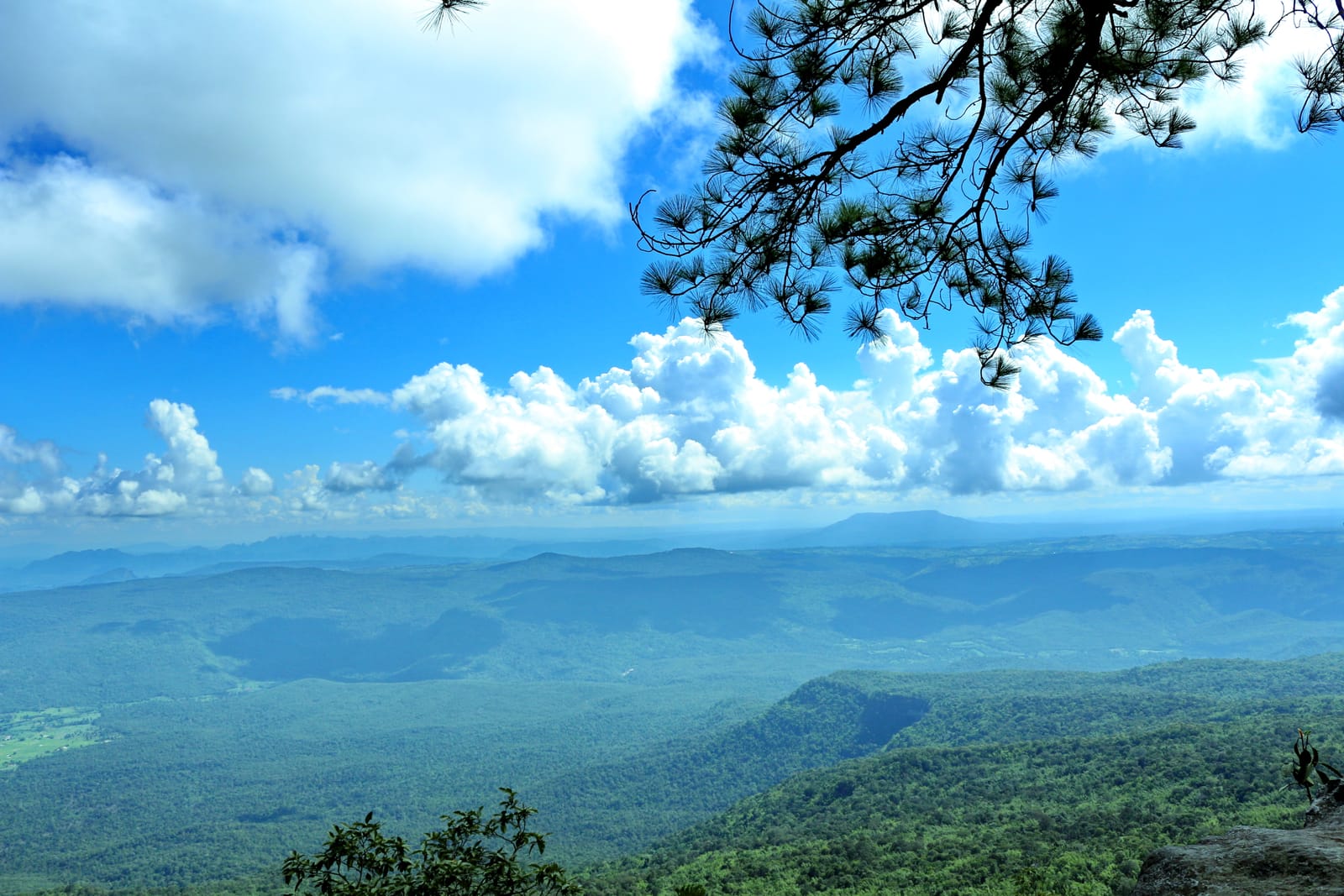
The closest sea-of-mist viewpoint to Chiang Khan. At dawn the mist drifts over the Mekong and it's gorgeous. You go up by villagers' songthaew because the road is steep, snap your photos, and come back down for coffee in town without any hassle.
Kaeng Khut Khu
A rocky rapid in the middle of the Mekong that emerges clearly when the water is low. There's a viewing deck and stalls selling coconut candy and 'dancing shrimp' along the rapids — a popular spot for photos and snacks at the edge of Chiang Khan.
Chiang Khan Skywalk (Phu Khok Ngio Buddha)
A glass walkway jutting out from a cliff, looking down at the spot where the Hueang River meets the Mekong in two distinct colors. Up top there's the large Phu Khok Ngio Buddha to pay respects to. It hasn't been open long but it draws plenty of visitors.
Phu Pa Po (Loei's Fuji)
A viewpoint that looks out at Phu Hor, a triangular peak that resembles Mount Fuji. On winter mornings a sea of mist hugs the base of the mountain. You reach the top by villagers' farm tractor because the road is very steep. It's a photo angle that fewer people reach than Chiang Khan.
Phu Ruea National Park
A peak that used to get so cold in winter that frost would form. You can drive up close to the summit, then walk a little further to the sunrise viewpoint. Along the way there are rock fields and seasonal flower meadows. Good for road-trippers who'd rather not hike up a mountain.
Wat Neramit Wipassana (Dan Sai)
A hilltop temple whose ordination hall is built entirely from orange-red laterite. Inside there's a replica of Phra Phuttha Chinnarat and beautiful mural paintings. It's near Phra That Si Song Rak, so you can see both in one trip.
Phra That Si Song Rak
An ancient Ayutthaya-era chedi built as a witness to the friendship between the kingdoms of Ayutthaya and Vientiane. It's deeply revered by Loei locals, with a custom forbidding anything red within the chedi grounds. Dress modestly when you go to pay respects.
Suan Hin Pha Ngam (Loei's Kunming)
A maze of sharp, layered limestone ridges that nature has shaped into something like Kunming's Stone Forest. You can follow the nature trail or take a farm tractor in to see it. It's a quieter corner that fewer people reach than Chiang Khan.
Phi Ta Khon Museum (Wat Phon Chai, Dan Sai)
A small museum inside Wat Phon Chai displaying Phi Ta Khon masks and the story behind Dan Sai's Bun Luang festival. Even if you don't visit during the festival itself, you can still get a feel for the local culture here.
Phu Pa Po–Suan Hin Pha Ngam (Nong Hin Zone)
If you don't feel like traveling far on a given day, the Nong Hin zone keeps Phu Pa Po and Suan Hin Pha Ngam close together — you can drive and see both in half a day. Good for travelers short on time who still want both the sea of mist and the stone forest.
Planning tips
The sea of mist at Phu Thok and Phu Pa Po is at its best in the early morning during winter (Nov–Feb), so aim to arrive before sunrise. Phu Kradueng opens seasonally and closes during the rainy season, roughly June–September. If you're set on climbing it, check the opening dates and book accommodation on the summit well in advance, because it gets very crowded in winter.
Want more out of Loei? Book tours & activities
Booking online ahead on Klook or GetYourGuide is usually cheaper than the gate and skips the queue. Pick only the experiences you actually want — prices and availability are shown live on each site.
For nature and mountain lovers
If you're leaning toward nature, Loei delivers at several levels — from peaks you reach by villagers' vehicles to watch the mist and then come down for coffee, all the way to Phu Kradueng, where you climb on foot and overnight at the top. Pick based on the energy and time you have.
Phu Kradueng
A flat-topped mountain you climb on foot and overnight on the summit, walking to sunrise viewpoints like Pha Lom Sak. Suited to travelers who want a challenge to conquer once.
Phu Thok
The closest sea of mist to Chiang Khan, reached by songthaew. At dawn the mist drifts over the Mekong and it's gorgeous. Easy to get to and good for first-timers.
Phu Pa Po–Loei's Fuji
See triangular Phu Hor that resembles Fuji, with mist at the foot of the mountain. You reach the top by farm tractor — a photo angle fewer people have found.
Phu Ruea
Drive up close to the summit, then walk on to watch the sunrise. Bitterly cold in winter. Good for travelers who'd rather not hike up themselves.
For temples and Dan Sai culture
Loei's cultural heart is in Dan Sai district — beautiful laterite temples, an ancient chedi, and the famous Phi Ta Khon festival. The temples and the chedi in this zone are close together, so you can see them one after another. Dress modestly, cover your shoulders and knees inside temple grounds, and take off your shoes before entering the buildings.
- Wat Neramit Wipassana — an ordination hall built entirely from orange-red laterite, on a hill with a wide view; free entry
- Phra That Si Song Rak — an Ayutthaya-era chedi, a symbol of the Ayutthaya–Vientiane friendship; no red items allowed in the grounds
- Phi Ta Khon Museum, Wat Phon Chai — learn the origins of the festival and the Phi Ta Khon masks; free entry
- Phi Ta Khon festival — Dan Sai's Bun Luang festival, held around June–July each year; extremely crowded during the event
For the Mekong town and Chiang Khan cafés
The other side of Loei is the easygoing Mekong town life in Chiang Khan — old wooden houses along the riverside road, cafés with river views, a long night market to eat your way through, and morning activities like sticky-rice alms-giving. It works well as a home base for heading out to the surrounding peaks.
- Chiang Khan walking street — food, crafts, and old wooden houses; lively every evening
- Morning sticky-rice alms-giving — the signature morning activity of Chiang Khan
- Cycling along the Mekong — rent a bike and take in the river and old houses in the morning
- Riverside cafés — coffee shops with river views, perfect for catching the cool breeze from mid-morning to evening
Try an easy day-by-day plan
Here's a sample three-day plan that takes one zone at a time — starting with Chiang Khan, then the southern mountain zone, and finishing with Dan Sai culture. Adjust the timing to suit reality. Anyone with their own car or a rental will move around far more freely, since public transport between districts isn't convenient.
Chiang Khan, the Mekong town
Southern mountain zone (Nong Hin–Phu Ruea)
Dan Sai culture
Getting around the province
Public transport between districts in Loei is sparse and infrequent, so if you want to travel freely, renting a car or driving your own is the way to go. Getting up Phu Thok, Phu Pa Po, and the skywalk requires local villagers' vehicles because the roads are steep. Keep some cash on you too, since a few spots don't take transfers.
Want a full day-by-day plan for Loei?
See the Loei travel guide →