🔄 Updated 21 Jun 2026
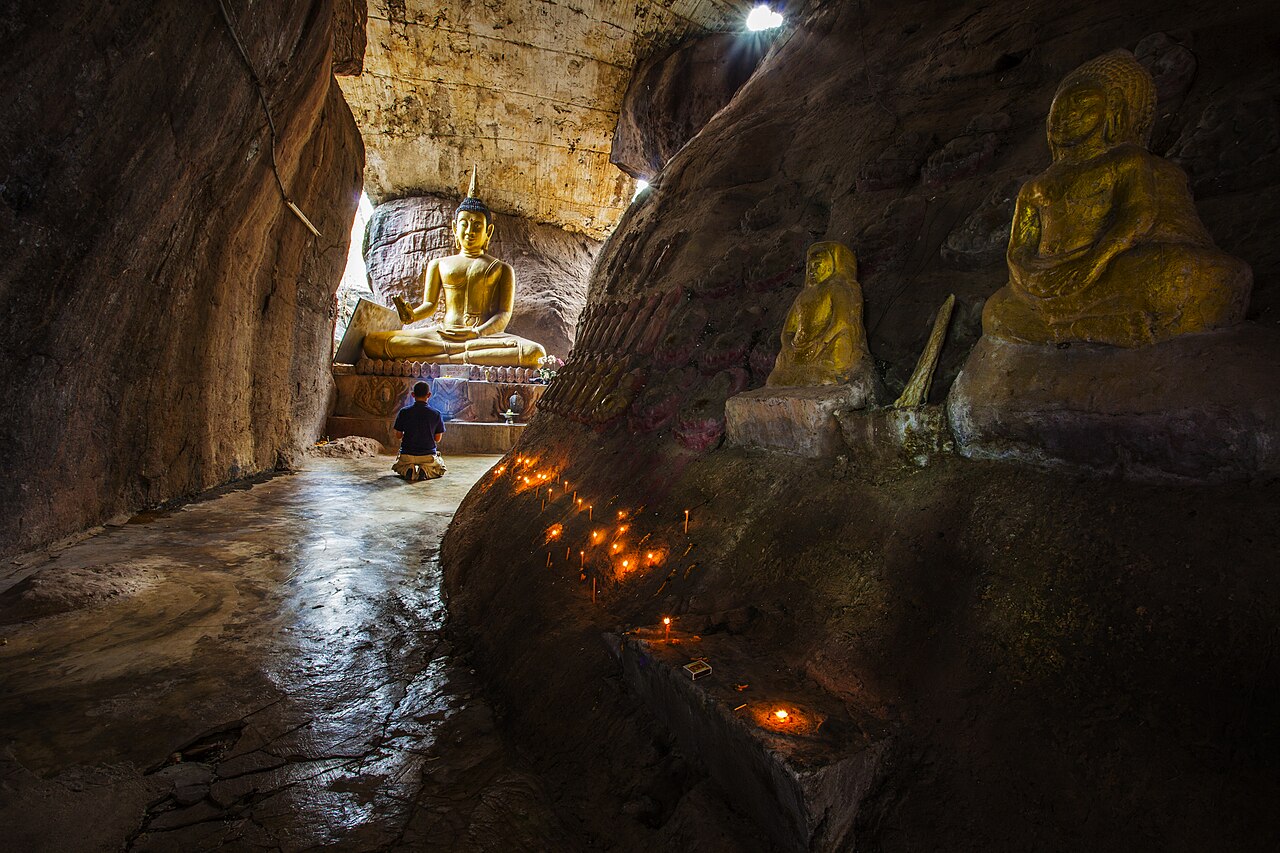
If you make it to Nong Bua Lamphu and stop at Wat Tham Klong Phen, plenty of people wander around the giant boulders, the cave and the ancient drum and call it a day. But the spot locals tell you is a "must-go-in once you're here" is the Luang Pu Khao Analayo Relics Museum — a small hall that keeps a whole forest monk's life story in one place. Some visitors come to look around; others come specifically to pay respects to his relics and the wax figure of him. This article focuses on the museum and Luang Pu Khao's story; for an overview of all of Wat Tham Klong Phen, we've covered that in a separate article.
What the relics museum is, and what it holds
"Atthaborikhan" refers to a monk's essential belongings — the alms bowl, robes, and the items carried while on tudong (wandering ascetic practice). This museum gathers the relics, alms equipment and personal items of Luang Pu Khao Analayo so later generations can see just how simply a forest monk lived. The hall sits within Wat Tham Klong Phen, in Non Than subdistrict, Mueang Nong Bua Lamphu district, and was built after Luang Pu Khao passed away in 1983 to preserve his belongings and give the faithful a place to pay their respects.
What stops a lot of people for a photo is the building itself, because it's made from marble found in the temple's Klong Phen cave. The story goes that only a few blocks of marble from the cave were cut to build the whole hall. Out front it's shaded by big trees and flowering plants, so it stays cool as you walk in — fitting for the forest-temple setting tucked among the surrounding rocks.
- Luang Pu Khao's relics and crystallized relics (phra that) — the part most people come specifically to pay respects to, kept inside the museum for veneration.
- Alms equipment — his alms bowl, robes and the items he carried on tudong, reflecting the forest-monk way of using only what's necessary.
- Wax figure — a wax likeness of Luang Pu Khao in a seated posture, made so realistically that many say it feels like sitting in front of him in person.
- Monk's ID card and personal items — his clergy ID card and small everyday belongings that help bring his daily life into sharper focus.
- Photographs and biography — old photos and panels telling his story, from his birth through his years in residence at Wat Tham Klong Phen.
Read before you go in
The museum holds the relics and belongings of a deeply revered monk, so dress modestly, take your shoes off before stepping up, stay composed and keep your voice down. Some spots may have signs asking visitors not to take photos, so check the signs first, and if you do photograph the wax figure or the relics, do it respectfully.
Want more out of Nong Bua Lamphu? Book tours & activities
Booking online ahead on Klook or GetYourGuide is usually cheaper than the gate and skips the queue. Pick only the experiences you actually want — prices and availability are shown live on each site.
Who was Luang Pu Khao Analayo, and why is he so revered?
Luang Pu Khao Analayo was born on 28 December 1888 at Ban Bo Cha-neng, Nong Kaeo subdistrict, Hua Taphan district, Amnat Charoen province (which at the time still fell under Ubon Ratchathani). He was ordained in 1919, and in 1925 he was re-ordained into the Dhammayut order and became a disciple of Luang Pu Mun Bhuridatto, the great meditation master whom forest monks across Isan revere as their teacher.
After taking up the wandering practice, he travelled through forests and mountains across several regions — both Isan and the North — living simply in the forest-monk style, focusing on meditation in quiet places, until a great many people came to admire him. What people consistently recall is his simplicity, his kindness, and his strict practice: he kept no possessions and put no emphasis on ceremony.
In 1958, while on tudong, Luang Pu Khao came across Wat Tham Klong Phen, which at the time was still an abandoned temple amid the rocks. He took up residence and gradually restored it into a meditation centre that monks and laypeople came to pay respects at without pause. He stayed here for the rest of his life and passed away on 16 May 1983 at the age of 94. Wat Tham Klong Phen and this museum are inseparable from the final stretch of his life and his way of practice.
Something many people don't know
Forest monks in Luang Pu Mun's lineage are traditionally cremated and their remains kept, and the relics of many such accomplished monks later transform into crystallized relics (phra that). So this museum isn't just a display of old objects — for the faithful, it's a place to come specifically to pay respects to Luang Pu Khao's relics and crystallized relics.
The celebration ceremony and major restoration
On 24 May 2022, His Majesty the King and Her Majesty the Queen travelled here to preside over the celebration ceremony for the Luang Pu Khao Analayo Relics Museum and to open the Khemapirato relics chedi connected to the temple. After that ceremony, both the building and the grounds around it were kept in good condition, well suited to walking around and paying respects.
If you come around now, you'll find the walkways, signage and the museum grounds noticeably tidier than before — good for anyone who wants to pay respects to Luang Pu Khao and stroll the forest temple in well-kept surroundings.
The atmosphere and what it's like to walk through
The museum itself isn't large — about 20–30 minutes is enough to see it all at an unhurried pace, but if you add in walking the whole of Wat Tham Klong Phen, allow an hour or more. Inside it's cool and quiet, and most people walk softly and speak softly, since it's a place of veneration rather than a general photo-check-in spot. It suits both the faithful who come to pay their respects and anyone interested in the story of Isan's forest meditation monks.
The faithful — paying respects
Coming specifically to pay respects to the relics and the wax figure of Luang Pu Khao, then sitting quietly in the temple for a while — the main destination for many.
History and the backstory
Reading the biography panels, looking at the alms equipment and belongings, and getting a feel for how forest monks in Luang Pu Mun's lineage lived in earlier days.
Combined with a temple visit
Visiting the museum along with the stone cave, the ancient drum and the stone-carved Buddha images at Wat Tham Klong Phen, all in one loop.
Getting to the museum
The museum is within Wat Tham Klong Phen, about 13 km from downtown Nong Bua Lamphu. Take Highway 210 (the Nong Bua Lamphu–Udon Thani road), then turn off onto the temple road for about another 2 km. Driving from town takes around 15–20 minutes, on paved road the whole way with clear signs, and there's a parking area at the temple — from there it's a short walk to the museum building.
- Private car / rental car — the easiest option. From downtown Nong Bua Lamphu, drive toward Udon Thani on Highway 210 for about 13 km, then turn off into the temple for another 2 km.
- Coming from Udon Thani — Nong Bua Lamphu is about 45–50 km from Udon Thani; drive Highway 210 for roughly 45 minutes to an hour. The temple is before you reach downtown Nong Bua Lamphu, so it's easy to stop on the way.
- Public bus — buses on the Udon Thani–Loei route run along Highway 210, and you can get off at the mouth of the temple turn-off. But from there you'll need to catch another ride or walk in about 2 km. Without your own vehicle, allow extra time and check with the driver ahead.
- Hired car / motorbike — there are some taxis-for-hire and motorbike rentals in town, good for anyone wanting to hit several spots in a single day.
Admission and opening hours
The museum is open daily, roughly 07:00–18:00, and there's no admission fee. If you're coming specifically for the museum, late morning to afternoon is best — good light and staff fully on hand. If you'd like to make merit, there are donation boxes and points within the temple.
Where to go after the museum
Because the museum sits inside Wat Tham Klong Phen, the first thing to do is walk the whole temple in one loop — the stone cave, the ancient drum and the stone-carved Buddha images. From there it's easy to pair it with other spots in the same day. If you want to keep things nature-focused, drive down to Phu Kao–Phu Phan Kham National Park and the Ubol Ratana Dam in the south of the province. If you'd rather head back into town, stop at the King Naresuan the Great Shrine and Nong Bua, then cap it off with a meal at a punchy Isan restaurant.
- Wat Tham Klong Phen (the whole temple) — walk the stone cave, the ancient double-headed drum and the stone-carved Buddha images, right after the museum.
- Phu Kao–Phu Phan Kham National Park — forest, mountains and viewpoints in the south of the province, good to continue with for nature lovers.
- King Naresuan the Great Shrine–Nong Bua — a landmark in the centre of town, good for a stroll and paying respects before you go looking for something to eat.
Plan a full day in Nong Bua Lamphu — see everything to do, eat and where to stay
See the Nong Bua Lamphu travel guide →