🔄 Updated 21 Jun 2026
Mae Hong Son is a Shan (Tai) town, and its way of eating differs from Chiang Mai more than you'd expect. The clearest place to see that is the morning market. Breakfast here isn't fried dough and coffee — it's a hot bowl of khanom jeen nam ngiao, warm boiled winged beans, banana-leaf parcels of khao kan jin, and Tai sweets that have been made the same way for generations. Spend one morning walking the market and you'll already understand half of this town.
Sai Yud Market, the heart of the morning food scene
Sai Yud Market sits in the center of Mae Hong Son, around Singhanat Bamrung Road. It's an old fresh market more than a hundred years old. The name "Sai Yud" (literally "stops by late morning") comes from how early it wraps up — vendors are out from around 4am while it's still dark, and many start packing up by 9am. Sleep in and you may miss the best dishes, which sell out fast. Prices here are very friendly; plenty of dishes start at just 5–10 THB.
The charm of Sai Yud is that it's a real community market. Most of the vendors are Shan locals carrying their own homemade food to sell — it isn't a market staged for tourists. Graze and chat as you go, and you'll come away with both the food and a snapshot of early-morning life in this misty town.
What time to go
The sweet spot is 6–8am: it's light enough to walk and take photos, the food is still fully stocked, and it isn't hot yet. Arrive after 9am and many stalls are already closing up, so give yourself a buffer.
Want to taste deeper? Try a Mae Hong Son food tour or cooking class
Half a day with a local who knows the lanes — or cooking a dish yourself — teaches you more than just eating. Book ahead on Klook or GetYourGuide.
10 breakfast bites to try at Mae Hong Son's morning market
Ordered with the most-visited and genuinely Shan dishes first. Prices are rough ranges from stalls in the market and can shift with ingredients and which vendor you go to.
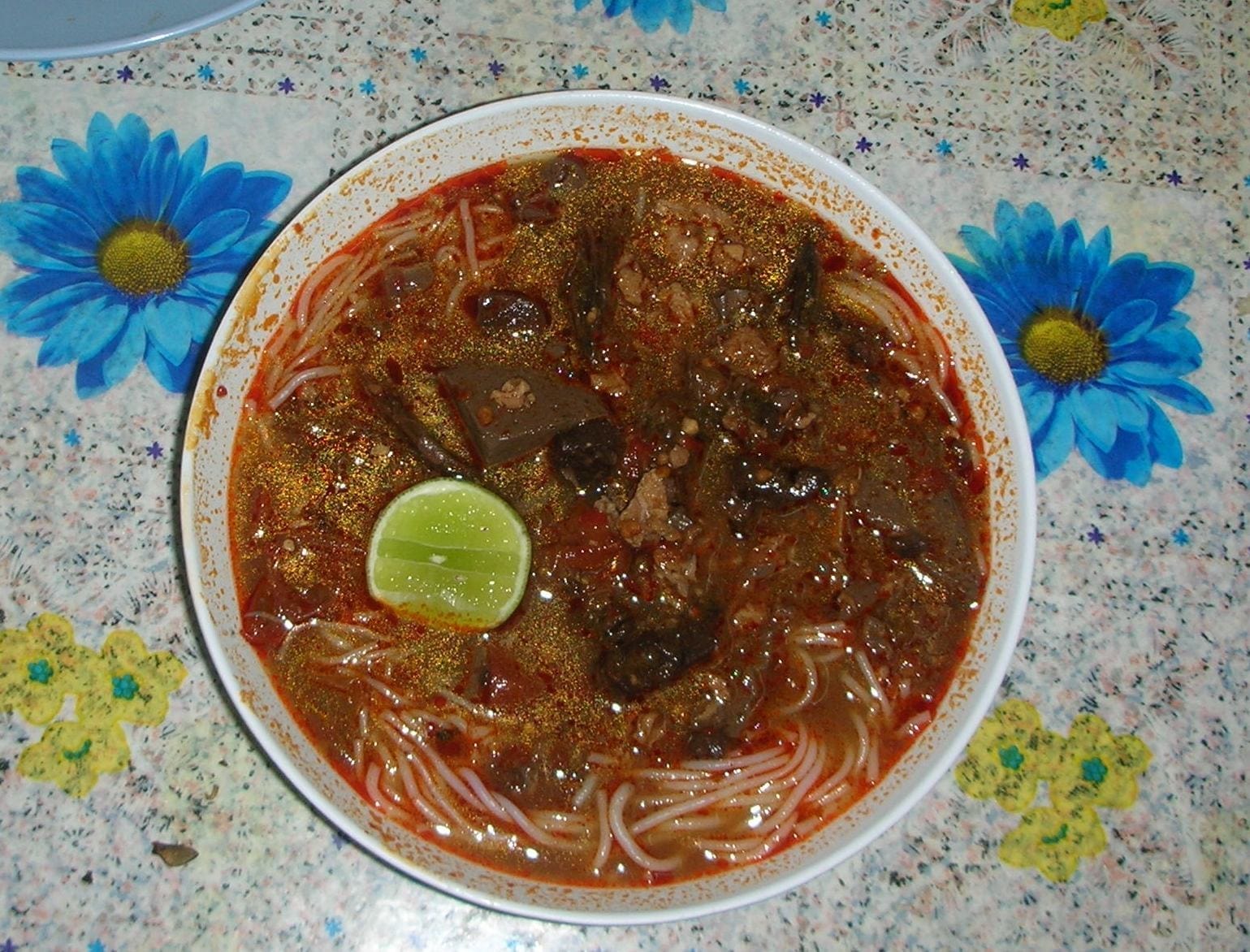
Shan khanom jeen nam ngiao
The nam ngiao here is different from Chiang Mai's — milder, with the turmeric and tomato leading and a clearer broth. They pile on crispy fried noodles without holding back, and you eat it with bean sprouts and fresh greens. This is the breakfast people in town actually eat.
Warm winged beans (Pa Khon's stall)
Boiled winged beans served warm, dressed with a savory fermented-soybean chili dip. It's a regional breakfast that locals sit down and eat as a meal. Pa Khon's stall in the market is the one everyone knows — opens early and sells out fast.
Khao kan jin (Shan rice)
Rice mixed with pork blood and seasonings, wrapped in banana leaf and steamed until fragrant, then unwrapped and topped with fried garlic. Eaten with fried chilies, it's the classic Shan breakfast parcel — cheap, and easy to eat on the move.
Alawa (Tai sweet)
A Shan dessert made from rice flour, coconut milk, and sugar, stirred until soft and chewy and topped with sesame. Lightly sweet and rich with coconut, it's a local Tai sweet that's hard to find outside Mae Hong Son.
Peng mong
A rice-flour-and-coconut cake smoked until it picks up a distinctive aroma — dense and chewy, only lightly sweet. It's an old sweet tied to Tai culture, and you'll see it sold in pieces around the morning market.
Chickpea tofu / fried tofu
Shan-style chickpea tofu, served either soft with a sauce poured over or fried crisp outside and soft within, dipped in chili paste or a punchy sauce. A filling morning snack.
Jin lung
Minced pork mixed with herbs, formed into balls and simmered in oil until fragrant — deep in flavor and meant to be eaten with rice. It's a Shan dish you'll find at sit-down spots and at Pa Sribua's near the market.
Hang le curry / oop
Well-rounded hang le pork curry alongside oop chicken or oop egg (Tai-style braised curry dishes), spooned over hot steamed rice. A heavier option for anyone who wants a proper plate of food in the morning.
Khao som with oop chicken
Turmeric rice served with tender oop chicken — a Shan dish you'll find at the rotating stalls in the market beside the Chao Pho Khao Mue Lek shrine. Just a few baht a plate, but full of flavor.
Tua nao (sheets / dip)
Shan-style fermented soybean, sold both as thin sheets grilled over flame until fragrant and pounded into a chili dip. It's a seasoning and a staple this town's kitchens can't do without — and it makes a good souvenir to take home.
Sit-down spots around the market where locals go
If you'd rather sit down for a proper meal than graze, there are several long-running Shan restaurants around Sai Yud Market that open early.
Pa Sribua's
A Shan restaurant going on 30 years, along Singhanat Bamrung Road near Sai Yud Market. Known for jin lung and oop chicken. Open from around 7am to the afternoon — go early for the full spread.
Market by the Chao Pho Khao Mue Lek shrine
Rotating stalls with daily Shan dishes like khao som with oop chicken and sweet miang, 10–20 THB a plate. Open morning to noon, an easy continuation from Sai Yud Market.
Bai Fern
A northern–Shan restaurant that's been around more than 30 years, with oop chicken and hang le curry. A good choice if you want to sit comfortably for a full meal after walking the market.
How to do the morning market without the confusion
- Start with khanom jeen nam ngiao — it's what people line up for earliest and sells out fastest, and it tastes better hot, right as the stall opens.
- Bring small cash — most things run 5–40 THB, and plenty of vendors can't break large notes or don't take QR payments.
- Tai sweets travel well as gifts — alawa, peng mong, and tua nao sheets keep for a while, so they make souvenirs you can't find in other towns.
- Just ask the names — the vendors are friendly and will tell you which dishes are spicy and which are sweet, so you don't have to guess.
Straight talk
Sai Yud is a working fresh market, not a market dressed up for photos. The floor can be wet in the early hours, so wear comfortable shoes you don't mind getting dirty and you'll enjoy it a lot more.
Plan a full eat-and-explore trip to Mae Hong Son
See the Mae Hong Son travel guide →