🔄 Updated 21 Jun 2026
A lot of people picture Mae Hong Son as the cool, misty "city of three fogs" all year round. The truth is it has its best stretch and its stretch to avoid. Pick the right month and pack right, and you'll get the full sea of fog, pine forests, and Shan culture. Show up during burning season and the air turns so murky you can't even see the mountains in your photos. Let's go through it one thing at a time so you know exactly how to prepare.
When is the best time to visit Mae Hong Son?
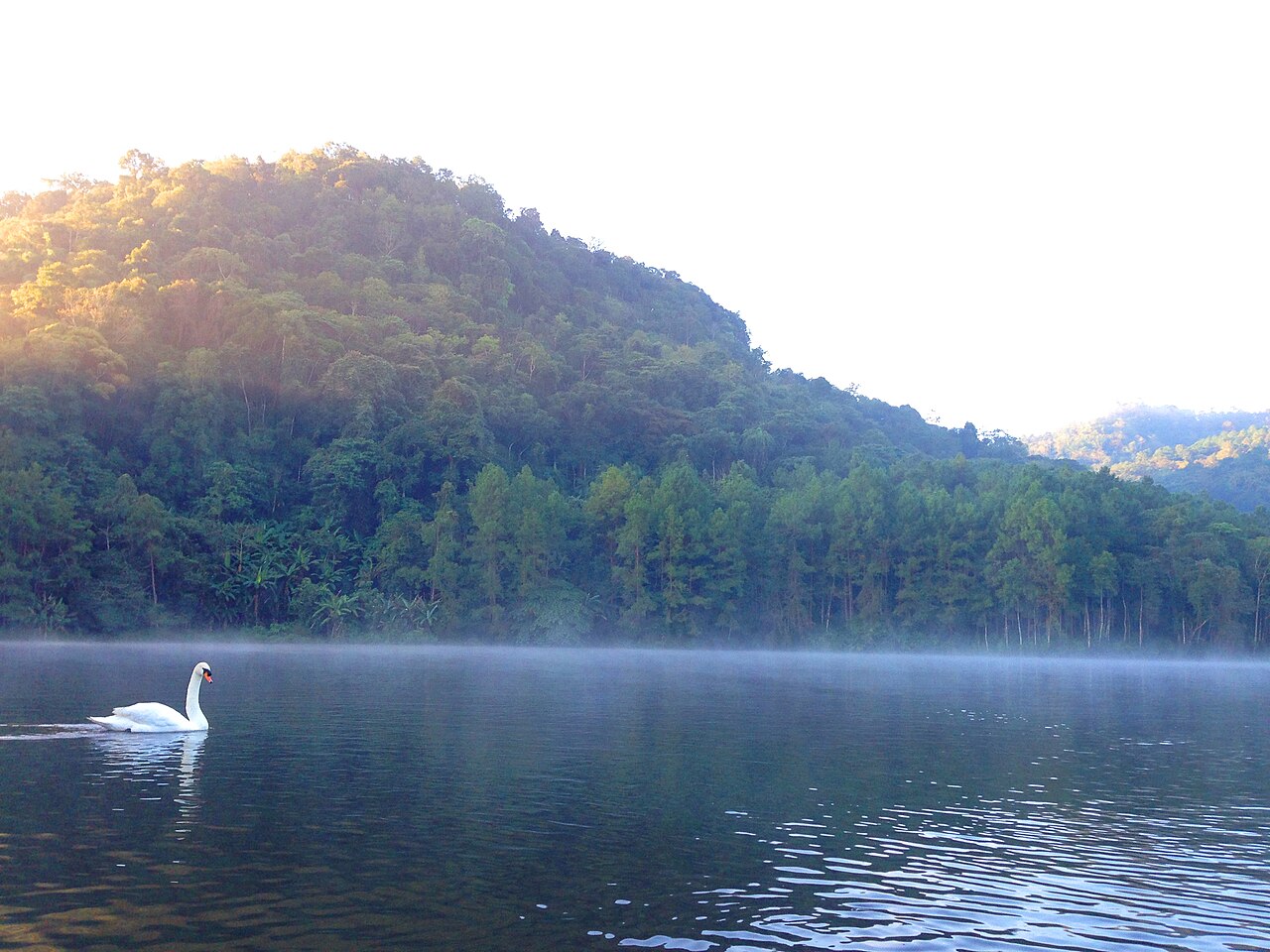
The best window in Mae Hong Son is November through early February — the cool season, when the air is crisp, the sky is clear, and there's a good chance of a sea of fog almost every morning, especially at Pang Ung and the viewpoints around town. January is the coldest month of the year, and the fog tends to roll in thickest from late January to mid-February.
- Nov–Feb (cool season) — the golden window: clear skies, cool air, sea of fog. But it's busy and accommodation is at its priciest, especially around New Year.
- Mar–Apr (dry / burning season) — best avoided. Heavy haze, murky skies, and the mountain views vanish into the smoke.
- May–Oct (rainy season) — lush green, beautiful waterfalls, fewer people, cheaper rooms. But it rains often and the curves get slippery, so build in extra time and watch for landslides.
Keep it simple
Want the surest shot at a sea of fog? Aim for 20 January – 15 February — coldest air and the thickest fog of the season. Just book your room several weeks ahead, because everyone is fighting for the same spots.
Dodging the March-April haze
This is the one a lot of people get wrong. Mae Hong Son ranks among the worst provinces in Thailand for PM2.5 dust during March and April, from crop burning and forest fires both inside Thailand and across the border. On some days the readings hit red and visibility at the airport drops; the mountains you came to see become faint shadows in the smoke.
- If you can't avoid these months, check the daily AQI before you head out (the AirVisual app or pm25.gistda.or.th).
- Carry an N95 mask, not an ordinary cloth one.
- If you have allergies or asthma, push the trip to the cool season instead — don't force it.
- If the readings spike, switch your plan to indoor activities: temples, markets, cafes instead of mountain viewpoints.
Straight talk
A trip built around the sea of fog or mountain views in March-April has a high chance of disappointing you, because the smoke swallows everything. If nature is the whole point, shifting to the cool season is well worth it.
How cold does it get, and what to pack?
In cool season, the town of Mae Hong Son averages a low of around 15–16°C, but up on the hills and at Pang Ung it runs another 4–5°C colder, with record lows touching 3°C. Pre-dawn, while you're waiting for the fog, it gets bitterly cold. People coming from Bangkok tend to underestimate it and end up shivering all night.
- A thick jacket or windbreaker, at least one, for the pre-dawn hours up on the hills.
- Thin layers to stack — once the midday sun is out it warms up and you can peel them off.
- A wool beanie, gloves, and a scarf if you're overnighting at Pang Ung or Ban Rak Thai.
- Lip balm and moisturizer — the dry air chaps lips and skin easily.
The 1,864 curves and beating car sickness
The road into Mae Hong Son is famous for having the most curves in Thailand. Highway 108 (Hot–Mae Sariang–Mae Hong Son) earned the nickname the 1,864 curves, while Route 1095 (Chiang Mai–Pai–Mae Hong Son), roughly 245 km, is every bit as winding. The Pai–Pang Mapha stretch barely stops curving — buses keep sick bags ready for passengers as standard. If you get car sick easily, take it seriously.
- Take motion-sickness pills at least 30 minutes before you set off, not once you already feel queasy.
- Sit up front or by a window and look far ahead — don't bury your face in your phone.
- Eat just enough; don't go too hungry or too full. Keep some sour snacks and water to sip.
- Carry an inhaler, a balm, and a spare bag, and ask the driver to stop for breaks along the way.
Driving yourself or riding along
If you're driving, check your brakes and tires before you set off, use a low gear on the descents, and avoid driving at night — it's dark and dangerous. If you get car sick very easily, flying straight into Mae Hong Son Airport and renting a car in town is far easier than the long road ride from Chiang Mai.
How to get to Mae Hong Son
There are two main ways in — fly or go by road — and each suits a different style. Choose based on your time and your tolerance for curves.
- Plane — there are flights into Mae Hong Son Airport (HGN), with carriers like Nok Air and Bangkok Airways, mostly connecting through Chiang Mai. The hop is short at around 30–40 minutes and skips the curves entirely — good if you're short on time or get car sick easily.
- Minivan / bus from Chiang Mai — leave from Chiang Mai Arcade terminal, via either the Pai line (1095) or the Mae Sariang line (108). It takes around 6–8 hours depending on the route, cheaper than flying but with lots of curves.
- Self-drive / rental car — the most freedom: stop at Pai, Tham Lod cave, and viewpoints as you please. But you need to be confident driving mountain roads and sure of the car's condition.
Around town, songthaews (shared pickup trucks) run set routes out to the outlying sights like Pang Ung, Ban Rak Thai, and Pai. The stand is near the fresh municipal market in the middle of town. If you're not driving yourself, chartering a songthaew or hiring a local driver is what a lot of people go for, since the drivers know the curves well.
Rough budget per person
Your budget depends on whether you fly or take the road, and what kind of place you stay in. Here are rough per-person numbers for a 3-day, 2-night trip to start your planning from. Real prices swing with the season and holidays.
Budget: road trip, guesthouse stay
Minivan from Chiang Mai and back, a guesthouse or hostel, eating at markets and local spots, hitting the sights you can reach on public songthaews.
Comfortable: fly in, mid-range hotel
Fly into Mae Hong Son to skip the curves, stay at a mid-range hotel in town, rent or charter a car for the outlying sights.
Relaxed: mountain-view resort
Stay at a nice view resort near Pang Ung or Ban Rak Thai, charter a private car, and focus on photos and slow cafe time — no rushing.
Save on budget
Cool-season rooms are pricey and fill up fast. If your budget is tight, skip New Year and long holiday weekends and book ahead — you'll get a much better rate. Have a look through our hotel roundup before you hit book.
Packing checklist
- Warm jacket + layers — pre-dawn on the hills is genuinely cold; don't underestimate it.
- Motion-sickness pills — take them 30 minutes before you leave, and carry spares.
- N95 mask — in case the dust readings climb, especially in the dry season.
- Comfortable walking shoes — some spots involve uphill walks and gravel tracks.
- Personal medication + first-aid kit — some places are far from a pharmacy.
- Spare cash — many shops and stays outside town don't take cards, and signal is patchy in spots.
- Power bank + charging cables — in case of a power cut or a long stretch outside town.
- Lip balm, sunscreen — the mountain sun is strong and the air is dry.
Bag packed? Now plan your Mae Hong Son route.
See the Mae Hong Son travel guide →