🔄 Updated 21 Jun 2026
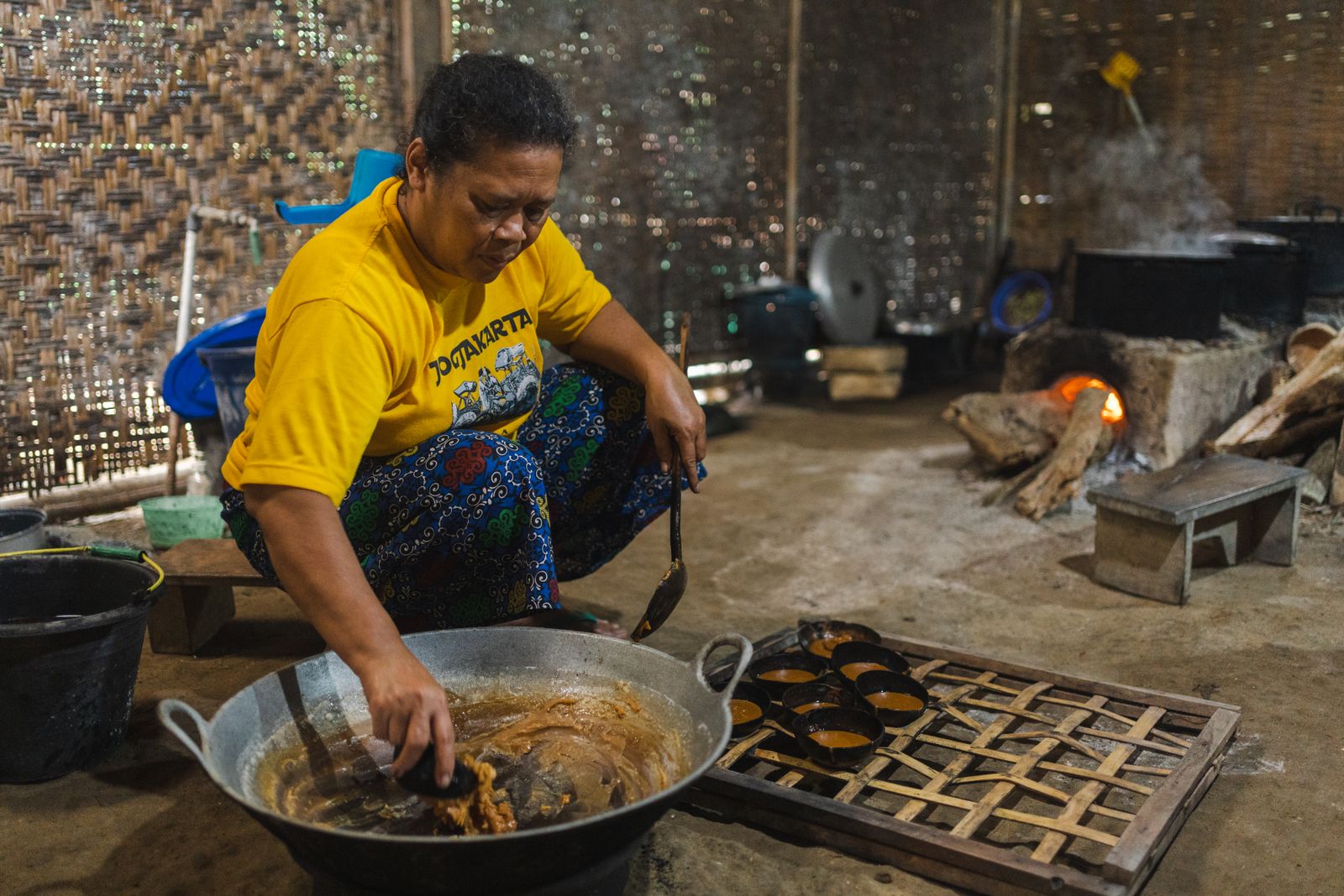
Mae Klong coconut sugar doesn't come easy. Growers climb the coconut palms before dawn, slice the flower stalk, and tie on a bamboo tube to catch the sap that drips out, collecting twice a day — morning and afternoon. The morning sap is sweeter. As soon as it's gathered, it goes straight into a wide pan over a wood fire in the kiln and boils for hours, stirred constantly so it doesn't burn, until it reduces to a thick, sticky, golden-brown syrup. Then it's poured into moulds to set as palm sugar cakes, the sweet smell drifting through the whole boiling shed.
What makes Mae Klong coconut sugar special
Real Mae Klong coconut sugar is boiled from 100% fresh sap with no cane sugar added, so the sweetness is soft and rounded, with its own distinct aroma and a faint salty edge from the brackish riverside soil. That's different from the tinned palm sugar you find in most markets, which is usually cut with cane sugar to make it whiter and cheaper. Real Mae Klong sugar runs a deep brown rather than bright white, with a soft texture that melts fast — which is exactly why old-school Thai dessert shops still choose it for the flavour and aroma it gives.
How to spot the real thing
Real coconut sugar is golden-brown rather than bright white, soft enough to dent when you press it, with a smell like light caramel, and it dissolves quickly in warm water. If it's an unnaturally pale, set-hard block, or sharply sweet with no aroma, it's usually been cut with a lot of cane sugar. Taste before you buy — most genuine shops are happy to let you sample.
Want to taste deeper? Try a Samut Songkhram food tour or cooking class
Half a day with a local who knows the lanes — or cooking a dish yourself — teaches you more than just eating. Book ahead on Klook or GetYourGuide.
Where to watch the real coconut sugar boiling
If you've made it to Mae Klong and want to see the real process, several places let you watch the boiling. Some demonstrate it for free; some run workshops where you can try stirring the sugar yourself. We've picked the ones that are genuinely open and easy for visitors to reach, ordered by convenience.
Palm Sugar Kiln, Amphawa Chaipattananurak Project
A demonstration centre for real coconut sugar in the middle of Amphawa, an easy walk from the floating market. You can see the whole kiln process from fresh sap to the moulded cakes, and the project's Pattara Pat shop sells real sugar and souvenirs on site. Best for a first visit — the most informative and the easiest to reach.
Tha Kha Floating Market (Farmers' Housewives Group)
A community floating market with a traditional feel, where locals still demonstrate boiling coconut sugar, making Thai sweets, and weaving coconut fronds. It only opens on weekends and on certain lunar-calendar days, and it's less crowded than Amphawa — good if you want to see the real way of life.
Suan Riam Arun (The Monrak Mae Klong)
A coconut grove in Mae Klong town where the owner climbs the palms and boils everything by hand. There are three kilns, with a focus on real sugar that's soft with a faint salty edge. Visits run as scheduled Farm Visit sessions, so check the dates and book ahead. Good if you want a deeper look right inside the grove.
Suan Khun Ta Amphawa (Organic)
An organic coconut sugar grove in Amphawa making real palm sugar cakes and fresh sap. At certain times it opens for kiln visits and direct sales from the grove, with better prices than buying at the market. Follow their page for open dates before you go — good for anyone who likes organic products.
Suan Tan Tha Kha (Boiled with phayom wood)
A coconut sugar maker in the Tha Kha area that drops phayom wood into the fresh sap to keep it from fermenting, following old know-how, for a richer, more fragrant sugar. They have regular customers who order from them. If you're passing through Tha Kha, stop and ask to see the kiln and buy some to take home.
Amphawa Garden
A real coconut sugar producer in Amphawa that sells direct and ships nationwide, with several grades of palm sugar cake to choose from. If you can't fit in a kiln visit but still want real sugar to take home, ordering from here is convenient — a souvenir option you can count on for the real thing.
The best time to catch the boiling
Sugar boiling happens daily through the tapping season, but the busiest stretch — when the fresh sap is at its sweetest — is the dry season (roughly November to April). To catch the boiling for real, go mid-morning, since that's when the morning sap is going into the pan. In the rainy season the sap turns thinner and some groves pause for a while.
Mae Klong–Amphawa sweets made with coconut sugar
The charm of Mae Klong coconut sugar really shows once it goes into the sweets — the aroma and soft sweetness of real sugar come through clearly. These are the desserts that star palm sugar cake and that you can find all over Amphawa.
- Thong yot — egg-yolk drops cooked in syrup. With coconut sugar they take on a deeper golden colour and a richer aroma than with cane sugar. An auspicious sweet that the old shops still make by hand.
- Sweet sticky rice (khao niao mun) — sticky rice in rich coconut milk, sweetened with coconut sugar, eaten with thong yot, custard, or nam dok mai mango. A classic of the Amphawa floating market.
- Khanom tan — a steamed, pale-yellow cake made from sugar-palm fruit pulp, sweet and fragrant with coconut sugar and coconut milk, topped with grated coconut. A local sweet that's easy to find around here.
- Palm sugar cake sweets / khanom mo kaeng — desserts whose whole appeal rides on the coconut sugar. The mo kaeng custard has a lightly browned, fragrant top — sweet, just right.
- Khanom tom / khao tom mat — dough wrapped around coconut filling cooked down with palm sugar, sweet and rich in the old style. A street-cart sweet you'll see around the floating market.
Dessert shops in Amphawa that are actually open
If you want to taste sweets made with real Mae Klong coconut sugar, we've picked Thai dessert shops in Amphawa that locals and reviewers have actually been to. Most are in the Amphawa floating market or near the temples, and their hours follow the market days (Friday afternoon–Saturday–Sunday). Check with the shop again before you go.
Baan Khanom Ketmanee
An old-style Thai dessert shop that takes it up a notch — you can taste omakase-style before buying. It has rare sweets like rai rai, yok manee, thao thong kip ma, sanae chan, ja mongkut, and thong ek, all made with real coconut sugar. Some sessions even let you make the sweets yourself. Good for anyone serious about Thai desserts.
Wanna Khanom Thai Amphawa (Wat Phet courtyard)
A Thai sweets maker by the Wat Phet Samut courtyard, with fresh local desserts — sweet sticky rice, black-bean sticky rice, boxed Thai sweets, and catering for coffee breaks. Mae Klong locals and visitors stop by regularly. Good for buying souvenirs to take home.
Khanom Thai Baan Dara (riverside)
A Thai dessert buffet on the Mae Klong River, all-you-can-eat with over 30 items a day — sweet sticky rice, layered khanom chan, and coconut-milk sweets made with coconut sugar. Easy on the wallet, around ฿79 for adults and ฿49 for kids. Good for a family that wants to try lots of different sweets.
Thai sweet carts in Amphawa floating market
Walk the Amphawa floating market and you'll find vendors carrying baskets of fresh Thai sweets — khao tom mat, khanom tan, khanom tom, sticky rice with custard — and many use local coconut sugar. A few baht a piece, perfect for grazing as you stroll.
Pattara Pat (Amphawa Chaipattananurak Project)
The project's shop, selling real coconut sugar and sweets made with the project's own sugar. Watch the boiling, then buy right there in one spot — confidence that it's the real thing. Good if you want to do both: see the kiln and take home sweets and sugar.
Buying palm sugar cakes as a souvenir
Pick palm sugar cakes that are soft, golden-brown, and fragrant, with a label saying 100% pure. To keep them a while, put them in an airtight container in the fridge. A little syrup weeping out is normal for unblended sugar — just scoop out what you need. For making sweets or sweetening drinks, it's far more fragrant than cane sugar.
Watch the boiling, eat the sweets, then make the most of Mae Klong–Amphawa
See the Samut Songkhram travel guide →