🔄 Updated 21 Jun 2026
What makes Mae Klong souvenirs special is that nearly everything is genuinely local, made and sold by families for generations. The mackerel comes from fishing boats working the Gulf coast at the mouth of the Mae Klong River, the palm sugar is boiled down fresh in Amphawa orchards, and the pomelo and shrimp paste come from the gardens and mangroves around Khlong Khone. We've ranked the souvenirs by what people genuinely buy, with the spots that are open right now.
The Mae Klong souvenirs people actually buy
Mae Klong mackerel (steamed in baskets)
The star of the town. Mae Klong mackerel has a short body and a bowed head because it's bent to fit the little steaming basket. The flesh is soft and rich since it's caught right where the brackish water meets the gulf. Grab a small basket, fry it up, and eat it with shrimp-paste chili dip. The real deal isn't oversized and turns oily and glistening when you fry it.
Real Amphawa coconut palm sugar
Boiled down from fresh sap tapped off the coconut flower twice a day. It's fragrant and rounded-sweet without the harsh edge of sugar cut with cane sugar. The genuine kind is soft, with a pale yellow-brown colour. Few people still make it the old way, so buying straight from an orchard is your best bet.
Khlong Khone shrimp paste
Shrimp paste made from tiny krill harvested in the Khlong Khone mangroves. The texture is fine and the colour a purplish pink, with a savoury aroma that isn't overly salty. Use it in shrimp-paste chili dip or shrimp-paste fried rice and the dish levels up instantly. It comes in tubs that are easy to pack home.
Khao Yai white pomelo
The Khao Yai white pomelo variety is grown along the Mae Klong River, with big, juicy segments and a sweet flavour edged with just a little tartness, never bitter. It's one of the province's signature fruits. During pomelo season (roughly Aug–Nov) it's at its best and cheapest.
Old-style Thai sweets (thong yip, thong yot, foi thong)
Amphawa is home to royal-style Thai sweets. You'll find thong yip, thong yot, foi thong and met khanun all over the floating market, made fresh in the evening. Pick a stall with quick turnover and you'll get the freshest batch.
Khanom krok, krong kraeng kathi & tao suan
Warm, fresh sweets best eaten on the spot, though some vendors will box them up to go. Charcoal-grilled khanom krok smells of coconut cream, and krong kraeng in sweet coconut milk is rich and comforting. Better bought to snack on while you wander the market than to carry far.
Sun-dried gourami / salted sea fish
Dried goods that travel easily. Sun-dried snakeskin gourami has firm flesh, and salted sea fish is great fried up with rice porridge. You'll find them at the mackerel stalls, which usually sell processed seafood too.
Banana chips, taro chips & crispy roti
A favourite snack at Amphawa souvenir shops. Plenty of vendors run a 3-bags-for-100-baht deal — crisp, just sweet enough, and a light-on-the-wallet gift you can hand out to a crowd.
Razor clams & processed seafood
Don Hoi Lot is the province's razor-clam ground. Besides eating them fresh, you'll find pickled and processed versions to take home, plus other dried seafood at the same markets.
Samut Songkhram khom lychee
The khom lychee variety has thin skin, thick flesh, a shrivelled seed and a sweet fragrance — another fruit the province is known for. It only shows up during lychee season, around Apr–May, so if you're here then, don't pass it up.
How to tell real Mae Klong mackerel
Mae Klong mackerel is fairly short with a bowed head (from being bent into the steaming basket), not long and slender. When you fry it, the flesh turns oily and glistening. If a stall says Mae Klong but the fish is unusually long and large, ask where it came from before you buy.
Want to taste deeper? Try a Samut Songkhram food tour or cooking class
Half a day with a local who knows the lanes — or cooking a dish yourself — teaches you more than just eating. Book ahead on Klook or GetYourGuide.
Where to buy your souvenirs
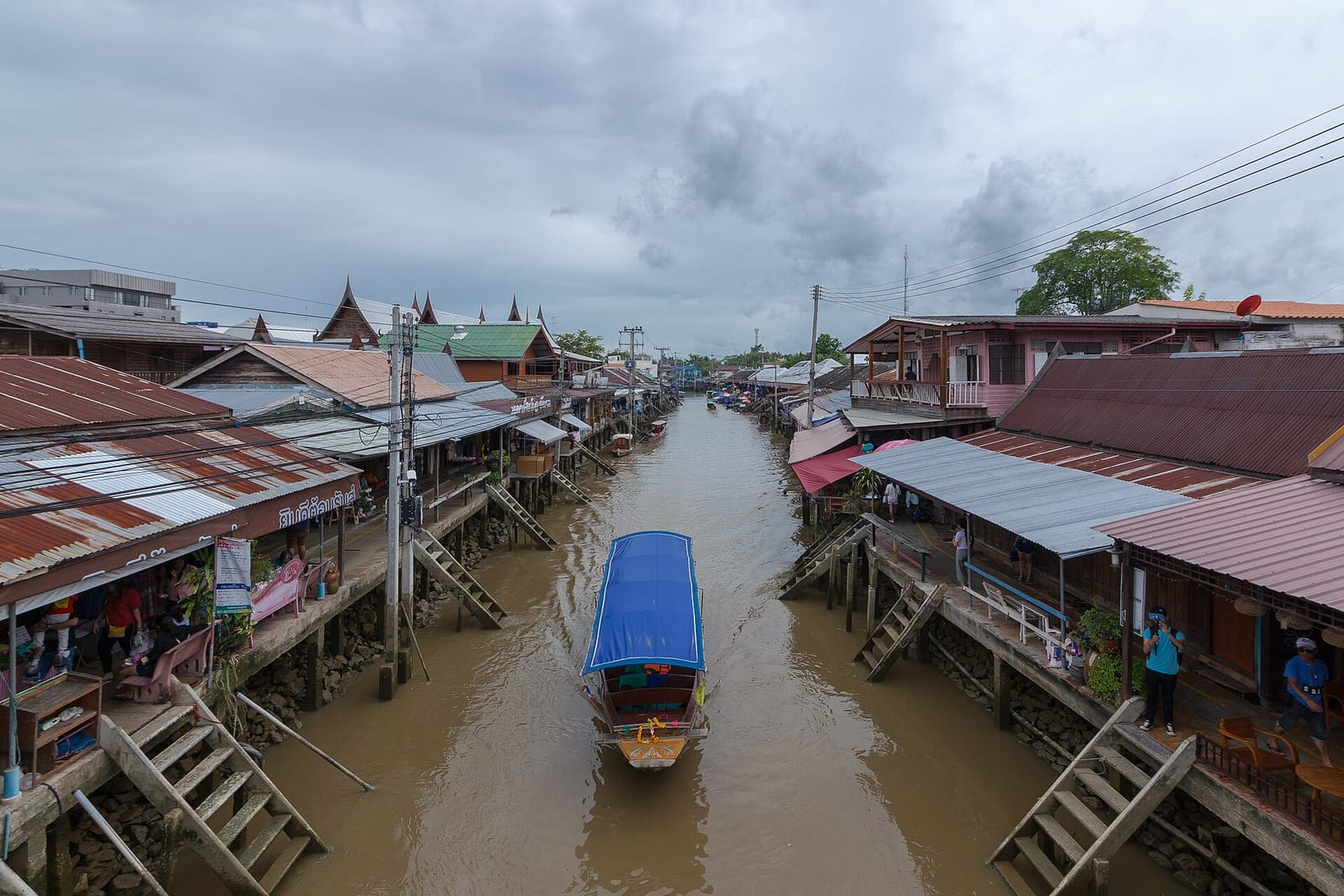
If you want to get everything in one place, Mae Klong Market (in central Samut Songkhram) has mackerel, shrimp paste, palm sugar, processed seafood and seasonal fruit, and it's open daily. Amphawa Floating Market is the one for Thai sweets and snacks, but it only runs Friday to Sunday, from afternoon into the evening. For genuine coconut palm sugar, your best bet is buying straight from an Amphawa orchard.
Mae Klong Market (in town)
The province's souvenir hub — mackerel, shrimp paste, processed seafood and seasonal fruit. Open daily, everything in one stop.
Amphawa Floating Market
Thai sweets, snacks and processed souvenirs in a canal-side setting. Open Fri–Sun, afternoon to evening.
Amphawa palm-sugar orchards
Buy real coconut palm sugar straight from the source. Some orchards let you watch the sugar being boiled and pick a fresh batch off the stove.
Picking souvenirs that are worth it, with no regrets
- Fresh items (mackerel, pomelo, lychee) — buy them right before you head home and pack a cooler bag. Eat mackerel within 1–2 days if it isn't frozen.
- Palm sugar — go for the soft kind with a pale yellow colour that smells fragrant. If it's hard and dried into a block, it's usually been cut with a lot of cane sugar.
- Shrimp paste — choose the fine-textured kind with a fragrant, not overpowering, smell, and seal it in a tub so it doesn't scent everything on the way.
- Fresh Thai sweets — buy from a stall with quick turnover for the freshest batch, and eat them within a day or two.
- Dried goods (gourami, banana chips) — these travel well and keep, so they're ideal gifts to hand around to a group.
A tip on timing
If you want both the fresh produce and the floating-market sweets in one trip, come Friday to Sunday. Buy mackerel and shrimp paste at Mae Klong Market in town in the morning, then head to Amphawa in the afternoon to wander the floating market for sweets.
Plan a full day of eating and exploring around Mae Klong and Amphawa
See the Samut Songkhram travel guide →