🔄 Updated 21 Jun 2026
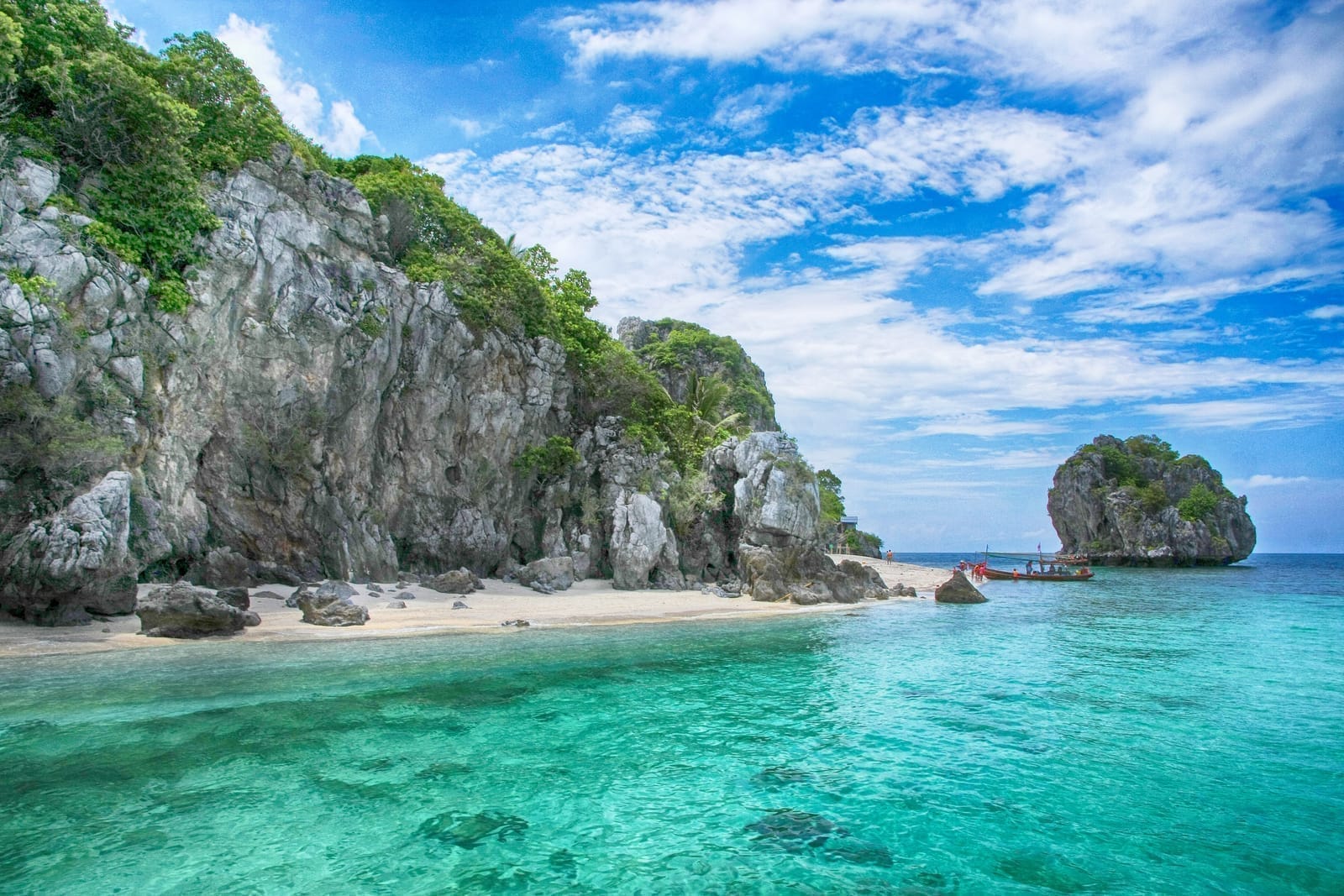
Mu Ko Chumphon National Park covers stretches of sea and islands across several districts, from the Chumphon river mouth down through Sawi and Thung Tako to Lang Suan. More than 40 islands of all sizes are scattered through the area: some are rock islands where swiftlets nest, some have white-sand beaches you can walk on, and around them are the reefs that make up the dive spots. The charm of this coast is that it's still not as crowded as the Andaman side. People haven't spread across it the way they have in Krabi or Phuket, so the atmosphere stays calmer.
Another thing people who work the sea here bring up often is that the waters off Chumphon are a route that whale sharks regularly pass through to feed in certain seasons, especially around the Ko Ngam islands. If you're lucky you have a shot at seeing a big one even on a snorkeling trip. The area is also one of the country's densest spots for sea fans and black coral, which keeps underwater photographers coming back.
Top dive spots in Mu Ko Chumphon
Chumphon's dive spots are spread across several islands. Most one-day tours loop around 3–4 islands so you get a mix of snorkeling and beach time. The ones people talk about most are the Ko Ngam group and the islands around them, listed below.
Ko Ngam Yai
The big rock island that's the star of the Chumphon sea. It's ringed by hard-coral gardens and sea fans, with fish of every kind, and it's the spot in the park with the best chance of meeting a whale shark. Good for both snorkeling and diving.
Ko Ngam Noi
Right next to Ko Ngam Yai, its underwater rock walls are lined with sea fans and brightly colored soft coral, with moray eels, groupers and schools of small fish gathered in clusters. A favorite of underwater photographers.
Ko Maphrao
A small island with a clean white-sand beach and clear shallow water, good for beginners and kids because the shallow-water coral sits close to the surface and is easy to see. Easy to walk the beach too.
Ko Kalok
An oddly shaped rock island where boats usually stop so you can snorkel the coral around it. The water is clear and you can see the fish schools easily — a popular stop on the one-day 4-island programs.
Ko Thalu
An island whose standout feature is a rock arch you can pass through. The water around it is clear, with coral and fish schools to snorkel over. It's another island on the tour route over by Ko Ran Pet and Ko Ran Kai.
Ko Ran Pet–Ko Ran Kai
A pair of islands that make up another popular snorkeling spot on the far side, with clear shallow water and coral of many kinds. They're usually run as a one-day tour paired with Ko Thalu, with easy boat access from the Lang Suan–Thung Tako piers.
Ko Mattra
An island with both a sandy beach and a reef. Some tours use it as a lunch and swim stop. The atmosphere is laid-back, good for a mid-trip break.
Ko Kula
An island on the Ao Kram side with the shortest boat ride, just 15–20 minutes. It has a sandy beach and clear shallow water, with snorkeling and kayaking around the island. Good for anyone who wants an island day without a long boat ride.
Where should beginners start
If you've never snorkeled before, start at Ko Maphrao or Ko Kula, where the water is shallow and the coral sits close to the surface. Once you're comfortable, move on to the Ko Ngam group, where the water is deeper and there's a chance of a whale shark. Most tours include life jackets and a guide who stays with you, so just tell the guide up front if you're not a strong swimmer.
Want more out of Chumphon? Book tours & activities
Booking online ahead on Klook or GetYourGuide is usually cheaper than the gate and skips the queue. Pick only the experiences you actually want — prices and availability are shown live on each site.
Best time to go and when the water is clearest
Chumphon is on the Gulf of Thailand, so the clear-water, calm-wind season runs roughly from April to October, and especially May, which many people say is the clearest water of the year — you can see the coral and fish schools sharply. From November to February it's the monsoon season on the Gulf side, with strong waves and a lot of rain, and many tour operators stop running or can't take boats out every day.
- April–May — water at its clearest and the heat is just right for swimming. This is the high season for the Chumphon sea.
- June–October — still good for getting in the water, with rain in spells but plenty of days when the sea is still lovely, and fewer people than in the hot season.
- November–February — monsoon season, strong waves, boats often can't go out. Always check with your tour operator first.
- Whale sharks — no guarantees, but people see them most often during clear-water season around the Ko Ngam islands. Treat it as a bonus rather than something to count on.
Getting there and the piers
The park spans several districts, so there are several departure piers depending on which island group you're heading for. Most tours meet you at the pier and set off together. If you're driving yourself, check with the tour operator which pier they use, since each one is in a different district.
- Ao Kram Pier (Sawi district) — the closest departure for Ko Kula, a 15–20 minute boat ride. Good for an easy trip without a long ride.
- Tha Yang Pier (Mueang district) — the main pier for many Ko Ngam dive tours, and convenient to reach from town.
- Lang Suan–Thung Tako piers — for the Ko Ran Pet–Ko Ran Kai and Ko Thalu programs on the southern side of the province.
- Getting to Chumphon — take the train or a coach to Chumphon station and carry on to the pier, or fly into Chumphon airport and rent or charter a car from there.
Booking a tour or chartering a boat
If you'd rather not arrange it yourself, booking a one-day snorkeling tour with a local operator is the easiest option — they sort out the boat, guide, gear and lunch for you. A join-in tour (sharing with another group) starts at around 1,300–1,500 THB per person. If there are several of you, you can charter your own boat instead; a private boat starts at around 1,200–1,500 THB and up, depending on the size of the boat and the distance. Prices shift with the season and fuel costs, so confirm with the operator again before you book.
Park entry fee and costs
The park entry fee is separate from the tour or boat fare. Some tours include the entry fee, others have you pay it yourself at the checkpoint, so ask clearly when you book to avoid confusion on the day.
- Park entry (Thai) — 40 THB adults, 20 THB children.
- Park entry (foreigners) — 200 THB adults, 100 THB children.
- One-day join-in snorkeling tour — around 1,300–1,500 THB per person, including boat, guide, gear and lunch.
- Chartering your own boat — from around 1,200–1,500 THB per boat and up; works out cheaper per head for a group.
- Gear rental — if you go on your own, masks and fins can be rented at the pier for a few hundred THB.
Mu Ko Chumphon as a one-day round trip
Snorkel 3–4 islands, there and back in a day
Dive your fill, stay on an island or in town
What to bring before you dive
- Reef-safe sunscreen — it helps protect the coral, and some spots in the park ask you to use it.
- A long-sleeve sun shirt — the sea sun is strong; a rash guard helps prevent burns and means you don't need as much sunscreen.
- A waterproof camera or pouch — the water is clear and the coral shows up sharply, so it's a shame not to get photos.
- Seasickness pills — some spots involve a long boat ride; if you get seasick easily, take them before setting off.
- Cash — many piers and island shops take cash only, and the phone signal is weak in some spots.
Straight talk before you decide
The Chumphon sea really is beautiful, but it depends heavily on the season. Come at the wrong time of year (Nov–Feb) and the water can be murky or the boats may not go out at all. So if you're mainly coming to dive, aim for April–October first, and go in knowing that whale sharks are a matter of luck, not something you'll see on every trip. If you come hoping to see clear water and pretty coral, you won't be disappointed.
What else to do around here
Diving in Mu Ko Chumphon (in depth)
Want the full details on the dive spots, tours and serious dive trips? See the deeper Chumphon diving guide.
BeachSai Ree Beach
An easy-to-walk beach in town next to the Krom Luang Chumphon shrine, good for a stop before or after your boat trip.
FoodChumphon seafood
Back from the sea, you have to finish with fresh seafood at the places locals actually eat, known for grilled prawns and crab-roe gaeng som.
Plan your whole Chumphon trip to fit together
See the Chumphon travel guide →