🔄 Updated 21 Jun 2026
Almost all of Mukdahan's edible souvenirs revolve around moo yor, naem, Isan sausage and gunchiang — cured pork products that keep for several days and ride home in the car just fine. What sets Mukdahan moo yor apart is the dense texture, low filler, and that aroma of pepper and garlic. Many shops have been making it since their parents' generation, and you'll also find Lao–Vietnamese goods at the Indochina Market along the Mekong. This guide splits into two parts: the moo yor and naem makers worth trying, and where to shop most conveniently. We close with how to pick fresh and carry it home without it spoiling.
Quick take — what to buy, and where
- Want the original old-school moo yor — Mae Nin Moo Yor under the bodhi tree, the maker that once won the town's moo yor contest.
- Want to compare several makers in one spot — head to the Mekong-side Indochina Market, where moo yor vendors set up right at the steps down to the lower level.
- Want the full set — moo yor, naem, sausage, gunchiang — bigger souvenir shops like Mae Thuan, Mae Pailin and Mae Aem can put together a gift box.
- Want something unusual from the Lao–Vietnamese side — wander the Indochina Market for dried goods, spices and imported snacks.
Want to taste deeper? Try a Mukdahan food tour or cooking class
Half a day with a local who knows the lanes — or cooking a dish yourself — teaches you more than just eating. Book ahead on Klook or GetYourGuide.
Moo yor, naem, sausage — the makers locals actually buy from
We've ordered these by who locals mention most and buy from repeatedly, not strictly by taste, since each maker has its own strength. Some are known for pure-meat moo yor, others for their naem or Isan sausage. The prices listed are rough ranges and shift with size and the season.
Mae Nin Moo Yor, the original (under the bodhi tree)
The original maker locals think of first. It once took first prize at the moo yor contest at Mukdahan's local-products fair. The moo yor is dense and peppery, good plain, and comes in several styles — plain, with skin, and with crunchy tendon. The shop sits under the bodhi tree in town, and there's a small stall at the steps down into the Indochina Market too. Cash, with delivery nationwide.
Mae Thuan Moo Yor
A big maker that's been doing moo yor, naem, Isan sausage, gunchiang and mam (sour fermented pork) for decades. Good if you want it all in one stop, and they'll box it up as a gift set. Delivery available. The moo yor is firm and doesn't fall apart, and the Isan sausage has a nicely balanced sourness — people often buy this one by the case for gifting.
Mae Pailin Moo Yor
An in-town moo yor maker locals know by name, doing fresh moo yor, naem and Isan sausage with a hearty homestyle hand. The moo yor is soft and fragrant with seasoning, good both for eating yourself and bringing to relatives. There's a storefront where you can look before you buy.
Mae Aem Moo Yor
A souvenir shop with fresh moo yor, naem and gunchiang, with a focus on cleanliness and hygiene — good if freshness is your concern. Reviewers note it's easy to shop and easy to choose, and the staff can tell you how many days each item keeps. A solid choice to grab right before you get on the road home.
Moo yor stalls at the Indochina Market (steps to the lower level)
At the steps down to the lower level of the Indochina Market, several moo yor vendors set up stalls, including agents of big names like Mae Nin. The upside is comparing several makers in one spot — some stalls let you taste before buying, and you can pick up other souvenirs in the market while you're there. Good if you're short on time and want it all in one place.
Isan sausage & naem stalls at the municipal market
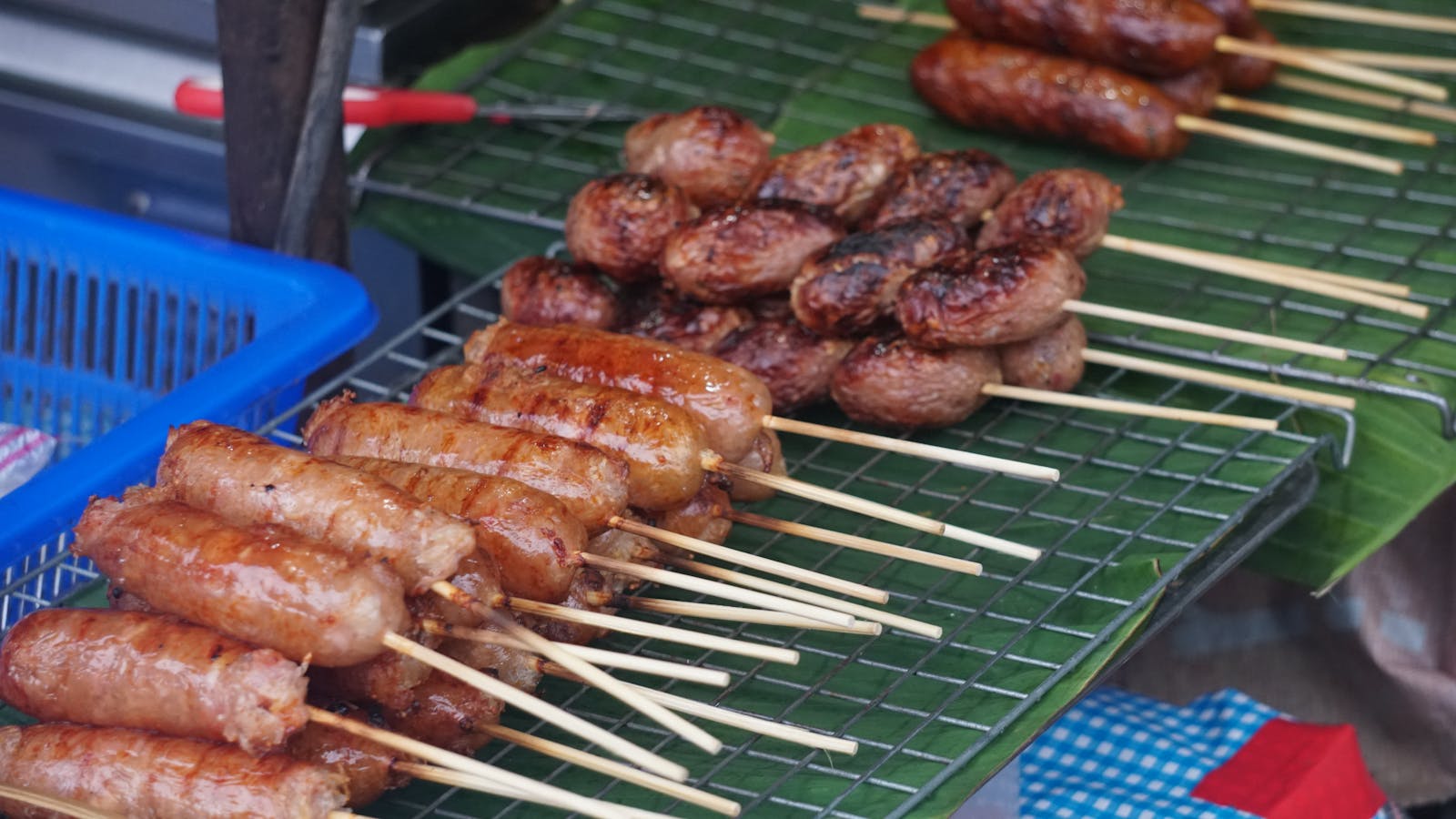
Inside the municipal market in the town center, stalls make fresh Isan sausage and naem for locals. The Isan sausage is rice-fermented with a natural sourness, great grilled and eaten hot, and the naem has a nice tang. It's cheaper than the souvenir shops since it's aimed at residents — better for eating along the way than carrying far.
Gunchiang & mam at in-town souvenir shops
Beyond moo yor, Mukdahan's cured-pork souvenirs also include sweet, fragrant gunchiang and sour mam. Many in-town souvenir shops make their own and sell them alongside moo yor, so it's easy to build a mixed set. Gunchiang keeps longer than moo yor, which makes it the better pick for a long trip home.
Lao–Vietnamese dried goods at the Indochina Market
If you want a souvenir that isn't cured pork, the Indochina Market has dried goods and spices imported from Laos, Vietnam and China — Lao coffee, sunflower seeds, imported snacks and seasonings. Prices are negotiable, and it's a nice counterpoint to all the meat. The kind of souvenir you won't find in other towns.
How to pick good moo yor
Good moo yor should be dense, a natural pale-pink color — not washed-out and floury, not overly red. Press it and it springs back rather than crumbling. If you can taste it, look for that pepper-and-garlic aroma and a not-too-salty balance. Makers heavy on filler give themselves away the moment you chew. Just ask the seller straight up what day it was made and how many days it keeps.
Indochina Market — the main shopping spot by the Mekong
The Indochina Market sits along the Mekong on Samran Chai Khong Road, near Wat Si Mongkhon, and it's the town's main souvenir hub — moo yor, naem, clothes, dried goods, and imports from Laos, Vietnam and China. The market has an upper zone along the road and a lower zone by the riverbank, down a flight of steps toward the Mekong, which people call the basement level. It's right at those steps that the moo yor vendors set up. The market is busiest on Friday, Saturday and Sunday nights, roughly 6pm to 10pm, though some souvenir shops open during the day too.
Moo yor & food-souvenir zone
At the steps down to the lower riverbank level — a cluster of moo yor, naem and cured-meat vendors where you can compare prices.
Lao–Vietnamese import zone
Dried goods, seasonings, Lao coffee, imported snacks and household items. Prices are negotiable.
Clothing & goods zone
Clothes, local silk and affordable household items — a pleasant browse.
Mekong views
Once you're done shopping, step out to the riverbank for a cool breeze and a look across to Savannakhet on the Lao side.
When to go to the Indochina Market
For the full market atmosphere — everything in stock, the place buzzing — come on a Friday-to-Sunday evening. But if you just want to grab moo yor and skip the crush, a weekday daytime when the souvenir shops are open is more relaxed, parking is easier, and you'll have time to choose.
Other edible souvenirs worth taking home
- Nem nuong / spare-rib naem — the Vietnamese-style version that Mukdahan does well. Buy a set with the vegetables and rice-paper wrappers to roll up at home.
- Pla som & sun-dried fish from the Mekong — preserved river fish that keeps a while, fried up with hot steamed rice.
- Khao mao & local sweets — found at the morning market and the Indochina Market, better for eating along the way than carrying far.
- Lao coffee & imported sunflower seeds — dried goods over on the Indochina Market side that keep well, an unusual souvenir you won't find in other towns.
Straight talk before you carry it home
- Moo yor and naem are fresh products — they normally keep about 5–7 days refrigerated. For a long trip, ask for a foam box or a cooler bag; many shops offer it.
- Isan sausage and grilled items are better eaten along the way than carried overnight. If you want to take some far, choose the raw, un-grilled version, which keeps longer.
- Market prices are somewhat negotiable, especially imports, but old-school moo yor makers usually price fixed because the quality is set.
- Many makers are mainly cash — some larger souvenir shops have PromptPay and nationwide delivery, but for market stalls, keep cash on you.
Planning a full eat-and-explore trip to Mukdahan? See more places to stay and visit.
See the Mukdahan travel guide →