🔄 Updated 21 Jun 2026
Most people coming to Nakhon for the sacred sites want to hit all three in one trip: the Phra Borommathat stupa, the City Pillar Shrine, and Ai Khai. The catch is that Ai Khai sits in Sichon district, around 70 km from the city center, nearly an hour and a half of driving. Squeezing it all into a single day feels rushed and you don't really get to take anything in. So this plan keeps day one in town and saves the drive up to Sichon for day two, which lets you pray with a clear head and without hurrying.
Before you set off
This trip runs smoothest with your own car or a rental from town or Nakhon airport, because Ai Khai is far from the city and public transport means several transfers. If you're not driving, you can take a Sichon-bound van and switch to a motorbike taxi, but build in extra time. Dress modestly, cover shoulders and knees, since every stop is temple or shrine grounds.
The three sacred stops — what people pray for at each
Before planning the trip, it helps to understand what people usually come to each spot to ask for, so you can prepare yourself and your offerings accordingly. The three sites carry different beliefs, but they fit comfortably into one trip.
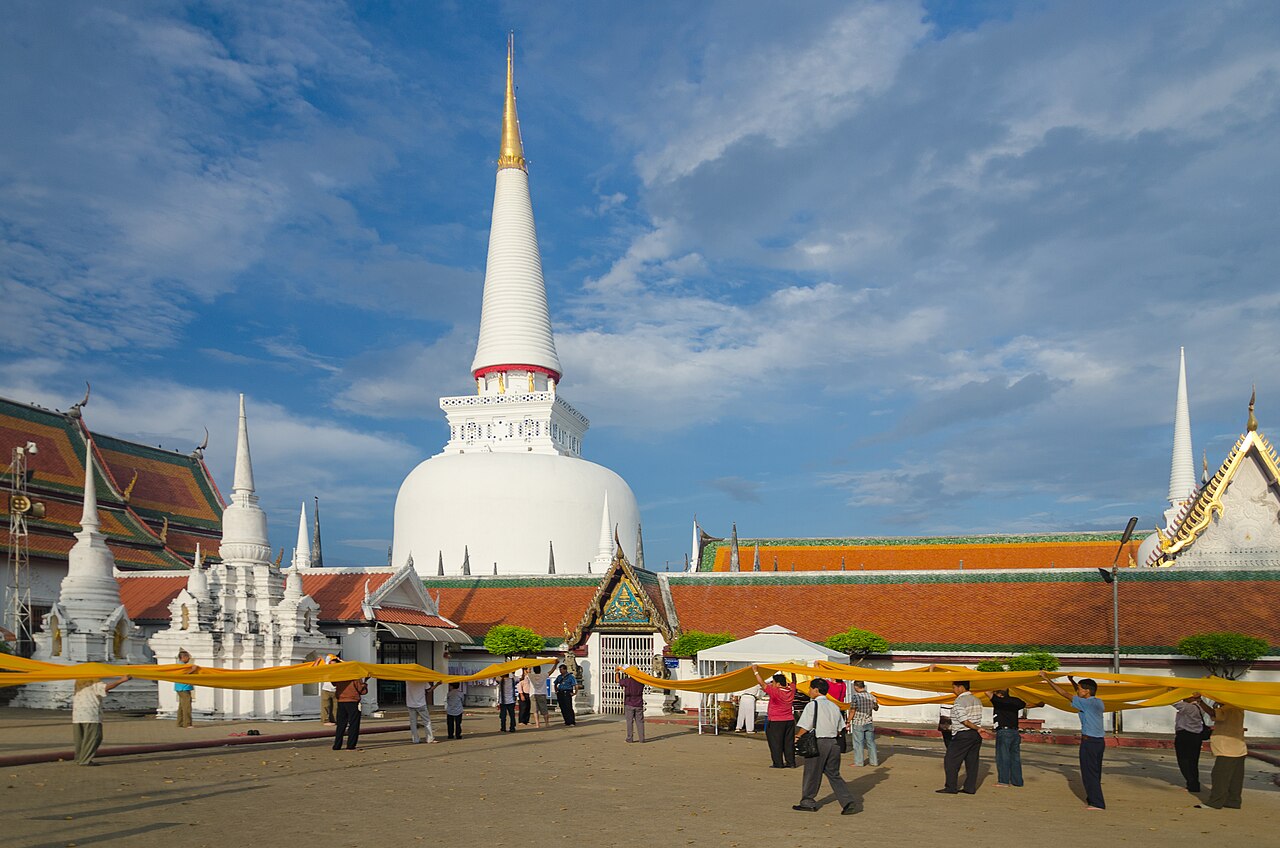
- Phra Borommathat stupa, Wat Phra Mahathat — a bell-shaped stupa with a golden spire that southerners believe enshrines relics of the Buddha. People come for good fortune, to walk in circles around the stupa, and to join the cloth-wrapping ceremony on holy days. The temple is currently up for UNESCO World Heritage listing.
- Nakhon Si Thammarat City Pillar Shrine — a cluster of Srivijaya-style buildings in the middle of town, home to the city pillar and Jatukham Ramathep. People come to ask about work, money, and protection, and it's especially busy on the first Saturday of each month.
- Ai Khai, Wat Chedi Sichon — a carved wooden figure of a young boy that people believe grants wishes, especially for luck, work, and trade. It's the liveliest wish-fulfillment site in the South.
Straight talk
Asking for lottery numbers is a personal belief, so use your own judgment. For wishes about work or health, we'd suggest asking for something reasonable and only vowing what you can actually follow through on, because if your wish comes true you have to come back and fulfill every part of the vow you made out loud.
Book the activities in your Nakhon Si Thammarat trip ahead
Booking online ahead on Klook or GetYourGuide is usually cheaper than the gate and skips the queue. Pick only the experiences you actually want — prices and availability are shown live on each site.
Day 1 — Phra Borommathat stupa + City Pillar Shrine in town
Day one stays with the sites in town. Both stops sit within Nakhon Si Thammarat city, just a few kilometers apart, so walking or driving between them is easy. Start early at Wat Phra Mahathat while the sun is still soft, then move on to the City Pillar Shrine. Between them, you can slot in bold southern food and a walk through the old town.
Stupa, City Pillar Shrine + Nakhon old town
About going up to the stupa
Paying respects to the Phra Borommathat stupa from the lower terrace can be done any day during temple hours, but going up close to bow or to join the cloth-wrapping is only open on holy days and weekends. If you mean to take part in that ceremony, pick the right day and double-check the temple's announcements before you travel.
Day 2 — Up to Sichon, pay respects to Ai Khai at Wat Chedi
Day two is the highlight for the sacred crowd. Drive north from town to Sichon district, around 70 km, nearly an hour and a half. Heading out a little early helps you dodge the late-morning traffic jam in front of the temple. After paying respects to Ai Khai, you can continue to the Sichon coast for seafood to close out the trip, before heading back to town or to the airport.
Ai Khai, Wat Chedi + the Sichon coast
Getting to Ai Khai
If you don't have your own car, take a Nakhon–Sichon van from town, get off at Ton Riang junction, then switch to a motorbike taxi for the roughly 6 km to the temple. The motorbike ride costs around 60 THB. If you're a group, chartering a taxi or van from town works out better value and saves you the multiple transfers.
Offerings at each stop — what to prepare
The good news is that every stop has offering shops right on site, so you don't have to lug anything from home. Buying at the temple is easier and you get fresh items. Each place favors different offerings, so a rough idea ahead of time saves confusion.
- Phra Borommathat stupa — incense, candles, flowers, gold leaf, or stupa-wrapping cloth on the days when wrapping is open. Basic offerings are available within the temple grounds.
- City Pillar Shrine — incense, candles, flowers, garlands, and offerings for Jatukham Ramathep. There are offering shops around the shrine.
- Ai Khai, Wat Chedi — because he's a child, popular offerings are red soda, sweets, boiled eggs, kids' toys, soldier outfits, and slingshots. For fulfilling vows, it's cement roosters and firecrackers.
How to pray and fulfill vows at Ai Khai, without confusion
Praying to Ai Khai isn't a complicated ritual. The key is to focus and say clearly what you're asking for, and what you'll offer if it comes true. Asking and fulfilling use different numbers of incense sticks — easy to remember: 3 to ask, 1 to fulfill.
- When asking — light 3 incense sticks, and clearly state your full name, address, and what you're asking for.
- Vow what you'll offer in return — say outright what you'll give if the wish comes true, such as how many cement roosters or how many firecrackers, so you can actually follow through.
- Ask within reason — only vow what you can really do; don't vow beyond your means, because if it comes true you have to come back and fulfill everything you vowed.
- When fulfilling the vow — light 1 incense stick, say you've come to fulfill the vow as promised, bring all the offerings, and set off firecrackers in the amount you vowed.
A tip
Before you vow, think through an offering that matches your means. People who vow ten thousand firecrackers or huge roosters have to come back and make good on all of it when the wish actually comes true. Vowing only what you can manage feels a lot easier.
Real opening hours — check before you plan
- Wat Phra Mahathat Woramahawihan — the grounds open around 08:30–17:00, free entry. Going up to bow at or wrap the stupa is open on holy days and weekends, roughly 08:00–16:00.
- Nakhon Si Thammarat City Pillar Shrine — open daily, around 08:30–17:30, sometimes later. The first Saturday of the month draws an especially large crowd of people coming to pray.
- Ai Khai, Wat Chedi Sichon — open daily, around 06:00–20:00, free entry. Midday to afternoon is the busiest; early morning is the quietest.
- Sichon–Tha Sala coast — open any day. Most seaside seafood spots are open from midday to evening.
Straight talk on hours
The stated opening hours for the City Pillar Shrine and the temples don't always line up across sources, so we'd suggest building in extra time and going mid-morning to early afternoon to be safest. For Ai Khai, if you want to avoid crowds, go on a weekday in the morning and steer clear of the days before lottery draws (the end and middle of the month), when traffic and crowds are heavy.
When it's crowded, when it's easy
All three stops are busy on just about every holiday, but it's especially heavy on weekends and long weekends. Ai Khai gets particularly packed in the days before a lottery draw, while the City Pillar Shrine is busiest on the first Saturday of the month. If you want to pray in peace, try to avoid these peaks and start early.
- Busiest — weekends, long weekends, the days before a lottery draw at Ai Khai, and the first Saturday of the month at the City Pillar Shrine.
- Quietest, easiest — weekday mornings (start praying around 08:00–10:00), when the sky isn't yet hot and the crowds haven't built.
- Special period — the Hae Pha Khuen That festival around February (Makha Bucha) at Wat Phra Mahathat is extremely crowded, but you get to see the procession of phra bot cloth stretching for a kilometer — a sight you can only catch in Nakhon.
Food along the way — pay respects, then eat well
The charm of a Nakhon sacred trip is real southern food the whole way. In town, the standout is khanom jeen with southern curry, eaten with a full plate of fresh veggies, plus bold fish-organ curry, khua kling, and herby khao yam. On the Sichon side, finish with seaside seafood — shrimp, shellfish, and fish straight from the sea. If you like sweets, Nakhon's khanom la makes an easy souvenir to take home.
Nakhon khanom jeen
Bold southern-curry khanom jeen, eaten with a full plate of fresh veggies — a Nakhon specialty you shouldn't skip. Try the coconut-milk curry, the chili sauce, and the fish-organ curry.
LunchNakhon southern curry rice
Rice topped with rich southern curries, with plenty to choose from — khua kling, fish-organ curry, spicy stir-fries. Great for a quick lunch between temple visits.
Coffee breakNakhon old-town cafés
Newer coffee shops tucked into the old town, good for a break to cool off between temple walks, before your next meal.
Trip pairings — where to add if you have more time
Sichon–Tha Sala coast
Sandy beaches and seaside seafood spots near Wat Chedi — a perfect follow-on to a morning at Ai Khai, with a sea-view lunch.
Sacred sitesAi Khai, Wat Chedi — full guide
Want the details on how to pray, fulfill vows, what to offer, and how to get there? Read the full Ai Khai guide before you go.
GuideThings to do in Nakhon Si Thammarat
See the rest of the province — beaches, waterfalls, the old town, and cafés. With extra time, you can stretch the trip across several days.
Plan a full Nakhon Si Thammarat trip — where to stay, eat, and explore
See the Nakhon travel guide →