🔄 Updated 21 Jun 2026
When people talk about faith and fortune in southern Thailand, Ai Khai at Wat Chedi is one of the first names that comes up. The temple sits in Chalong subdistrict, Sichon district, Nakhon Si Thammarat — an old temple that became famous nationwide thanks to the devotion surrounding the carved wooden figure of Ai Khai, also known as Ta Khai, the boy of Wat Chedi. The core belief is that vows made over luck, work, and trade come true so often that the temple stays packed with people returning to repay them.
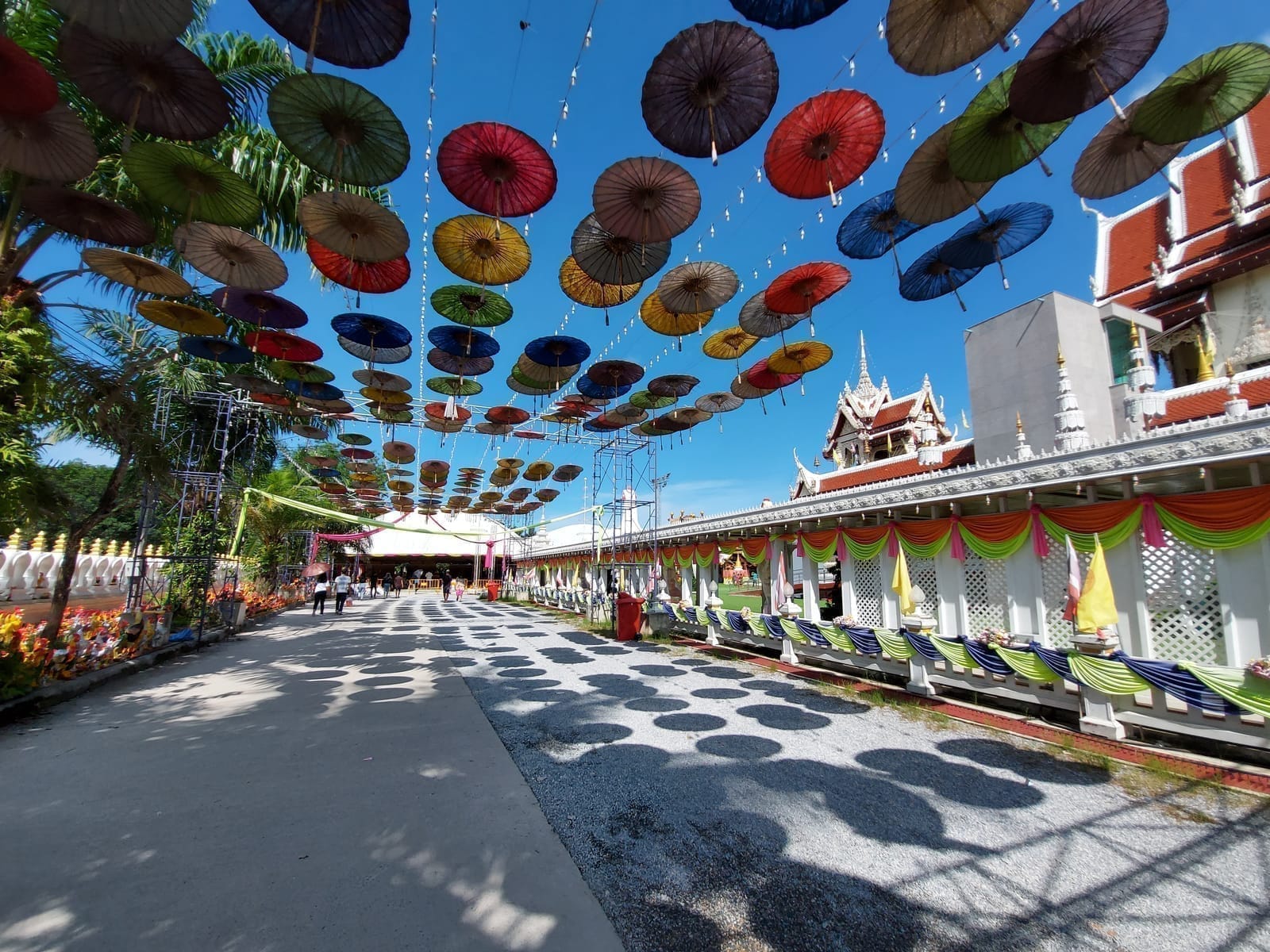
The appeal here isn't just the temple itself but the whole atmosphere around it. From the mouth of the access road all the way up to the temple gate, it's lined with shops selling offerings, cement roosters, and firecrackers, with the crack of vow-fulfilling firecrackers going off every few minutes. First-timers are usually struck by how lively the devotion feels here. We've laid out the details so you can prepare before you go and not feel lost when you arrive.
Who Is Ai Khai of Wat Chedi?
Ai Khai is a figure representing the spirit of a young boy whom locals believe was a disciple of Luang Pu Thuat, watching over the grounds of Wat Chedi for generations. The people of Sichon and the wider south revered him long before he became famous across the country. Ai Khai's character is that of a mischievous boy who loves toys and fun, which is why people like to offer children's toys, toy soldier sets, and kids' snacks when they repay a vow.
The phrase most often tied to Ai Khai is ask and you receive — meaning wishes tend to come true, especially around money, work, and trade. Many people who come to repay vows say they asked about a job, a sale, or a stroke of luck and got what they hoped for, so they came back to repay the vow exactly as they'd pledged. Asking for winning lottery numbers is another popular reason people come, but we'll be straight with you: that's a personal belief, so use your own judgment.
Want more out of Nakhon Si Thammarat? Book tours & activities
Booking online ahead on Klook or GetYourGuide is usually cheaper than the gate and skips the queue. Pick only the experiences you actually want — prices and availability are shown live on each site.
How to Make a Wish to Ai Khai
Making a wish to Ai Khai isn't a complicated ritual. The key is to be sincere and clear about what you're asking for, and what you'll offer in return if it comes true. When you make the vow, light 3 incense sticks, state your full name, address, and what you're asking for in full, then specify the offering you'll bring back when your wish is granted.
- Light 3 incense sticks — used when making a vow or a wish. State your full name, address, and exactly what you're asking for.
- Pledge your repayment offering out loud — say plainly what you'll offer if your wish comes true, such as how many cement roosters or how many firecrackers, so you can actually follow through.
- Ask within reason — ask for something you can genuinely deliver on, and don't pledge beyond your means, because if it comes true you'll need to come back and repay exactly what you promised.
- Popular days to come — Buddhist holy days, Tuesdays, and Saturdays are the days people favor for making wishes, but any day works.
A Tip
Before you make a vow, think through a repayment offering that fits your means. People who pledge ten thousand firecrackers or huge roosters have to come back and deliver every bit of it once their wish actually comes true. Pledging what you can comfortably manage will leave you more at ease.
Offerings Ai Khai Likes
Because Ai Khai is a child, the popular offerings are kids' snacks and toys. You don't have to bring anything from home — the temple gate and the whole access road are lined with shops selling complete offering sets. Buying at the temple gate is more convenient and you get fresh items.
- Red soda (nam daeng) — one of the most popular offerings, lined up in rows all over the Ai Khai pavilion.
- Sweets and boiled eggs — Chinese pastries, kids' snacks, and boiled eggs, which pair with the name Ai Khai (khai meaning egg).
- Children's toys and toy soldier sets — toy cars, dolls, kids' soldier sets, the things a young boy would love.
- Slingshots — the trusty toy of a mischievous boy, a favorite offering to Ai Khai.
- Cement roosters — the symbol of vow repayment here, ranging from small to large, priced by size.
- Firecrackers — set off to repay a vow by the number you pledged, ranging from a few hundred to ten thousand.
How to Repay a Vow to Ai Khai
Once your wish comes true, you have to come back and repay the vow exactly as you pledged. Repaying differs from asking in that you light just 1 incense stick, then tell Ai Khai that you've brought the offerings you vowed and ask that the vow be released. After that, you present the offerings and set off firecrackers in the number you pledged.
- Light 1 incense stick — different from the 3 used when asking. Tell Ai Khai you've come to repay the vow as promised.
- Bring the full repayment offering — exactly as pledged, such as cement roosters, red soda, and toys, in the amount you vowed.
- Set off firecrackers — in the number you pledged. There's a designated spot for setting them off inside the temple, with staff on hand for safety.
- Say the words of repayment — state that you've done what you vowed and ask that this vow be released from here on.
Straight Talk
Lately a lot of online vow-repayment and online wish-making services have popped up for people who live too far to come in person. That's down to each individual, but if you can make it, repaying a vow at the temple yourself feels very different from doing it remotely.
Opening Hours and Entry Fee
Wat Chedi is open for prayers every day, with most people coming roughly between 6:00 AM and 8:00 PM, and midday to afternoon being the busiest. Entering the temple and praying to Ai Khai is free — you only pay for the offerings you buy at the gate and the donation boxes around the grounds, where you can give as your faith and means allow. There's a large parking lot, but on busy days you may have to park further out and walk or take a shuttle in.
Getting to Wat Chedi
Wat Chedi is in Sichon district, about 64 km from Nakhon Si Thammarat city and about 50 km from Nakhon Si Thammarat Airport. A private car or rental is the easiest way to go — just drop the pin for "Wat Chedi Ai Khai Sichon" in Google Maps and follow it straight there. You can still get there without a car, but it takes a few connections.
- Private car / rental — the most convenient. About 1.5 hours' drive from Nakhon Si Thammarat city, about 1 hour from the airport. Motorbike rental runs around 250–300 THB/day, a car around 900 THB/day.
- Van / minibus on the Nakhon–Sichon route — catch one in the city or near the train station, get off at the Ton Riang intersection, then take a motorbike taxi the remaining 6 km or so to the temple. The motorbike ride is around 60 THB.
- Chartered taxi from the airport — convenient if you're in a group. A charter runs around 1,200–1,500 THB depending on bargaining and whether it waits to bring you back.
- Coach from Bangkok — leaves from the Southern Bus Terminal (Sai Tai Mai) to Nakhon Si Thammarat, starting around 1,300 THB, then transfer to a van into Sichon.
Travel Tip
If you don't have your own car, packaging a trip with a chartered van or a merit-making tour leaving from the city is good value and saves you all the connections — ideal if you're traveling as a group. If you're driving yourself, set out early in the morning to avoid the traffic that builds up at the temple gate by late morning.
When It's Crowded and When It's Easy
Wat Chedi is busy on just about every day off, but it gets especially heavy on weekends, long holidays, and — as southerners know well — the days near the lottery draw (just before the 1st and 16th of each month). Traffic backs up right from the entrance, and sometimes you're queuing for parking and walking a long way. If you'd rather pray in peace without the crush, try to avoid these peak windows.
- Busiest — weekends, long holidays, and the days before the lottery draw (end and middle of the month).
- Moderate — Buddhist holy days, Tuesdays, and Saturdays, when people favor coming to make wishes but you can still move around.
- Quietest and easiest — weekday mornings (6:00–9:00 AM), before it gets hot, with plenty of room to pray and take photos.
- Avoid if you dislike crowds — weekend afternoons, the most packed time of the week.
The Best Time to Go
Weekday mornings are the best window — the air is still cool, the crowds haven't built up, and you can pray with focus and get nicer photos of the Ai Khai pavilion than in the afternoon, when people are packed in shoulder to shoulder.
A Half-Day Plan to Visit Ai Khai
If visiting Ai Khai is your main goal, you can make it a half-day trip and tack on some sightseeing around Sichon afterward. Here's a rough plan for anyone with a car, starting from Nakhon Si Thammarat city in the morning.
Pray to Ai Khai + Explore Sichon
Where to Go Next
Sichon sits right by the sea, so after praying to Ai Khai it's easy to keep the trip going — whether you're into the coast, the food, or the temples back in Nakhon Si Thammarat city. If you have another day, you can stretch it out further.
Sichon–Tha Sala Coast
Sandy beaches and seaside seafood spots near the temple, perfect to roll into after a late-morning visit to Ai Khai for a lunch with a sea view.
TemplesWat Phra Mahathat Woramahawihan
Nakhon's revered stupa and the city's spiritual heart — stop to pay respects on your way back into town. A key temple no visitor to Nakhon should skip.
GuideNakhon Si Thammarat Attractions
See more places across the whole province — beaches, waterfalls, the old town, and cafés — enough to plan several more days.
Plan a full Nakhon Si Thammarat trip — where to stay, eat, and explore
See the Nakhon travel guide →