🔄 Updated 21 Jun 2026
The good news for anyone planning a Nakhon Nayok trip is that it sits very close to Bangkok, working equally well as a day trip or an overnight. There's no airport and no train line, but the Rangsit–Nakhon Nayok road (Highway 305) and the Ongkharak route make it quick to get there by van or by car. What you really need to think through is getting around the province, because the waterfalls, the dam and the Khao Yai foothills sit outside town and spread far apart, and local public transport is limited. We'll walk through it section by section, from getting into the province to finding a ride out to the sights.
How to get to Nakhon Nayok from Bangkok
Bangkok to Nakhon Nayok is roughly 105 km. The main route is Highway 305, which runs along Rangsit canal through Thanyaburi, Ongkharak and Ban Na before reaching Nakhon Nayok town, taking about 1.5–2 hours depending on traffic. There are three main options — scheduled vans, driving yourself, and chartering a car — and the right one depends on whether you'll only hit the big-name spots or want to roam around several.
- Rangsit–Nakhon Nayok van — the popular boarding point is the intercity van terminal opposite Future Park Rangsit. The fare into town is around ฿70–80, with vans leaving frequently every 20 minutes or so, roughly 6am–8pm. If you're staying in inner Bangkok, take the BTS or a bus to Rangsit first and connect there.
- Victory Monument–Nakhon Nayok van — there's a route running from Victory Monument up the tollway through Rangsit and into Nakhon Nayok, handy if you're based in central Bangkok. The fare is slightly higher than the Rangsit route, in line with the distance.
- Self-drive — the most flexible option for touring the province. Take Highway 305 from Rangsit through Ongkharak straight into town, or dodge the Rangsit traffic via the motorway/ring road and then pick up 305. Fuel for the round trip runs about ฿500–800 for a sedan.
- Private car with driver — van or sedan services with a driver will pick you up from Bangkok, ideal for families or anyone who'd rather not drive. They charge by the day, so agree on the route and price before you set off.
Tip for choosing where to catch the van
The Rangsit route is the cheapest and has the most frequent vans, but you have to get yourself to Rangsit first. If you're starting from central Bangkok, the Victory Monument route gets you there in one ride and may be the easier call. Compare how long it takes to reach each boarding point before you decide.
Vans that run all the way to the waterfalls and dam
Something a lot of people don't realise: some vans don't stop in town — they carry on up to the natural sights themselves, especially the routes that terminate at Khun Dan Dam / Khlong Tha Dan. Along the way they'll pass and pull over at various stops, so people without their own wheels can still reach some spots without renting a vehicle.
- Nang Rong Waterfall / Wang Takhrai — the Khun Dan Dam van passes both and can drop you off; the fare from Rangsit is around ฿100.
- Sarika Waterfall — there's a route that stops here, around ฿130 from Rangsit (it's on a different road from Nang Rong, so check with the terminal staff first).
- Khun Dan Prakan Chon Dam (Khlong Tha Dan) — the direct end point of this van route, around ฿100.
- Foothill resorts — the same route passes Phu Khao Ngam, Sida Resort, Wang Ree and others; just tell the driver the name of your accommodation. Some stops add a little to the fare based on distance.
Straight talk
Vans up to the natural spots run on limited, less frequent schedules than the in-town routes, especially the return runs in the late afternoon. Build in extra time and confirm the last departure with the driver clearly up front, or you risk getting stranded. This approach suits visiting one spot per day rather than chasing several.
Getting around Nakhon Nayok without a car
To be straight with you: Nakhon Nayok doesn't have a comprehensive network of scheduled songthaews that drop you right at the waterfalls or dam. In town there are enough hired cars and motorcycle taxis for short hops, but the natural sights sit 15–25 km outside town. If you're coming without your own vehicle, these three options work best.
- Rent a motorbike — there are several rental shops in town (around Suan Dusit University's Nakhon Nayok campus is a popular spot), running about ฿200–300 a day including a helmet. It's the nimblest way to ride up to the waterfalls and dam, and best for confident riders.
- Rent a car to drive yourself — the choice for groups, or anyone travelling with kids or older relatives. It's safer when it rains or when the mountain roads turn slippery. Ask local rental shops, or rent in Bangkok and drive over.
- Charter a car or motorbike taxi by the day — agree on a driver to take you around the spots for a day, ideal if you don't drive; split between a group it works out fine. Settle the route and price before you go.
- Vans up to the natural spots — use the routes that run to the waterfalls/dam covered above. Good for a relaxed single-spot day, but you're tied to the van schedule.
Straight talk
If you're set on hitting several spots in one day — a waterfall plus the dam plus a café, say — having your own vehicle or a rented motorbike/car changes the trip entirely, saving you hours of waiting for connections. The rental cost is usually well worth it compared with losing a whole day to waiting around for rides.
Getting to Nang Rong & Wang Takhrai waterfalls
Nang Rong Waterfall sits within the Nakhon Nayok side of Khao Yai National Park — a foothill waterfall you can swim in, with plenty of riverside restaurants. Wang Takhrai nearby is a forest park along a stream. Both are on the same road, about 17–20 km from town, a 25–35 minute drive. Head out of town on Highway 3049 toward the dam/waterfalls; the signs are clear.
- Distance — around 17–20 km from town, a 25–35 min drive
- Nang Rong entry fee — ฿5 per person, ฿10 motorbike, ฿50 sedan, ฿100 van. Open roughly 8am–5pm.
- Route — town → Highway 3049 → turn off following the Nang Rong/Wang Takhrai signs
- Best for — rental motorbike, your own car, or a van route that passes by (you can get off at the waterfall stop)
Getting to Sarika Waterfall
Sarika Waterfall is a tall waterfall that drops in tiers down a cliff face, on a slightly different road from Nang Rong, in Sarika sub-district about 12–15 km from town. The water looks its best during the high-flow rainy season (June–October); in the dry season it shrinks a lot, so check the water level before you go.
- Distance — around 12–15 km from town, a 20–25 min drive
- Entry fee — Thai adults ฿40, children ฿20 (foreign adults ฿200, children ฿100). Open roughly 8am–5pm.
- Best water — the rainy season, June–October, when flow is high; the dry season runs low
- Best for — rental motorbike or car; some vans make a stop here
Getting to Khun Dan Prakan Chon Dam
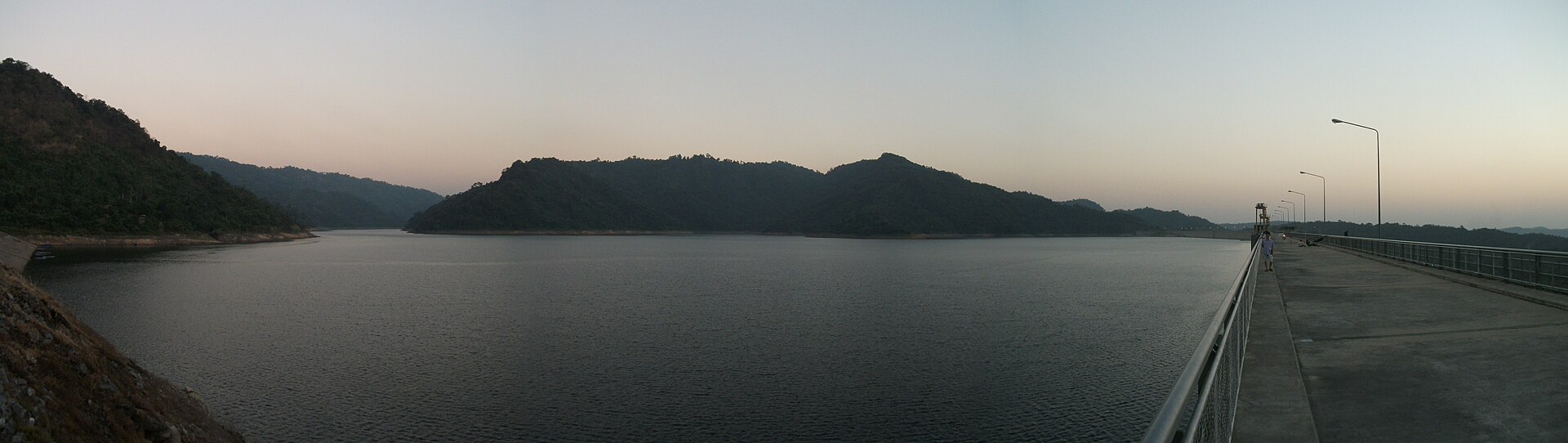
Khun Dan Prakan Chon Dam (Khlong Tha Dan Dam) is a long roller-compacted concrete dam, and the view across the reservoir to the mountains is a favourite photo spot. You can drive up onto the dam crest. It's about 20 km from town and happens to be the end point of the dam van route, so you can reach it with or without your own car.
- Distance — around 20 km from town, a 30–35 min drive
- Entry fee — no charge to enter the dam area; there's a paid tram/golf-cart tour around the dam
- Opening hours — it opens for visits during set hours, and some days the times shift for water release. Check the dam's page first if you're going on a special day.
- Best for — your own car, a rental motorbike, or the van route that terminates at the dam
Getting to the Khao Yai foothills on the Nakhon Nayok side
Plenty of people assume Khao Yai is only in Korat, but the Nakhon Nayok side of the Khao Yai foothills is lined with resorts and cafés with mountain views, with cool, pleasant air from late rainy season into early winter. This zone runs up through Mueang and Pak Phli districts. The dam/waterfall vans pass several resorts, but if you want to café-hop around a few spots in one day you'll need your own car, since the cafés are spread along the hillsides and public transport doesn't reach them.
- Route — same road as up to the waterfalls/dam, then turn off into the resort/café lanes at each spot
- Cool season — November–February, when the air is breezy, great for open-air cafés and camping
- Best for — your own car or a rental, since the cafés and viewpoints are far apart with no public transport reaching them
- Crossing over to Khao Yai in Korat — to carry on up to Khao Yai National Park on the Pak Chong side, you'll need a car and plenty of extra time for the roundabout drive
Getting around Nakhon Nayok town
Nakhon Nayok town is small and unhurried — the morning market, restaurants and in-town accommodation are all close together. If you're staying in town, walking or a short motorbike-taxi hop is enough, but to head out to the natural spots you'll still need a rental or a chartered ride.
- On foot — the market area and in-town shops are close together, easy for a relaxed eat-and-wander
- Motorbike taxi — available in town, good for short hops; agree the price before you get on
- Motorbike/car rental — the real workhorse for heading out of town to the waterfalls and dam
- Grab — few cars around, so don't rely on it, especially outside town or for the ride back from the waterfalls
Tip for planning the whole trip
If you're doing a day trip without a car, pick a single spot the van reaches — Khun Dan Dam or Nang Rong Waterfall, say — and confirm the return schedule clearly. But if you want to tick off the waterfalls, the dam and the foothill cafés all in one go, driving yourself or renting a car is the smoothest answer.
Pick a well-placed base near the waterfalls and foothills before mapping out your route
See the Top 10 Nakhon Nayok hotels →