🔄 Updated 21 Jun 2026
Nakhon Nayok is an easy day trip for a lot of people — it's only about 100–130 km from Bangkok. But before you start the car, the first question to answer is which month you're coming, because the highlights shift with the seasons. The rainy months give you waterfalls and rafting, the cool season gives you camping in good weather, and the maprang fruit only shows up for a short window early in the year. Let's go through what each part of the year gets you.
Rainy season: full waterfalls, June–October
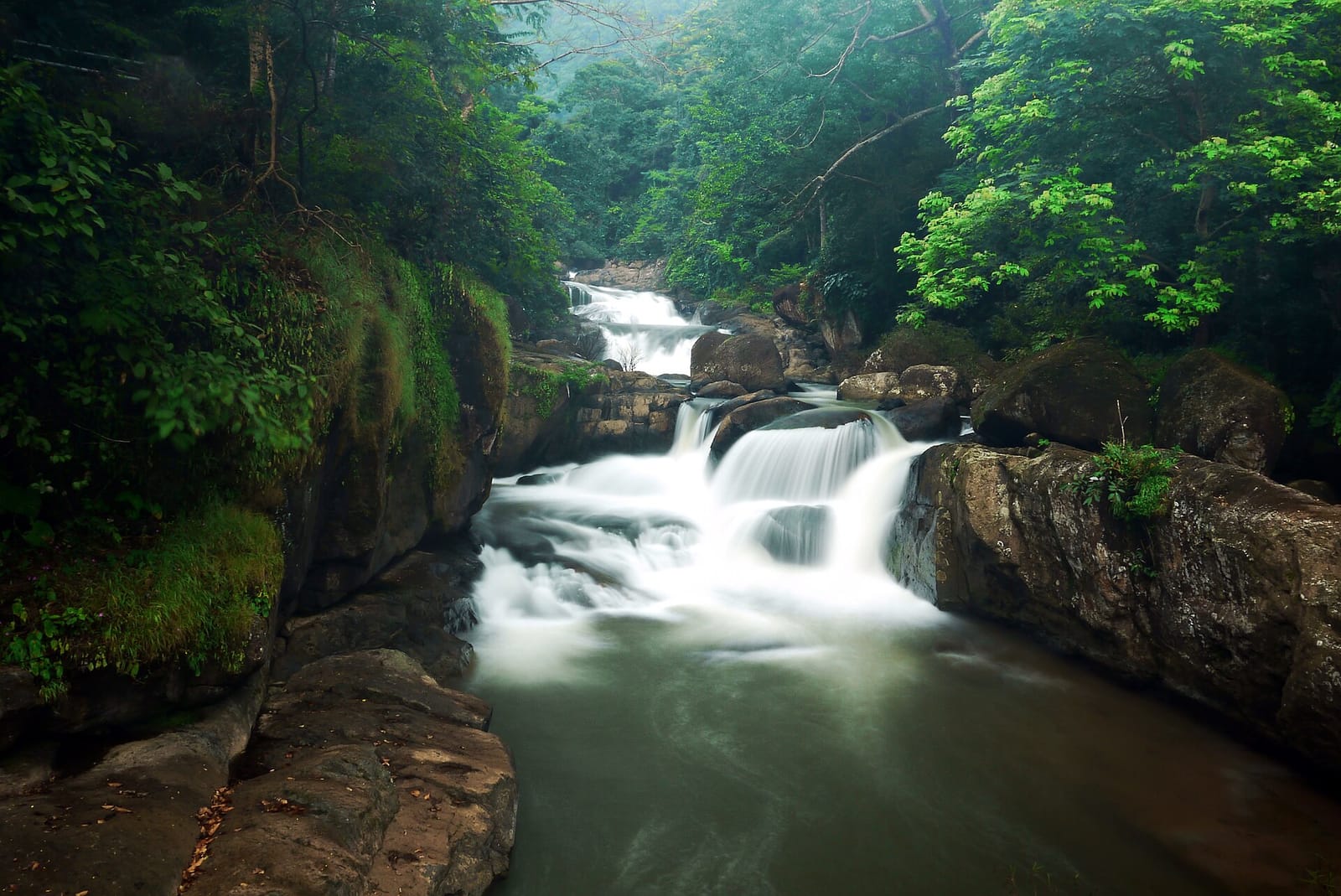
Nakhon Nayok is best known for its waterfalls — Sarika, Nang Rong and plenty of smaller ones tucked along the foothills. The rainy stretch from June to October is when the water is highest and the falls look their best: lush green forest, strong flow, and cold pools you can wade into. That's a world away from the dry season, when some falls barely have any water at all. If you're coming mainly for the waterfalls, aim for this window.
- June–July — the rains start, the falls fill back up, the forest greens out, and the crowds aren't heavy yet.
- August–September — peak water and the most dramatic falls, but also the wettest stretch, so keep an eye on the forecast and on ranger announcements.
- October — the tail end of the rains into the start of the cool season: still plenty of water, with the air turning pleasantly cool. A lot of people say this is the sweet spot.
Rainy-season safety
The falls are gorgeous in the rainy season, but heavy rain up in the hills can trigger flash floods very quickly. Always check the warning signs and listen to ranger announcements before getting in the water. If the water turns muddy or the level rises suddenly, get out right away. The trails are slick mud at this time of year, so rubber sandals or shoes with good grip are far safer than flip-flops.
Rafting: fun, but watch the water
White-water rafting on the Nakhon Nayok river is a hugely popular activity — you float downstream in an inflatable raft, covering roughly 8–10 km over 1–2 hours. The rapids are class 1–3, so moderate rather than brutal, and plenty of people bring kids and grandparents along. There are bursts of excitement here and there, but most of it is taking in the riverbanks and splashing around.
You can raft almost year-round, but the water is strongest and the most fun in the rainy season, July–October. In the hot months around April the water drops but it's still runnable — slow and easy, more of a gentle float. Package prices vary; most run about 200–400 THB per person, and groups can split the cost per raft. A full 1-day trip with transfers included works out to roughly 900–1,650 THB per person, depending on group size and what's bundled in.
- Pick an operator with full gear — life jacket, helmet, and a dry bag for valuables. The good ones check your gear before you get in the raft, every time.
- Keep your life jacket on the whole time, even if you can swim, because a few spots have whirlpools and you can get knocked around.
- Stow your phone and camera in a dry bag or leave them in the car — there's a real chance of getting soaked or dropping something in the water.
- When it's raining hard or the river floods, a responsible operator will cancel. Don't force a run on your own if the water is unusually strong.
Who it suits — and who should skip it
Nakhon Nayok rafting is great for families and first-timers since the rapids aren't intense. If you're bringing small kids or older relatives, tell the operator beforehand so they can set you up with the right raft and guide. And during the high-water stretches of the rainy season, if you're not confident, choose a run when the water is moderate — you'll feel a lot more at ease.
Cool season: good-weather camping, November–February
Once the rains pass and the cool season arrives, the skies clear and the air turns crisp — exactly what campers wait for. Nakhon Nayok and the neighbouring Khao Yai zone have loads of campsites, by the water, up on the hills, and at viewpoints. November through February is high season for camping, and on some hilltops you might catch morning mist.
- Private and homestay campsites in Nakhon Nayok — most run about 100–400 THB per person per night. Some rent out tents and have bathrooms and a restaurant, which suits first-timers who don't want to haul much gear.
- Campsites inside Khao Yai National Park (e.g. Lam Takhong, Pha Kep Tawan) — the camping-area fee is just a few dozen baht per person, plus the park entry fee. You sleep under the stars and the sea of mist, but you need to book ahead through the park system in high season.
- Pack for the cold — nights up in the hills are much chillier than in town, so bring a warm jacket, a sleeping bag, and a torch.
Book park campsites ahead
Campsites on the Khao Yai side fill up fast during the cool season and long weekends, so you'll need to book ahead through the national park reservation system. For private sites in Nakhon Nayok, messaging their page to reserve a slot beforehand is the safer bet, especially on weekends.
Maprang and sweet marian plum: a short window, Mar–Apr
Maprang and sweet marian plum are Nakhon Nayok's signature fruit — GI-registered, large, firm and crisp, with a sweet-tart flavour. They fruit for a short stretch, roughly February to April, peaking from March into early April. If you want to eat them fresh off the tree, this is the only time to come — miss it and you're waiting until next year.
- Buy straight from the orchards — fresher and better value than the roadside stalls, and many orchards let you walk in and pick your own.
- There's a maprang festival early in the year that gathers the orchards and fruit in one place; check the festival dates for that year before you plan.
- Maprang bruises easily, so if you're buying some to take home, pick unblemished fruit, pack it in a padded box, and eat it within a few days.
Which month to visit, by goal
Waterfalls and rafting
Aim for the rainy season, Jun–Oct: the falls run full and green, and the rafting is fast and fun — just watch for flood announcements.
Camping and cool air
Nov–Feb: clear skies and cool weather, ideal for sleeping in a tent under the stars. Book your site ahead, especially on holidays.
Maprang fruit season
Mar–Apr: the fruit is out, eat it fresh from the orchard and take some home. Come late and the season's over.
Getting there: how to come from Bangkok
Nakhon Nayok is roughly 100–130 km from Bangkok, about 1.5–2 hours by car, heading out via Rangsit–Ongkharak or taking the motorway. If you're not driving, vans and buses leave Mo Chit terminal several times a day. But the sights — waterfalls, the dam, the campsites — are outside town and spread out, so having your own car is by far the most convenient.
- Driving yourself — the most convenient, since the waterfalls, Khun Dan Dam and the campsites are in different directions with no public transport reaching them. Fuel for the round trip runs about 600–1,000 THB per car.
- Van or bus — tickets are about 100–150 THB each way, but you're dropped in town and have to arrange onward transport, which gets awkward if you're visiting several spots.
- Renting a car or motorbike in Nakhon Nayok — if you come by public transport, renting onward is worth it, since the sights are scattered and some routes climb into the hills.
How much to budget
Nakhon Nayok is a low-cost place to travel, especially on a day trip. The figures below are rough budgets per person for 2 days and 1 night, assuming a group of 2–4 splitting the cost of transport.
- Budget ~1,200–1,800 THB/person — camp or stay in a homestay, eat at local spots, and visit waterfalls with entry fees of just a few dozen baht.
- Mid-range ~2,500–3,500 THB/person — a resort or pool villa, one rafting run, fuel/transport, plus a margin for nicer meals.
- Comfortable 4,000 THB and up/person — a pool villa with a good view, several activities, full meals, and souvenirs to take home.
How to save
Go on a weekday — accommodation and campsites are clearly cheaper than weekends · many waterfalls charge just a few dozen baht and you can spend the whole day there · for rafting and camping, going with a bigger group and splitting per raft or per group brings the cost down a lot.
What to pack
Nakhon Nayok is all about nature — waterfalls, rafting, camping — so what you pack is different from a city trip. Come prepared and you'll have more fun and stay safer.
- Shoes that can get wet and grip well — rubber sandals or an old pair of trainers for the slippery waterfall trails and getting in the water.
- A change of clothes + a towel + a dry bag — you'll definitely get wet at the falls and on the raft, so keep your phone in a dry bag so it survives.
- A warm jacket and sleeping bag (if camping in the cool season) — nights up in the hills are colder than you'd think.
- A rain jacket or umbrella (if coming in the rainy season) — it can rain any time, so keep some in the car for peace of mind.
- Mosquito repellent + any personal medication — you're near forest and water, and the mosquitoes come out around dusk.
- Cash — some campsites, waterfalls and local shops don't take transfers or cards, so carry some cash.
Browse Nakhon Nayok hotels and stays that real guests have reviewed, with prices compared across platforms.
See the Top 10 Nakhon Nayok hotels →Pre-trip checklist
- Pick the month to match your goal — waterfalls/rafting (Jun–Oct) · camping (Nov–Feb) · maprang fruit (Mar–Apr)
- In the rainy season, check the forecast and ranger flash-flood announcements before getting in at the falls
- Book campsites/accommodation ahead, especially in the cool season and on long weekends
- Choose a rafting operator with full life jackets and helmets, and keep them on the whole time
- Sort out a vehicle and plan your route, since the sights are scattered and some roads climb into the hills
- Pack wet-friendly shoes, a change of clothes, a dry bag, and warm or rain gear depending on the season
All set — see what to do and where to eat in our full Nakhon Nayok city guide.
Open the Nakhon Nayok travel guide →