🔄 Updated 21 Jun 2026
The heart of Nakhon Pathom is Phra Pathom Chedi, and the whole town grew up around it. So the streets nearby are full of old markets, grandfather-era shophouses, and long-running shops that have been selling the same things for decades. The best part about walking here is that everything sits close together — park once and you can cover almost all of it on foot without moving the car. We've laid out a route that starts at the chedi, works into the markets, and finishes at the night market in the evening.
Start at Phra Pathom Chedi — the launch point for every walk
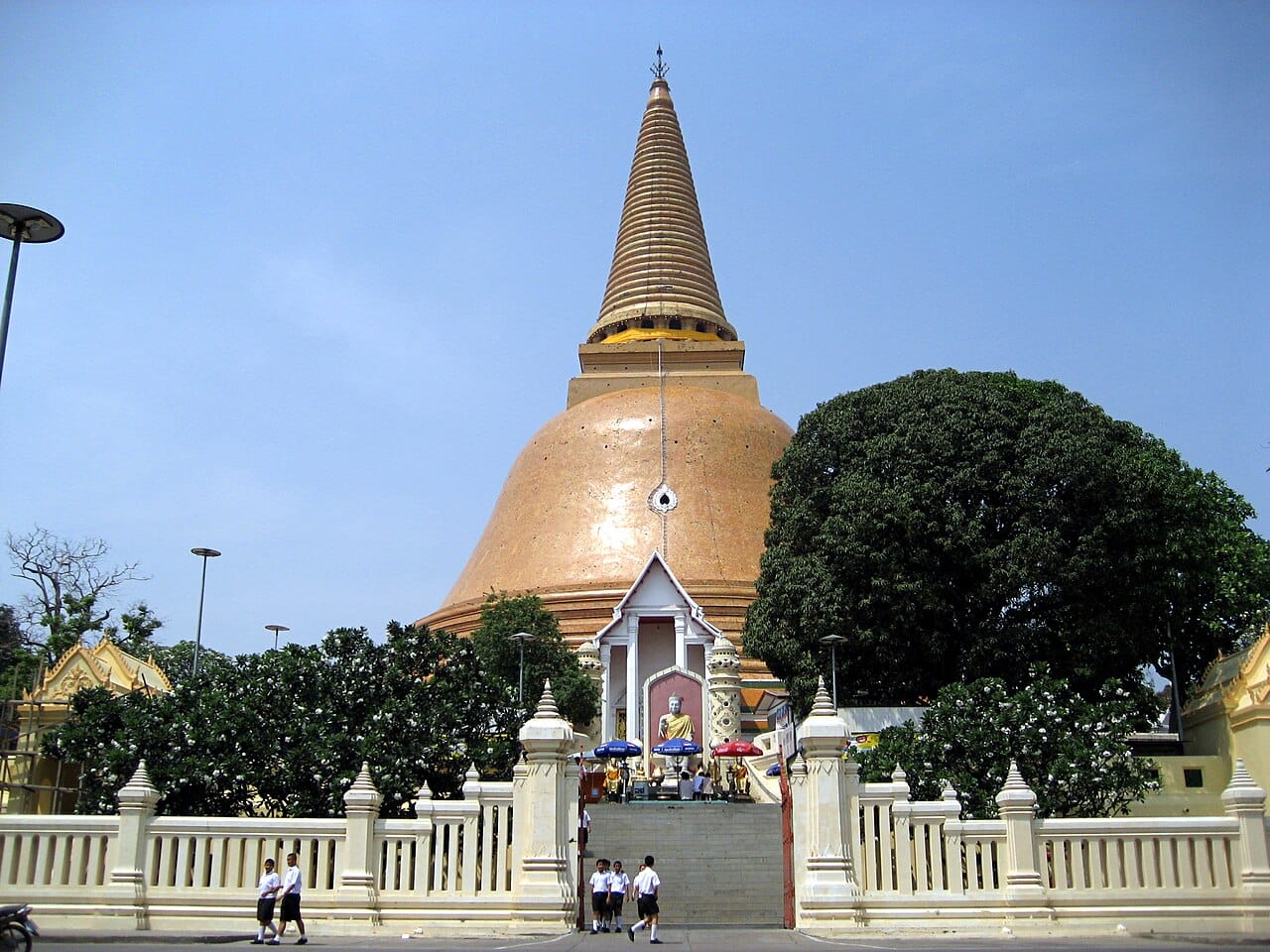
No matter how many times they've been, locals still start here. The golden-orange Phra Pathom Chedi stands 120.5 metres tall, the tallest chedi in Thailand. You can walk the shaded cloister around the base, and stop to pay respects to Phra Ruang Rojanarit in the northern viharn. The stairway on this side is the busiest, and it doubles as the gateway straight into the market district.
- Open daily, roughly 06:00–18:00. Free entry for Thais, and you can walk the full circle around the chedi.
- Morning or evening is best. The chedi plaza gets very hot around midday and the sun reflects hard off the stone paving.
- Dress modestly — shoulders and knees covered, as at any temple. Cloths are available to borrow at some entrances.
- The northern naga staircase drops you right across the road from the upper and lower markets.
Where to park
There's roadside parking around the chedi plus some temple-lot spaces. Weekends fill up fast, so arriving before 9am makes it much easier. Park on the north side and you'll have the shortest walk into the markets.
Want more out of Nakhon Pathom? Book tours & activities
Booking online ahead on Klook or GetYourGuide is usually cheaper than the gate and skips the queue. Pick only the experiences you actually want — prices and availability are shown live on each site.
Upper & Lower Market: the town's twin fresh market across from the chedi
Cross the road from the front of the chedi and you hit the Upper and Lower Market (Talat Bon and Talat Lang), an old fresh market that has served the Nakhon Pathom community since the reign of King Rama V. It's still a real working market — aunties and uncles run stalls of vegetables, fruit, dried goods, sweets and ready-to-carry food. Mornings are busiest, it's an easy place to soak up everyday local life, and several long-running shops hide down its lanes.
- Lower Market is the food-and-old-shops zone — hunt down red pork rice, noodles and Thai desserts in here.
- Upper Market leans toward fresh produce, vegetables and dried goods — good for grabbing edible souvenirs to take home.
- Come from early to mid-morning, roughly 06:00–11:00, when the selection is fullest and freshest. After noon many stalls start packing up.
- Nakhon Chai Si pomelo often shows up in the market when it's in season — taste before you buy a batch to take home.
Old-school eats around the chedi — order these and you won't miss out
Nakhon Pathom is famous for red pork rice and khao lam, to the point that they've become the town's signature dishes. Around the chedi there are old-school shops that have been selling for decades, even a century. We've listed them by how often locals bring them up and how easy they are to walk between. Prices are rough ranges and may shift day to day.
Tang Ha Seng Red Pork Rice (Lower Market)
An old red-pork and crispy-pork rice shop behind the chedi market, going for over 70 years. The red pork is sweet and tender, the crispy pork has crackly skin, the gravy is thick, and they also do duck egg noodles and bah jang (sticky rice dumplings). It's a place locals have brought their families to for generations.
Nai Chua Red Pork Rice (Lower Market, Lane 3)
Another local favourite, in the Lower Market on Lane 3 near the chedi. The red pork and crispy pork comes as a set at an easy price, and people stopping by to make merit at the chedi often queue up to eat here.
Mae Luk Chan Khao Lam
A legendary khao lam (bamboo-grilled sticky rice) going back over 100 years, sold since the reign of King Rama V and now in its fourth generation. The stall sits along the road on the left of the chedi before you cross over. There's plain, custard (sangkhaya) and bah jang versions in bamboo tubes, all smelling of smoke-grilled sticky rice.
Pork Satay Around the Chedi
Skewered, fragrant grilled pork satay is a Nakhon Pathom staple. Cart stalls and shops in the Lower Market have several vendors, served with peanut sauce and ajat (cucumber relish). It's the easiest snack to grab while you're walking.
Yeua Mai Restaurant (old-school Thai)
A Nakhon Pathom Thai restaurant going back over 30 years. The room is pleasant to sit in and the menu is bold, made-to-order Thai food — a good spot for a proper sit-down meal after you've worn yourself out walking the markets.
Phra Pathom Chedi Night Market
An evening night market and street-food run around the chedi, with oyster omelette, noodles, rat na, grilled squid, fried snacks and desserts — savoury and sweet all in one place. A great way to cap the day with a long graze.
How to eat smart
Save the red pork rice and khao lam for mid-morning while the shops are still fully stocked. Snack on pork satay as you walk, then leave room for the night market in the evening — that way you get both morning and night eats in a single day.
The old shophouse district and everyday city life
Walk past the markets along the roads circling the chedi and you'll find rows of old wooden and concrete shophouses. Many are still grocery shops, gold shops, old-style coffee houses and monastic-supply stores that have been open for generations. It's a district to walk slowly — reading the old shop signs, looking at the shophouse architecture, and watching the rhythm of local life. Good for anyone who likes shooting retro-feeling scenes.
The Roads Around the Chedi
The ring road circling the chedi, lined with old shophouses and original-era shops. You can loop all four sides on foot with the chedi as a backdrop the whole way.
Old Coffee Houses & Sweet Shops
Tucked into the district are traditional coffee houses and old Thai dessert shops. Stop for a black coffee or grab some sweets to carry as you keep walking.
Sanam Luang Rama VI / The Chedi Plaza
The green space and open plaza around the chedi. In the evening locals come to rest, exercise and let the kids run around — you see the real life of the town here.
Late afternoon is the best time to walk
Around 16:00–18:00 the sun softens and the breeze picks up, the plaza around the chedi turns pleasant, locals come out to walk, and the chedi's lights start coming on. It's the best window of the day for photos and atmosphere.
A walking route around the chedi — cover it all in one day
All of this is within walking distance, no need to move the car. We've built it into a half-day to full-day route that runs from morning to night without doubling back.
Morning–midday: chedi + markets + old-school eats
Afternoon–evening: old shophouses + night market
If you've only got half a day
Just take the morning: pay respects, walk the market, eat red pork rice, and buy khao lam to take home — the full old-town flavour in three hours. If you prefer the night-time vibe, come in the late afternoon and tack on the night market instead.
Make the most of walking Nakhon Pathom old town
- Park once and walk. The good stuff sits around the chedi within walking distance, so you don't need to keep moving the car — it saves time hunting for spots.
- Match your timing to what you want to see. Want the fresh market, come in the morning; want street food, come in the evening; want both, come for the whole day.
- Carry cash and an umbrella. Many old shops and market stalls take cash only, and the chedi plaza gets a fierce midday sun.
- Weekdays are quieter — easier walking and parking — but on Saturday and Sunday the markets and shops are busier and more complete.
- You can come by train. Nakhon Pathom railway station is near the chedi and within walking distance of the markets, so you can tour the area easily even without a car.
Plan a full Nakhon Pathom trip — temples, food and places to stay
See the Nakhon Pathom travel guide →