Home Destinations Nakhon Sawan ๐Ÿงญ Plan Your Trip ๐Ÿ”Ž Search About
Home โ€บ Thailand โ€บ Nakhon Sawan โ€บ Nakhon Sawan Temple & Shrine Plan Praying Through the Chinese Town of Paknampho
๐Ÿฎ Nakhon Sawan travel plan

Nakhon Sawan Temple & Shrine Plan
Praying Through the Chinese Town of Paknampho

Nakhon Sawan, which locals simply call "Paknampho," is a town where Chinese culture has soaked into every lane, from riverside shrines more than a century old to hilltop temples that look out over the headwaters of the Chao Phraya. We've laid out a faith-and-merit route that fits neatly into 2 days, so you can pray for good fortune and still see the everyday life of an overseas-Chinese community that's genuinely still breathing here.

๐Ÿฎ Paknampho Chinese shrinesโ›ฐ๏ธ Hilltop temples with city views๐Ÿ™ Pray for good fortune
Nakhon Sawan Temple & Shrine Plan Praying Through the Chinese Town of Paknampho

๐Ÿ”„ Updated 21 Jun 2026

If you're after a town where Chinese and Thai life blend together seamlessly, Nakhon Sawan is one of them. Overseas Chinese settled at Paknampho, the point where the Ping and Nan rivers meet to form the headwaters of the Chao Phraya, generations ago, and they left their mark everywhere: shrines, an old market, the food, and the deity processions that are now listed as part of the country's intangible cultural heritage. On this trip we string Thai temples and Chinese shrines into a single route, walked at an easy pace over 2 days with no rush.

The 2-day route at a glance

Day one covers the town and the riverside, focusing on the Chinese shrines and the in-town temples that are easy to walk between. Day two heads up the hills to pray and take in the views, finishing at the source of the Chao Phraya River. Everything sits in and around the Mueang district, just a few minutes' drive or ride between stops, which makes it work whether you've come specifically for this or you're just breaking up a trip heading north.

Day 1

Chinese shrines, in-town temples & Paknampho market

08:30
Start at the Chao Pho Thepharak-Chao Mae Thapthim shrine (Chao Pho Khwae Yai shrine)A riverside shrine on the Chao Phraya, across from Paknampho market and more than 130 years old. Inside you'll find Pung Thao Kong, the deity Guan Yu, and Chao Mae Thapthim. Nakhon Sawan locals treat it as the town's main shrine. Come early before the crowds and you can get some lovely shots of the red Chinese architecture.
10:00
Walk Paknampho market & the old quarterThe old market across from the shrine is a Chinese quarter that's still very much alive, with shops selling dried goods, Chinese medicine, sweets, and Chinese-style breakfast fare. It's a pleasant stroll past the old shophouses.
11:30
Pray at Wat Nakhon Sawan, a royal templeOn Kosi Road in the town centre, this old temple comes with a story that an Ayutthaya-era king once stopped to pay his respects. It's a paired "two siblings" temple, shaded and calm in the middle of town, and easy to visit straight after the market.
12:30
Lunch break, Paknampho Chinese foodThis area is the home of pak mo (steamed rice-sheet) noodles, mochi, and old-school Chinese cooking. Just pick a spot in the market or along Kosi Road.
14:30
Wat Chom Khiri Nak PhrotA temple on a low hill within the town, open 06:00-18:00. It has an old ordination hall and views over the town, making it a good afternoon stop that stays quiet.
17:00
Stroll the Chao Phraya riverside, watch the sunsetClose out day one by the river in town. The evening breeze is pleasant and you'll see Paknampho life along the water.

What to wear

Both temples and shrines are sacred places, so a sleeved top and trousers or a skirt that covers the knees is more respectful and more comfortable. Chinese shrines usually sell incense and offerings out front, so keep some small cash notes on you.

Day 2

Hilltop temples, city views & the Chao Phraya headwaters

08:00
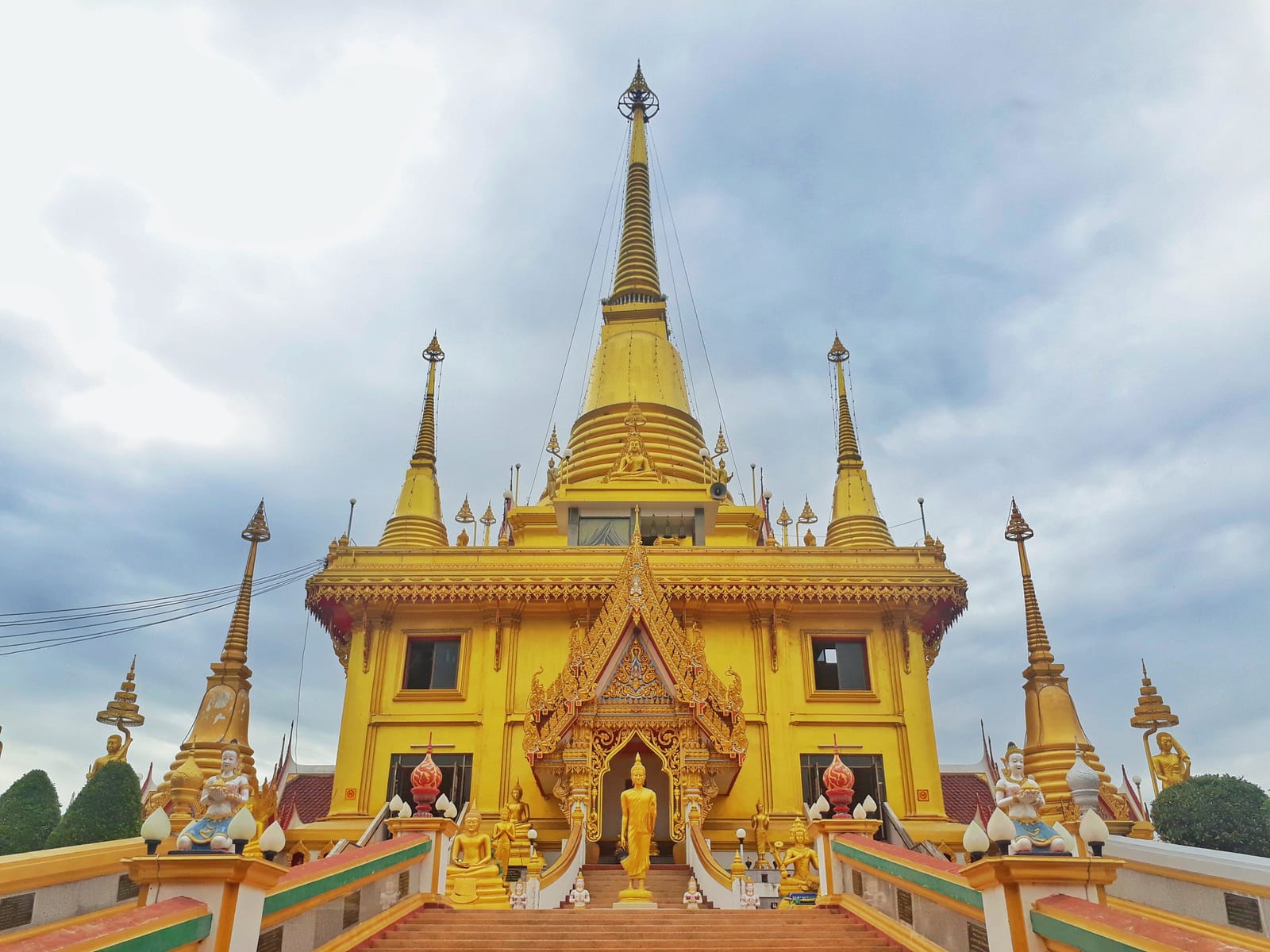
Climb to Wat Khiri Wong, pray at the Chulamani ChediA temple on Dao Dueng hill within the town, where the golden Chulamani Chedi sits gleaming on the summit. Climb up onto the chedi's base and you can see the whole of Nakhon Sawan, including Khao Kop, Bueng Boraphet, and the source of the Chao Phraya. Inside there are statues of famous monks such as Somdej To, Luang Pu Thuat and Luang Pho Sot. Go early while the air is still cool.
10:30
Wat Woranat Banphot (Khao Kop)An old temple on Khao Kop hill with a chedi and a Buddha footprint, a town hill that's visible from many angles. Head up to pray and you'll get a view of the other side of town. Nearby there's a cliffside goddess shrine worth a stop.
12:00
Lunch & a breakHead back into town to eat. The Paknampho area has noodles, chicken or duck over rice, and Chinese desserts to choose from.
14:00
Pasan, symbol of the Chao Phraya's sourceAn architectural landmark right where the Ping and Nan rivers merge into the Chao Phraya, and a popular check-in and photo spot. You can stroll along the river and get the full picture of why this town is called Paknampho ("river mouth").
16:00
Stop by the shrine & grab gifts before heading homeIf you haven't prayed everywhere, loop back to the Chao Pho Thepharak shrine for one more round of blessings, then pick up Paknampho mochi and Chinese sweets to take home.
๐ŸŽŸ๏ธ

Book the activities in your Nakhon Sawan trip ahead

Booking online ahead on Klook or GetYourGuide is usually cheaper than the gate and skips the queue. Pick only the experiences you actually want โ€” prices and availability are shown live on each site.

๐ŸŽŸ๏ธ See all Nakhon Sawan tours & activities (Klook)

Why it's called the "Chinese town"

Paknampho is where overseas Chinese came ashore and settled along the river long ago, so Chinese culture runs deeper here than the shop signs suggest. The Chao Pho Thepharak-Chao Mae Thapthim shrine is the spiritual heart of the town's Chinese community, and the event that put Nakhon Sawan on the national map is the Paknampho deity procession during Chinese New Year, with its golden dragon, lion, and Eng Gor parades that have run continuously for more than a hundred years.

  • The riverside shrine โ€” the Chao Pho Thepharak-Chao Mae Thapthim shrine is the heart of the Chinese quarter, set right across from the old market.
  • Paknampho market โ€” an old trading quarter that still sells dried goods, Chinese medicine, and Chinese-style food every day.
  • Chinese New Year tradition โ€” the Paknampho deity procession, held every Chinese New Year, is now listed as intangible cultural heritage.
  • Original Chinese food โ€” pak mo noodles and Paknampho mochi are the town's signature dishes, rooted in the Chinese community.

Key temples & shrines not to skip

1

Chao Pho Thepharak-Chao Mae Thapthim shrine

Mueang district ยท riverside, across from Paknampho market

A Chinese shrine on the Chao Phraya River, more than 130 years old and across from Paknampho market. It enshrines Pung Thao Kong, the deity Guan Yu, and Chao Mae Thapthim, and is the main shrine of the town's Chinese community and the starting point of the Chinese New Year deity procession.

Chinese shrinePraying spot
2

Wat Khiri Wong

Mueang district ยท on Dao Dueng hill

A temple on Dao Dueng hill with the golden Chulamani Chedi on the summit. Climb up to pray and you get a view over the whole of Nakhon Sawan, taking in Khao Kop, Bueng Boraphet, and the source of the Chao Phraya. Inside are statues of several famous monks.

Hilltop templeCity view
3

Wat Woranat Banphot (Khao Kop)

Mueang district ยท on Khao Kop hill

An old temple on Khao Kop hill in the middle of town, with a chedi and a Buddha footprint. Head up to pray for a different view of the town, and nearby there's a cliffside goddess shrine to visit next.

Hilltop templeOld heritage
4

Wat Nakhon Sawan, a royal temple

Mueang district ยท Kosi Road

An old royal temple in the town centre on Kosi Road, with a story that an Ayutthaya-era king once stopped to pay his respects. It's a paired "two siblings" temple and an easy walk on from Paknampho market.

Royal templeIn town
5

Wat Chom Khiri Nak Phrot

Mueang district ยท open 06:00-18:00

A temple on a rise within the town with an old ordination hall and views over the town, open 06:00-18:00. It's a quieter praying spot, good for an afternoon stop.

In-town templePeaceful

If you come during Chinese New Year

Late January to early February is the Paknampho deity procession, when the town gets very lively with golden dragon and lion parades and the whole quarter is decorated. If you're set on coming then, book your accommodation several weeks ahead, because rooms fill fast and prices rise. Confirm the exact dates with the municipality's page or the TAT Nakhon Sawan office before you travel.

Getting around between stops

Most stops are in and around the Mueang district, close together. Driving yourself is the most convenient, since hilltop temples like Khiri Wong and Khao Kop need you to drive up the slope. If you don't have a car, you can call a ride through an app or use a motorbike taxi in town. The shrine and Paknampho market are an easy walk apart, and Pasan is also riverside in the town centre.

Recommended

Drive yourself

The most flexible option, easy for getting up to the hilltop temples, with enough parking at the temples and shrines.

In town

Ride-hail / motorbike taxi

Good if you're only touring in town. Short distances and not pricey.

Old quarter

Walk

The shrine, Paknampho market and the riverside all link up within comfortable walking distance.

Want a well-located place to stay near the Paknampho quarter?

See the Top 10 Nakhon Sawan hotels โ†’

FAQ

How many days do I need to cover the temples and shrines of Nakhon Sawan?

The main route, covering the Chinese shrines, the in-town temples and the hilltop temples, fits nicely into 2 days. Day one covers the town and the riverside, day two heads up the hills to pray and take in the views. If you only have one day, focus on the Chao Pho Thepharak shrine, Paknampho market, and Wat Khiri Wong.

Where is the Chao Pho Thepharak-Chao Mae Thapthim shrine?

It's on the Chao Phraya River in the Mueang district, right across from Paknampho market. It's an old Chinese shrine more than 130 years old and the spiritual heart of the town's Chinese community.

Which temple in Nakhon Sawan has views over the town?

Wat Khiri Wong on Dao Dueng hill is the best for city views. Climb onto the base of the Chulamani Chedi and you can see the whole town, including Khao Kop, Bueng Boraphet, and the source of the Chao Phraya. Another option is Wat Woranat Banphot on Khao Kop hill, which gives you a different angle on the town.

What time of year is the town liveliest?

Chinese New Year, from late January to early February, is the Paknampho deity procession, with golden dragon and lion parades and the whole quarter decorated. If you come then, book your accommodation several weeks ahead.

How should I dress to visit the temples and shrines?

Dress modestly: a sleeved top and trousers or a knee-length skirt. Both temples and shrines are sacred places. Chinese shrines sell incense and offerings out front, so it helps to keep some small cash notes on you.

Copyright & Image Takedown Policy

Thailandaddict is created to review and share travel experiences. Where an image is sourced from elsewhere, we credit the source. If you are the copyright owner and prefer that your image not appear on this site, please contact us and we will gladly remove the image or correct the information.