🔄 Updated 21 Jun 2026
If you come to Nakhon Sawan and want to really understand the place, start at Paknampho — the old market quarter along the Chao Phraya where Teochew, Cantonese, and Hakka Chinese settled and traded as far back as the reign of King Rama V. The Thai-Chinese character here isn't something you find only in a museum; it's alive in the shrines people still come to pray at every day, in the golden dragon that has become the city's emblem, and in a Chinese New Year festival that has run for more than a century. We've laid out a temple–shrine–local-icon route you can cover in a single day.
The Chinese shrines at the heart of Paknampho
The shrines are where this city's identity shows up most clearly. They sit along the river in the old market quarter, all within walking distance of each other, so you can finish praying and walk straight on to good food in the market.
Chao Pho Thepharak–Chao Mae Thapthim Shrine (Khwae Yai Shrine)
The oldest Chinese shrine in the city, on the Chao Phraya across from Paknampho market. An old bell with a Chinese inscription dates its donation to 1870, in the reign of King Rama V, which puts the shrine at nearly 150 years old. The building is bright red in classic Chinese style, housing the deities Chao Pho Thepharak, Chao Mae Thapthim, and Guan Yu. People come year-round to pray for luck and fortune and to ward off bad-luck years, and this is the starting point of the deity procession during Chinese New Year.
Smaller shrines around the old market quarter
Paknampho market has shrines large and small scattered through the area, some tucked into shop alleys. Locals stop to light incense before opening up for the day, as routine as anything. Walk between them while you take in the old wooden shophouses and the Chinese shop signs that still hang here, and you'll see the genuine Thai-Chinese atmosphere rather than a staged version of it.
Tip
To catch the shrines at their liveliest, go in the early morning on a weekday when people come to pray before opening their shops, or during the Chinese New Year and Hungry Ghost festival periods. On ordinary days the late morning is quiet and peaceful — good for photographing the architecture without rushing.
Want more out of Nakhon Sawan? Book tours & activities
Booking online ahead on Klook or GetYourGuide is usually cheaper than the gate and skips the queue. Pick only the experiences you actually want — prices and availability are shown live on each site.
Hilltop temples with views over the whole city
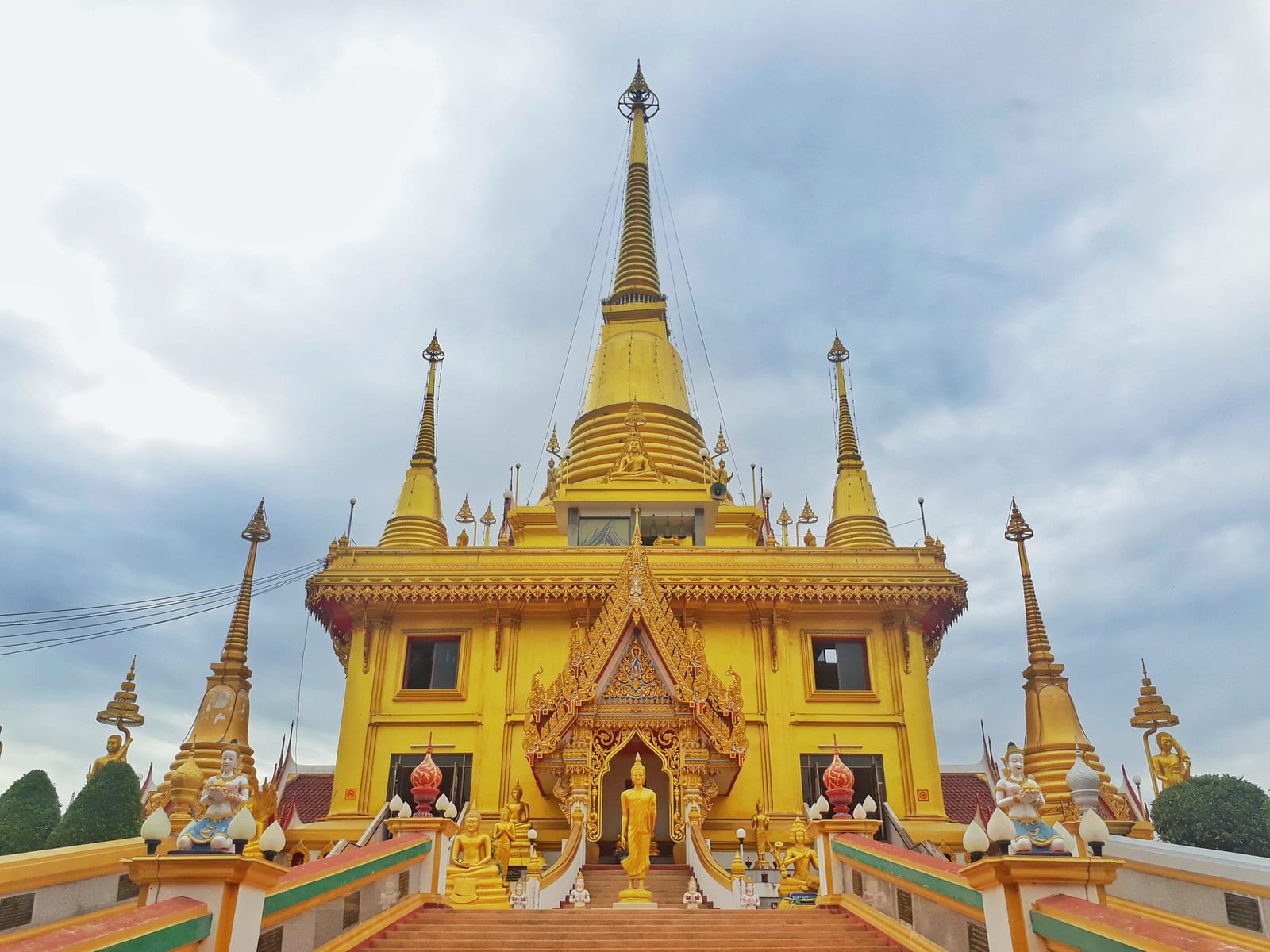
One of Nakhon Sawan's charms is the small hills right in the middle of the city. Several important temples sit on those hills, so going up to pray comes with a view of the city and the rivers thrown in.
Wat Khiri Wong
A hilltop temple in the middle of the city, spread across hundreds of rai on both the hill and the flat ground below. The highlight is the great "Phra Chulamani Chedi" — a big white pagoda on the summit. Climb up to pray at the chedi and you get a wide view across Nakhon Sawan and the line of the rivers. It's in town and you can drive up, which makes it a good first stop on a temple day.
Wat Woranat Banphot (Wat Kop)
An old royal temple on Khao Kop, which locals just call "Wat Kop" (Frog Temple) after the hill. The mood is quiet and calm, with Buddha images and a replica Buddha footprint on the hill. Walk up the stairs to pray and you get a view of the city from a different angle. It's a temple locals feel deeply attached to.
Wat Chom Khiri Nak Phrot (Wat Khao)
An old temple on a hilltop across from the town center, which older locals call "Wat Khao" (Hill Temple) or "Wat Lan Thom." It has been part of the city for ages, with an ordination hall and a viewpoint that gives you a lovely look at the river and the town from yet another angle. Good for anyone who wants to escape the bustle and pray somewhere quiet.
Good to know
The hilltop temples get strong sun in the middle of the day. Go up before 10am or in the evening before sunset for both comfortable weather and good light for photographing the city. Wear comfortable shoes — some temples have stairs up the hill.
The golden dragon and the city's icons
Ask anyone from Nakhon Sawan what symbolizes the city and the answer is the "golden dragon." The Nakhon Sawan golden dragon troupe was founded back in 1976 and has become the thing the whole country remembers this city for. The dragon's body runs more than 50 meters long, lit up end to end, and takes nearly 200 people to handle. This is a city icon tied directly to the Thai-Chinese faith of Paknampho.
Nakhon Sawan golden dragon
The city's emblem. The golden dragon troupe is known nationwide and performs at Chinese New Year and other major events. If you visit during the festival, it's worth catching at least once.
Pasan, the Chao Phraya source pavilion
A contemporary architectural landmark right where the Ping and Nan rivers meet, marking the source of the Chao Phraya. You can walk around and photograph the river view, and it's close to the shrine quarter.
Paknampho mochi
A local Chinese-influenced sweet, soft-textured with a range of fillings. You can buy it in the market quarter — a popular thing to take home.
Paknampho Chinese New Year, a century-old city festival
If you can plan your visit around Chinese New Year, you'll see Nakhon Sawan's Thai-Chinese culture at full tilt. The "Paknampho Deity Procession Festival" has run continuously for more than a hundred years, making it one of the longest-standing Chinese New Year festivals in Thailand, and it was registered as national intangible cultural heritage in 2018.
- Deity procession — the deities are carried from the Chao Pho Thepharak shrine and paraded around Paknampho market for good fortune, held over the Chinese New Year days.
- Golden dragon and lions — the highlight of the festival: the long, light-covered golden dragon along with lion dances, eng-kor, and lo-go drum performers from the various Chinese-descent troupes.
- Firewalking and spirit mediums — traditional displays of faith that are hard to see in other cities.
- Markets and food — the Paknampho quarter is in full swing, with offerings, food, and souvenirs all along the festival route.
Plan ahead
The Paknampho Chinese New Year festival is held over Chinese New Year (January–February, depending on the Chinese calendar) and the dates shift every year. Check the schedule with TAT Nakhon Sawan or the municipality first, and book accommodation well in advance — rooms fill up very fast during the festival.
A half-day route: temples and shrines
If you have half a day, this route flows nicely on foot and by car. Start early and head back in the evening.
Hilltop temples + city views
Shrines + old market
Want a full-day Nakhon Sawan plan with places to stay?
See the Nakhon Sawan travel guide →