🔄 Updated 21 Jun 2026
Nan gives you two trips in one. Spend the first half-day walking the old town, visiting temples, looking at centuries-old murals, then sit with a coffee by the road in the evening. Spend the other half driving out toward Pua–Bo Kluea, where you'll find Doi Phu Kha, the mist, and the winding road that plenty of people come specifically to drive. We'll group the sights so you get the big picture first, then go through each one.
Temples in Nan town
Nan's town temples sit close together, all within walking distance, so you can visit three or four in a single morning. The draw is the Lanna–Tai Lue architecture and murals you won't easily find elsewhere.
Wat Phumin
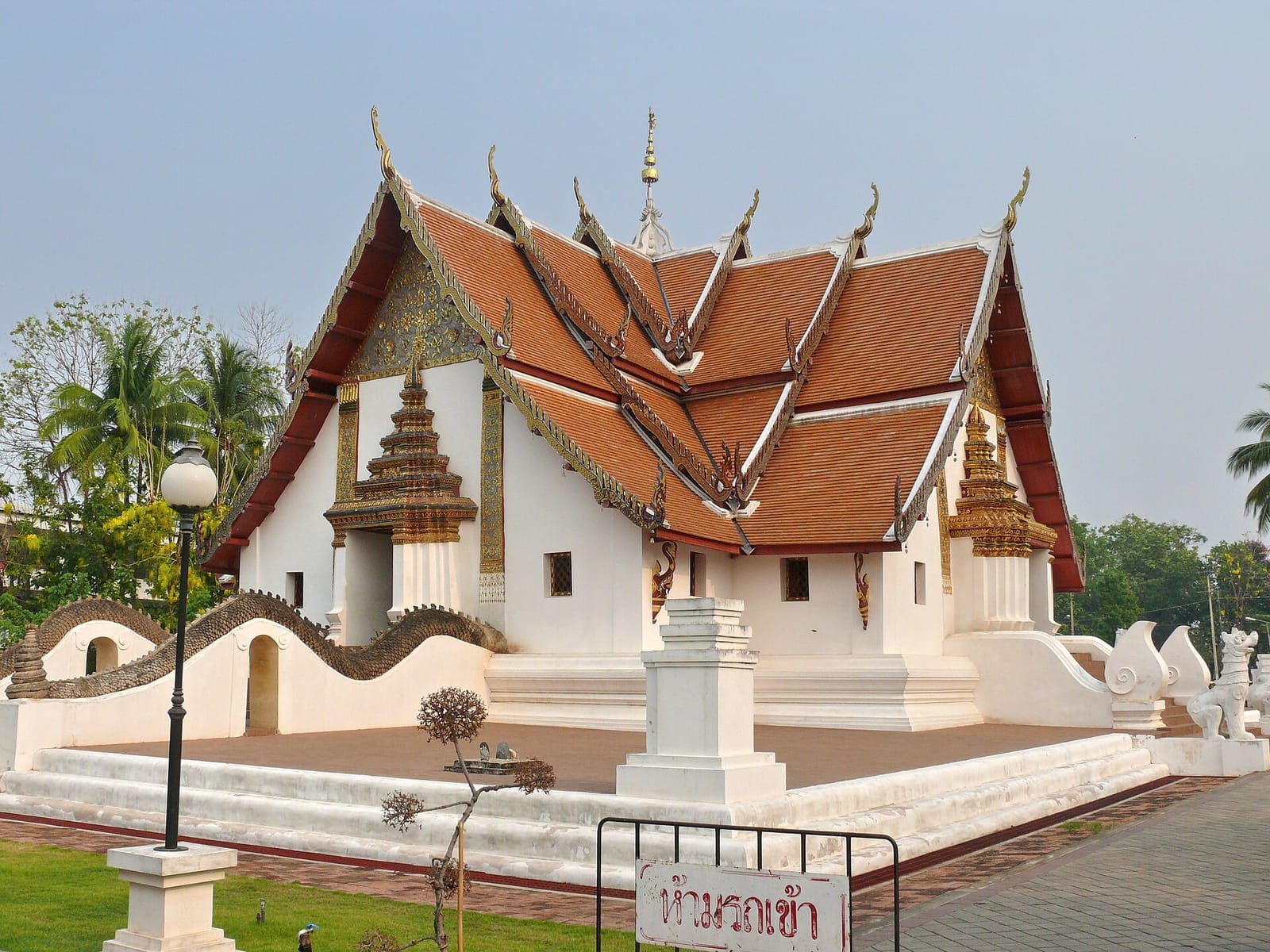
A cruciform-style temple in the heart of the old town, famous for its 'Pu Man Ya Man' mural — the whispering-lovers painting that has become a symbol of Nan. The walls tell the everyday life of old Nan in fine detail. It's the first temple most people stop at.
Wat Phra That Chae Haeng
Nan's guardian stupa — a gold-clad chedi set on a rise across the river. It's the year-of-the-Rabbit stupa and locals hold it in high regard. It sits just outside the old town, about a 10-minute drive or ride away.
Wat Phra That Khao Noi
Up on a hilltop on the western side of town, with a large standing Buddha and a viewpoint terrace that takes in all of Nan. It's a popular spot for sunset, and you can drive right up to the car park.
Wat Sri Mongkol (Kong)
An old temple around Tha Wang Pha district, with a back terrace looking out over green rice fields with the Doi Phu Kha range behind. A good photo stop on the way up to Pua.
Tip
The old-town temples are all walkable from each other. Park near Wat Phumin and just walk between them. Go early and it's cooler and quieter than mid-morning.
Want more out of Nan? Book tours & activities
Booking online ahead on Klook or GetYourGuide is usually cheaper than the gate and skips the queue. Pick only the experiences you actually want — prices and availability are shown live on each site.
Mountains and nature
The other half of Nan's appeal is out of town. The Pua–Bo Kluea route climbs up to Doi Phu Kha, passing villages tucked in the valleys, while down south around Na Noi you'll find Doi Samer Dao and the unusual earth pillars. These spots are far from town, so plan your driving time carefully.
Doi Phu Kha National Park
Nan's highest mountain, with the km-1715 viewpoint where you can watch a sea of mist fill the valleys on cold-season mornings. It's home to the Chompoo Phu Kha trees that bloom pink early in the year, and the air stays cool almost year-round.
Doi Samer Dao
Inside Sri Nan National Park in Na Noi district, this broad ridge gives a 360-degree view — stargazing at night, mist and sunrise in the morning. It's a popular camping spot, so book a place ahead in the cold season.
Bo Kluea Rock Salt
A mountain salt-making site that still boils salt the old way — rare to see in Thailand. You can walk through the salt-boiling process and buy salt and local products from the community. It's a hands-on look at local life unlike anywhere else.
Ban Sapan
A small village in a valley near Bo Kluea, with a stream, terraced rice fields, and riverside cafes. The mood is quiet and slow, and people like to stay a night at a homestay to wake up to the mist.
Sao Din Na Noi (Hom Chom)
Oddly shaped earth pillars carved by water and wind over millions of years. There's a short walking trail to take it in, and it's near Doi Samer Dao, so you can pair them in one trip.
Tip
Clear mist at Doi Phu Kha and Doi Samer Dao usually comes in the cold season (Nov–Feb), early in the morning. In the rainy season the mountain roads get slick and mist sits all day. Allow extra driving time and check the weather before you go.
The sky road and scenic drives
Route 1256 along the Pua–Bo Kluea stretch is the road many people come specifically to drive. It runs along the ridgelines, and in places it feels like you're floating above the mist, which is why it's called the 'sky road.' It's an easy, enjoyable drive with several viewpoints and cafes to stop at along the way.
Route 1256 Sky Road (Pua–Bo Kluea)
A winding ridgeline road. The most popular photo spot is where the road shoots straight toward the mountains. Drive it in the morning for a chance at mist. It actually takes longer than the distance suggests because of all the curves.
Kiew Muang Viewpoint (The View)
A roadside cafe and viewpoint around Pua, looking out over a wide sweep of valley. A good place to pause for a coffee on the way up to Bo Kluea.
Doi Sakad
A mountain village in Pua district, about 22 km from Pua town, with terraced-field views and small cafes. The road up is steep, so drive carefully.
Nan old town and food along the walk
Nan's old town is compact and easy to explore on foot — no car needed. Around it are museums, coffee shops, and an evening market to stop at. On Friday to Sunday evenings there's the Kad Khuang Mueang walking street where you can graze on local food.
- Nan National Museum — once the residence of Nan's ruling lords, it displays the city's prized black elephant tusk. Out front, the arched lamduan (frangipani) trees make a classic photo spot.
- Kad Khuang Mueang walking street — open Friday to Sunday evenings on the square in front of Wat Phumin, with local food and crafts and a relaxed vibe.
- Old-town cafes — Nan has small coffee shops in old buildings scattered across town, good for a rest between temple visits.
- Woven cloth and preserved mafai — Nan is known for Tai Lue woven textiles and candied mafai (Burmese grape). You can pick them up at souvenir shops around town.
Best time to go
The cold season (Nov–Feb) is Nan's high season — cool air and clear mist — but accommodation fills up fast and prices climb. To avoid the crowds, try the late-rainy/early-cold window, when the rice fields are still green and there are fewer people.
Plan a full Nan trip — temples, mountains and old town
See the Nan travel guide →