🔄 Updated 21 Jun 2026
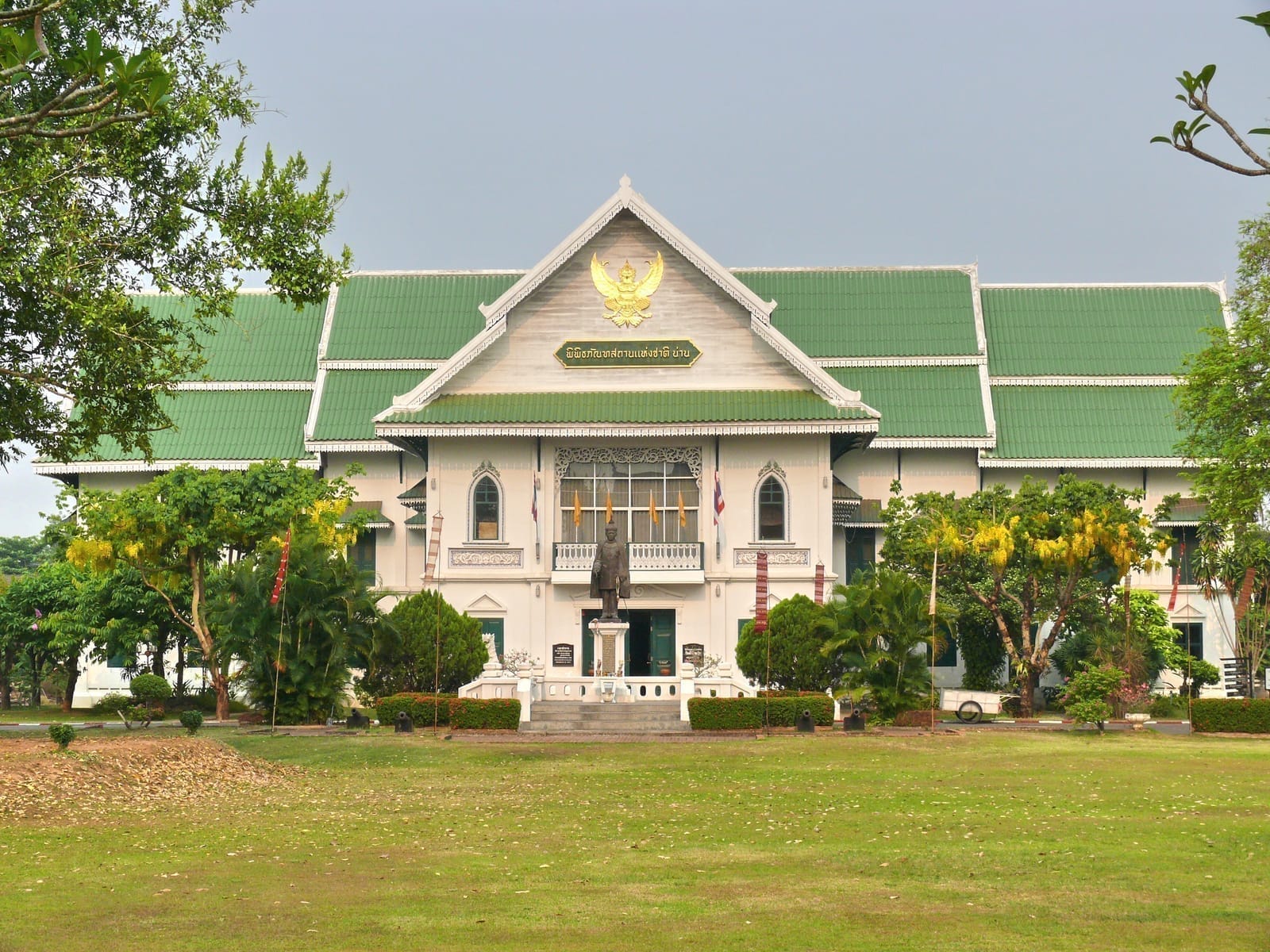
Nan National Museum sits right in the old town, just a few minutes' walk from Wat Phumin. The building itself is the Hor Kham (royal palace) that Phra Chao Suriyaphong Pharitdet, the ruling lord of Nan, built back in 1903. It's a two-storey building blending Western and Lanna styles, painted soft white and standing out on a wide lawn. The Fine Arts Department later took it over and set up the museum here, opening officially in 1987. Many locals in Nan still casually call it "the old palace."
The black elephant tusk you have to see
The first thing most people come for is the black elephant tusk — a stubby tusk in such a dark brown it's almost black, about 97 cm long and weighing around 18 kg. It's a treasured heirloom of Nan passed down from the ruling lords, displayed in its own dedicated room inside the building. There are several versions of the legend behind it, but what's certain is that it's a naturally black tusk, which is extremely rare. First-time visitors to Nan often come specifically to see this piece.
Beyond the black tusk, the upper floor holds belongings of Nan's nobility, silverware, the flowing-water weave (lai nam lai) textiles, and Buddha images in the Nan style. The ground floor tells the story of the ethnic groups and everyday life of Nan's people. It's an easy walk-through — an hour is enough to see it all.
- Black elephant tusk — the town's rare treasure, in the upstairs display room. Don't miss it.
- Lai nam lai textiles — Nan's flowing-water weave, instantly recognisable once you've seen it.
- Silverware & noble household items — the real thing, from the era of the ruling lords.
- Nan-style Buddha images — local craftsmanship with its own distinct character.
Visiting tip
The black-tusk room gets crowded with people late morning. If you want a close, uncrowded look, come right when it opens at 9:00 am — it's much calmer. And remember the museum is closed Monday and Tuesday.
Want more out of Nan? Book tours & activities
Booking online ahead on Klook or GetYourGuide is usually cheaper than the gate and skips the queue. Pick only the experiences you actually want — prices and availability are shown live on each site.
The frangipani arch — a tree tunnel out front
Before or after going inside, head out front and you'll find the frangipani arch — frangipani (plumeria) trees planted in two rows along the path, their branches curving toward each other into a long tree tunnel. It's the most photographed spot here: a shady, pleasant stroll that looks good from every angle, and it's free since it's outside the building. Even if you skip the museum, you can stop by just for the photos.
The arch changes with the seasons. In the rainy season the leaves are lush and green and it's cool and shady; in the dry season the leaves drop and you're left with the bare curving branches, so the tunnel frame shows up clearly. When the frangipani flowers bloom, white and yellow blossoms add another kind of beauty. On Friday, Saturday and Sunday evenings the arch is usually lit up, giving the place a completely different feel at night than during the day.
Middle of the tunnel
Stand in the centre of the path and let the curving branches frame you all around — the classic shot, and the most photographed angle.
In front of the white palace
Step back to get the full museum building in frame — both the architecture and the green lawn.
The arch at night
Friday, Saturday and Sunday evenings the arch is lit up — a different vibe from daytime, great for a stroll after dinner.
Hours, entry fees and getting there
- Hours — Wednesday to Sunday, 9:00 am–4:00 pm (closed Monday and Tuesday)
- Entry fee — 20 THB for Thais, 120 THB for foreigners; students in uniform and monks/novices enter free.
- Frangipani arch — it's outside the building, so you can walk and photograph it for free, no ticket needed.
- Location — in the heart of Nan's old town, near Wat Phumin and Wat Chang Kham, all within easy walking distance.
Where to go next
It's right in the old-town quarter, so you can walk out and reach Wat Phumin with its famous Pu Man Ya Man mural, then carry on to Wat Chang Kham, all in one trip. Rent a bike or just walk — you can cover several spots in a single morning.
Plan a full day exploring Nan's old town
See the Nan travel guide →