🔄 Updated 21 Jun 2026
Say "Narathiwat" and a lot of people picture only mosques and Malay food. But this province actually has plenty of nature to wander through — sea, peat swamp, and waterfalls spread across several districts. Some spots are within walking distance of town; others take a bit of a drive. The upside is that crowds are thin, so the atmosphere stays a lot quieter than Thailand's main tourist beaches. We've ordered things from inside town outward, to make routing easier.
Read before you go
Narathiwat is part of Thailand's deep-south border region. Before you travel, check the latest news and official safety advisories, and plan to move around during daylight. This is a predominantly Muslim-Malay area, so dressing modestly — especially at public beaches and in park areas — will make your trip more comfortable and shows respect to local people.
Narathat Beach — the sea next to town
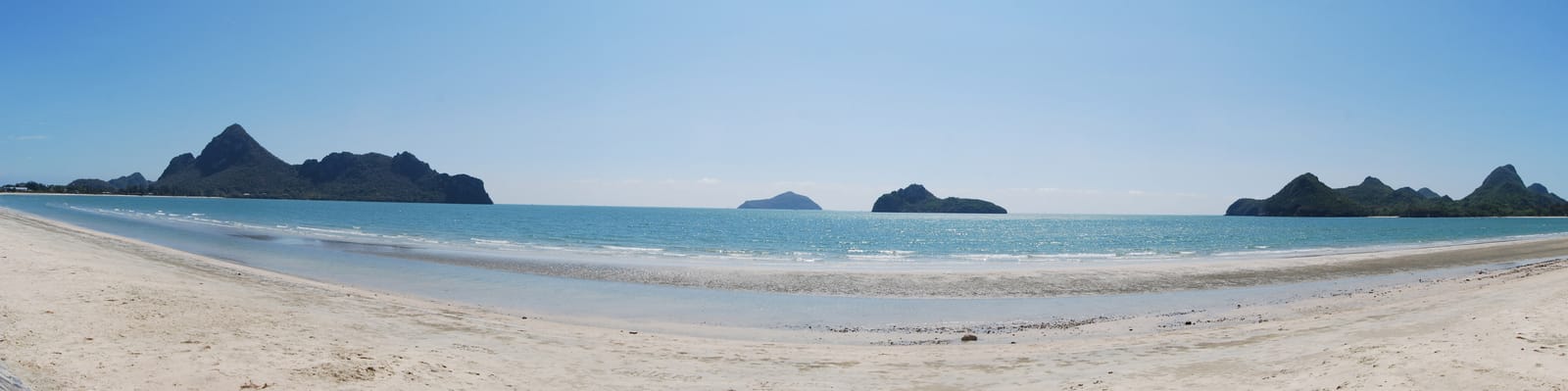
Narathat Beach is a sandy stretch about 5 kilometres long, sitting right against Narathiwat town — you can walk out from the town centre and reach it. The southern end runs down to the mouth of the Bang Nara River. The sand is fairly clean and pale, the water a greenish-blue, and it's where locals come to sit and catch the breeze in the evening. Brightly painted Malay-style kolae fishing boats are lined up here for photos. The whole place feels easygoing and uncrowded.
- Best time — late afternoon before sunset, when the breeze is cool, locals come out to stroll, and the light is good for photos
- Food — there are seafood spots and roadside snacks near the beach, so you can sit, eat, and enjoy the breeze
- Kolae boats — the Malay-painted fishing boats are a signature of this place, usually moored toward the south end near the river mouth
- Swimming — this is an open sea beach, and the surf can pick up in parts, especially in monsoon season. Watch for warning signs and ask locals before going in
Want more out of Narathiwat? Book tours & activities
Booking online ahead on Klook or GetYourGuide is usually cheaper than the gate and skips the queue. Pick only the experiences you actually want — prices and availability are shown live on each site.
Ao Manao–Khao Tanyong — the seaside park
Ao Manao–Khao Tanyong is a national park about 8 kilometres from town toward Tak Bai, right next to Thaksin Ratchaniwet Palace. The bay itself is a long curve of beach along the Gulf of Thailand, with rocky outcrops here and there and the green hill of Khao Tanyong as a backdrop. What stands out is how many ecosystems sit in one place — beach, coastal forest, hillside, and woodland. You can stroll the sand or hike up the hill for a view, and it's noticeably quieter than Narathat Beach in town.
- Opening hours — generally around 8:30–16:30
- Park entry fee — Thai adults about 20 THB, children 10 THB; foreign adults about 100 THB, children 50 THB (rates may change, so check on site)
- Things to do — walk the beach, rest by the sea, camp, or take the nature trail up the hill
- Getting there — head out of town on the Narathiwat–Tak Bai road, ~8 km. Having your own vehicle is by far the easiest
Pair it with the palace
Ao Manao–Khao Tanyong sits right beside Thaksin Ratchaniwet Palace. If you visit the palace in the morning (call ahead to confirm it's open) and then come down to relax by the sea at Ao Manao, you'll cover both the palace and the beach on one route, without backtracking.
Toh Daeng — Thailand's last peat swamp
Toh Daeng peat swamp — officially the Sirindhorn Peat Swamp Forest Research and Nature Study Centre — is in Puyo subdistrict, Sungai Kolok district. It's the largest and last intact freshwater peat swamp left in Thailand, covering hundreds of thousands of rai in total, with roughly fifty thousand rai still genuinely intact. The draw for visitors is the raised wooden boardwalk nature trail, around 1,200 metres long, which lets you walk straight through the middle of the swamp without getting your feet wet. Some sections are wooden bridges strung on steel cable, and there's a tower you can climb to look out over the canopy from above.
- Opening hours — open daily, around 8:00–16:00
- Entry — free admission. There's also an exhibition room explaining the peat-swamp ecosystem
- Best time — early morning, when it's cooler, the birdwatching is good, and it's shadier than midday
- What to bring — insect repellent, comfortable walking shoes, and drinking water. The swamp is humid with a fair number of insects
Why the peat swamp is special
A peat swamp is a forest waterlogged with freshwater year-round, with a floor made of thick accumulated plant debris. That gives it plants and resident birds you'd struggle to see anywhere else. Walk slowly and quietly and you'll hear birds and insects all around you. It's a great nature-learning trip if you bring kids — just don't make loud noise or take anything out of the forest.
Pacho Waterfall — a cliff cascade in Budo forest
Pacho Waterfall sits within Budo–Sungai Padi National Park, in Bacho subdistrict, Bacho district. It's a large waterfall in the Budo forest, running almost year-round. There are four tiers in total, and the first is the biggest and most beautiful — water pours down a wide rock face roughly 60 metres high into the pool below. The surrounding hills are thick and green, the air is cool, and it's a popular spot for locals to relax.
- Opening hours — around 9:00–16:30
- Park entry fee — Thai adults about 20 THB, children 10 THB; foreign adults about 100 THB, children 50 THB
- Getting there — from Narathiwat town take the Narathiwat–Pattani road about 28 km, then turn off toward the waterfall for another 2 km or so, paved the whole way
- Best water — after rain the flow is strong and the whole face is full; in the dry season it eases off but you can still wade and wander
- What to bring — non-slip shoes; the rocks by the falls are slippery, and keep an eye on small children in the water
Pair it with the 300-year-old mosque
Pacho Waterfall is in Bacho district, on the same road as the 300-year-old Talo Mano mosque. If you drive out of town toward Pattani, stop at the old wooden mosque first and then continue to the waterfall in one loop. It's a northern route through the province that combines culture and nature in one go.
How the sea and the peat swamp differ here
A lot of people ask: if time is short, sea or peat swamp? It depends on what you're into. The Gulf coast here is all about the quiet atmosphere, cool breeze, and bright kolae boats — great for chilling and shooting photos in the evening. The peat swamp and waterfall suit people who like hiking, birding, and ecosystems. If you can fit both in, you'll see the fullest picture of Narathiwat, because the nature here runs from the seashore all the way to a freshwater forest in a single province.
Sea & chill
Narathat Beach in the evening + Ao Manao–Khao Tanyong. Sit in the breeze, shoot the kolae boats, no long walks needed
Hiking & birding
Walk the boardwalk at Toh Daeng peat swamp + Pacho Waterfall in the Budo forest. For people who are serious about nature
Building a Narathiwat nature route
The nature spots are scattered in different directions, so having your own vehicle is the most flexible. Try grouping the spots that are close together. The beaches and Ao Manao are on the town–Tak Bai side, the peat swamp is over toward Sungai Kolok, and Pacho Waterfall is out toward Bacho–Pattani.
The sea on the town side
Peat swamp + waterfall
If you have a third day, pick up extras at a slower pace — drop by the seaside morning market, sit at a café in town, or watch the Bang Nara river mouth in the early morning before you head home.
Want a detailed, full-trip route through Narathiwat?
See the Narathiwat travel guide →