🔄 Updated 21 Jun 2026
If you've ever wanted to reach the very southern tip of the Thai map, the Narathiwat border route is a great way to do it. The towns here are small but lively, kept busy by cross-border trade that drives the economy on both sides: Thais cross over to shop in Malaysia, Malaysians cross over to eat and explore in Thailand. We've put together a 3-day, 2-night plan that covers both main crossings, the cross-border markets, the old temples and mosques the towns are known for, and the three-culture food you simply can't find anywhere else. Every time slot is flexible — adjust it to whatever you find on the ground.
Read this before you go
Thailand's three southern border provinces have a security context worth keeping an eye on. Before going, we recommend checking official government advisories, local news, and asking your hotel about the current situation. Plan to travel during daylight, keep your passport and documents ready if you'll cross a border, and respect the Muslim-Malay culture — especially in markets, places of worship, and residential areas.
An overview of the border route
This route runs from the coast at Tak Bai down to the southernmost point at Sungai Kolok. These two districts each have their own crossing, with a different feel to each. Tak Bai is a small riverside crossing you reach by boat, while Sungai Kolok is the province's largest crossing, reached by bridge. Along the way there are temples, mosques, markets, and food to stop for at intervals.
- Tak Bai–Taba Crossing — the coastal district at the northern end of the route. A small crossing over the Tak Bai River to Pengkalan Kubor in Kelantan state, with Wat Chonthara Singhe and Taba Market as highlights.
- Sungai Kolok–Rantau Panjang Crossing — the southernmost border town that Thai trains reach. It's the province's largest crossing, where you cross the bridge to the duty-free market at Rantau Panjang, Kelantan.
- Distance — Tak Bai to Sungai Kolok is roughly 30–40 km, about 40–60 min by car or connecting transport. Easy to link up in one trip.
- 1-hour time difference — Malaysia is one hour ahead of Thailand. Always plan your return so you cross back before the Thai-side checkpoint closes.
Book the activities in your Narathiwat trip ahead
Booking online ahead on Klook or GetYourGuide is usually cheaper than the gate and skips the queue. Pick only the experiences you actually want — prices and availability are shown live on each site.
Taba Crossing, Tak Bai — take the boat to Kelantan
Tak Bai is the coastal district at the northern end of the route. The Taba crossing sits on the bank of the Tak Bai River, directly across from Pengkalan Kubor in Kelantan state. The standout here is crossing the river by ferry boat — a slice of border life you rarely get to see. People from both sides cross back and forth to shop, leaving in the morning and returning in the evening, and there are duty-free shops to browse on the Malaysian side.
- Wat Chonthara Singhe — Tak Bai's old temple, also known as 'Wat Phithak Phaendin Thai' (the temple that guards Thai soil) because it was once used as evidence in setting the Thai-Malaysian boundary. The old wooden architecture and murals are beautiful and worth a slow walk.
- Taba Market — a market beside the crossing where fresh produce, food, and cross-border goods mix together. A great place to watch border-town life in the morning.
- Taba Crossing — the route across to Pengkalan Kubor in Kelantan, made by ferry boat. Allow time for immigration on both sides.
- Tak Bai beach and coast — this stretch is a seaside fishing community with viewpoints and fresh seafood to stop for.
Crossing rules change fast
Checkpoint rules, opening hours, crossing conditions, and the method (boat or vehicle) can change with policy and circumstances. If you really intend to cross into Malaysia, check the latest Taba crossing information again before you go, and have your passport ready. If you don't cross, you can still happily explore the temple, market, and coast on the Thai side.
Sungai Kolok — Thailand's southernmost border town
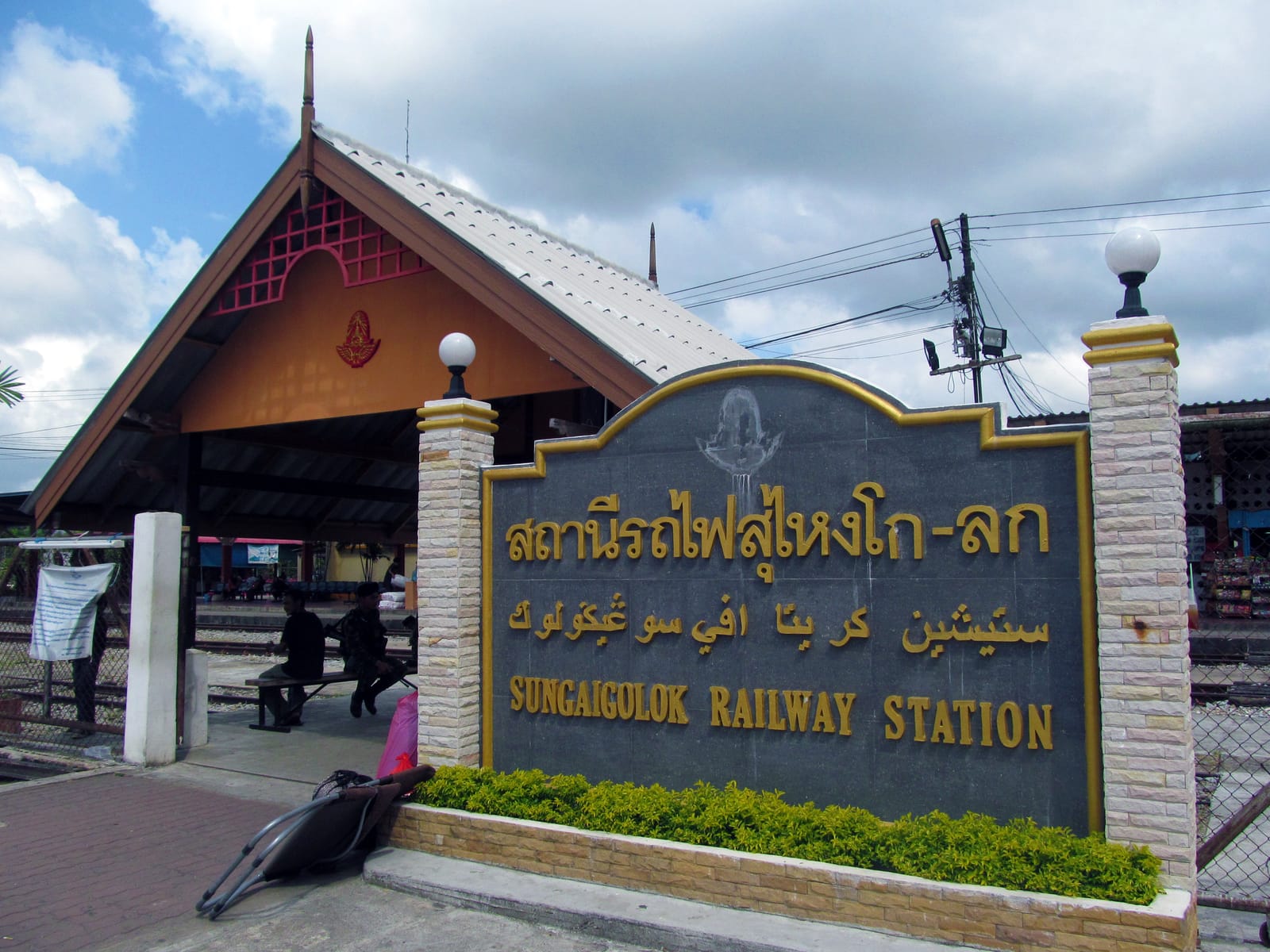
Sungai Kolok is the southernmost point the southern railway line reaches. Across the Kolok River lies Rantau Panjang in Kelantan state, linked by a border bridge that people walk across every day. This is the province's largest trade crossing, with thousands of people crossing daily. Most of the check-in spots are close together, so half a day of strolling around town covers nearly everything.
- Sungai Kolok Crossing — connects to the Rantau Panjang crossing on the Kelantan side via the bridge over the Kolok River. The Malaysian side is a duty-free market town, and you can carry on to Kota Bharu, the Kelantan state capital, in about 45 min–1 hour.
- Sungai Kolok Railway Station — the southernmost terminus of the southern railway line. The old building has real character, with retro-feel photo spots.
- Tho Mo Shrine — an old Chinese shrine the town is known for; locals and travelers come to pay respects by day and by night.
- Ahmadiyah Mosque (Sungai Kolok Central Mosque) — the central mosque in the municipal area, with handsome architecture and a hub for the Muslim community. Dress modestly when visiting.
- The Color of Kolok street art — murals around the railway station district, a popular check-in spot you can walk between for photos.
Markets and cross-border trade
The heart of the border route is the markets. The Thai side has morning markets and a walking street where Thai and Malay food mix together, while the Malaysian side is known for its duty-free markets — clothes, batik fabric, household goods, and snacks at tempting prices. If you want to cross to the Malaysian side, you'll need a passport and have to pass immigration on both sides.
Sungai Kolok Morning Market
A fresh market in town with produce, local food, and Malay ingredients. The best place to watch border-town life in the morning.
Sungai Kolok Walking Street (Friday evening)
Opens Friday evening from around 5:00 PM, bringing Thai and Malay street food together in one place. Great for grazing your way through dinner.
Rantau Panjang Market
On the Malaysian side, a duty-free market town for clothes, batik, and household goods. You'll need to cross the border with a passport.
Taba Market (Tak Bai)
The market beside the Tak Bai crossing, with fresh produce, food, and cross-border goods in a riverside border-town setting.
Two-culture food — the dishes and spots locals talk about
This is the highlight that makes the border route memorable. The food here is a Thai-Malay-Chinese mix all in one city: bak kut teh and southern-style dim sum for breakfast, then khao yam, nasi dagang, Malay curries, and all sorts of coconut-milk desserts for lunch and dinner. We've ordered them by what locals and reviews mention most often, with rough price ranges to help you budget.
Bak Kut Teh
Pork ribs braised in Chinese herbs in a rich Malaysian-style broth, eaten with hot steamed rice or fried dough sticks in the morning. It's the dish people think of first when they picture Sungai Kolok. The spot locals mention most often is Ran Uan Bak Kut Teh.
Morning Dim Sum
Dim sum is the breakfast culture of this border town — steamed buns, dumplings, and steamed ribs served alongside hot tea or coffee. Many shops open at dawn across the city.
Southern Khao Yam
Rice tossed with an array of fresh vegetables and drizzled with budu fish sauce — a balanced sour-salty-spicy flavor. A Narathiwat breakfast-to-lunch staple you'll find at markets and morning stalls.
Nasi Dagang
Malay-style rice cooked in coconut milk, eaten with fish curry or spiced curry. A hearty breakfast dish you'll find at markets and morning stalls, especially on weekends.
Khao Mok Kai (chicken biryani)
Malay-Muslim-style spiced rice eaten with tender chicken and a dipping sauce. A spot locals around Sungai Kolok recommend is Jiraphan 2 grilled-chicken shop, which also serves chicken biryani.
Ayam Golek — Malay grilled chicken
Grilled chicken in a sweet-spicy orange-red Malay golek sauce — both a main dish and a snack, sold at stalls and on the walking street.
Malay Curry-over-Rice
The curry-rice stalls in the markets offer a range of spiced Malay curries — chicken, fish, all bold and fragrant. Ladle them over rice for a filling, budget-friendly meal.
Roti & Teh Tarik
Roti that's crisp outside and soft inside with sweet, creamy pulled tea. A perfect afternoon snack or light dinner, found all over both Sungai Kolok and Tak Bai.
Grass Jelly with Milk & Iced Tea
A cooling border-town dessert. The spot Sungai Kolok locals recommend is Hayhaa Dessert & Cafe, which serves grass jelly with fresh milk and iced tea.
Malay sweets & the Ramadan market
Local sweets like kanom jor hu, Malay dumplings, and a range of coconut-milk desserts. During Ramadan, the dessert market gets even livelier.
Cafes in town
The town has small, inviting cafes serving both modern coffee and hot traditional brews. A spot like Pickpockets.cafe has two floors with chill corners, open roughly 8:00 AM–6:00 PM.
Table manners
Many spots in town are Muslim (halal) and serve no pork or alcohol, while the bak kut teh and dim sum shops are Chinese. Glance at the sign out front to choose the right one. Some shops close briefly during prayer times, and during Ramadan many Muslim shops adjust their opening hours, so keep a little flexibility in mind.
A 3-day, 2-night border timeline
We've kept it flexible. Day one starts at Tak Bai and the Taba crossing; day two goes down to explore Sungai Kolok and eat the two-culture food; day three crosses the Rantau Panjang checkpoint and then carries on. Always check the situation and checkpoint hours first. If crossing isn't convenient, you can still fill every day on the Thai side.
Tak Bai, Taba Crossing, Wat Chonthara Singhe
Exploring Sungai Kolok + two-culture food
Cross the Rantau Panjang checkpoint + carry on
Getting there and where to stay
- Train — Sungai Kolok is the southern line's terminus, with direct services to Bangkok (Krung Thep Aphiwat) that pass through Hat Yai. Great for anyone who enjoys a long train ride.
- Car/van — from Hat Yai or Narathiwat city there are services to Tak Bai and Sungai Kolok. Driving yourself is convenient, but travel during daylight.
- Plane — the nearest airport is Narathiwat (Hat Yai is an alternative), then connect by road into town.
- Where to stay — Sungai Kolok has hotels and guesthouses catering to border crossers; pick a location near the railway station or the checkpoint for convenience. Tak Bai has fewer options, so most people base themselves in Sungai Kolok.
- Ringgit — there are money changers around the checkpoint and in town. The Malaysian side mostly takes ringgit, while baht works at some shops near the border.
A rough budget
Border-route food is easy on the wallet: most main meals run ฿40–120 per person, coffee and desserts ฿25–70. Hotels in Sungai Kolok start around ฿500–1,200 per night depending on the tier. If you cross to the Malaysian side, bring ringgit for the market and onward transport. A relaxed 3-day trip is easy to keep within budget.
See hotels and a full Narathiwat travel guide
View the Narathiwat guide →