🔄 Updated 21 Jun 2026
If savoury southern Malay food is the heart of the main meal, traditional sweets are the charm of the small moments in between. Narathiwat has dozens of old Malay sweets that are hard to find anywhere else. Many are made from rice flour, coconut milk, duck egg and palm sugar — green comes from pandan, other colours from natural ingredients. These sweets are tied to Muslim-Malay life: afternoon snacks, treats for guests, and especially prominent during Ramadan when families break their fast.
What makes Narathiwat's Malay sweets special is how simple they are, yet handmade at every step. Many shops have passed their recipes down three or four generations. Most pieces cost just 5–15 THB, so you can grab a handful in a bag and snack as you go. We've picked out the sweets worth knowing, where to actually find them, and how to eat them the local way.
Akok, the Malay-style custard cake
Akok is the first thing people think of when Narathiwat sweets come up. It's made from flour, duck egg, sugar and coconut milk — a texture close to Thai custard but shaped into small pieces a bit like little egg cakes. The trick is in the method: it's baked with heat from above and below, with hot charcoal set on top and lifted off each time the cake is done. The name akok is believed to come from the Malay word "akeh", meaning to lift up — which matches the lifting of the charcoal exactly. Bite in and you get a fragrant hit of coconut milk, soft and just sweet enough, never cloying.
- The cake — flour, duck egg, sugar and coconut milk, mixed and baked until the top sets; soft and coconut-rich, like Thai custard.
- Looks — small oval pieces, a bit like egg cakes, with a fragrant golden crust; some makers add a light topping.
- Peak season — during Ramadan people order a day ahead; the rest of the year you'll find it at markets and the regular shops.
- How to eat it — with hot tea or old-style coffee, which cuts the sweetness nicely; a perfect afternoon snack.
Buying akok fresh
Akok is best eaten fresh from the oven. If you're heading to a well-known shop during Ramadan, call ahead to reserve — it sells out fast and they can't always keep up. On ordinary days, drop by a morning market or a regular shop mid-morning to catch pieces straight off the heat.
Want to taste deeper? Try a Narathiwat food tour or cooking class
Half a day with a local who knows the lanes — or cooking a dish yourself — teaches you more than just eating. Book ahead on Klook or GetYourGuide.
Putu kudeng and the putu family
Putu is a family of steamed sweets found across the Malay world, and Narathiwat has several kinds. Putu kudeng is steamed in a small bamboo tube or mould, filled with palm sugar, the rice-flour body tossed with grated coconut. Once it's steamed, the sugar inside melts and oozes, so each bite gives you soft dough, rich coconut and fragrant sweetness all at once. These sweets stick to plain local ingredients and aren't overly sweet — great if you like traditional-style desserts.
- Putu kudeng — steamed putu filled with palm sugar, tossed with grated coconut; fragrant palm-sugar sweetness, soft dough.
- Putu halubo / steamed putu — steamed rice flour tossed with coconut, eaten plain or dipped in sugar; mild and gentle.
- Deutayab (tepung) — rice flour, egg and palm sugar, fried thin then rolled with coconut and sesame; crisp outside, soft inside.
- Kodon (honeycomb sweet) — made from flour and egg, wrapped around coconut, with an airy honeycomb texture full of holes; around 15 THB a piece.
Names can vary
Many Malay sweets go by slightly different names depending on the area and the local Malay pronunciation, and putu can be called different things from shop to shop. If you can't find one, just describe it to the vendor — say, steamed dough with a sugar filling, tossed with coconut — and they'll know straight away which one you mean.
Colourful coconut-milk sweets and other old treats
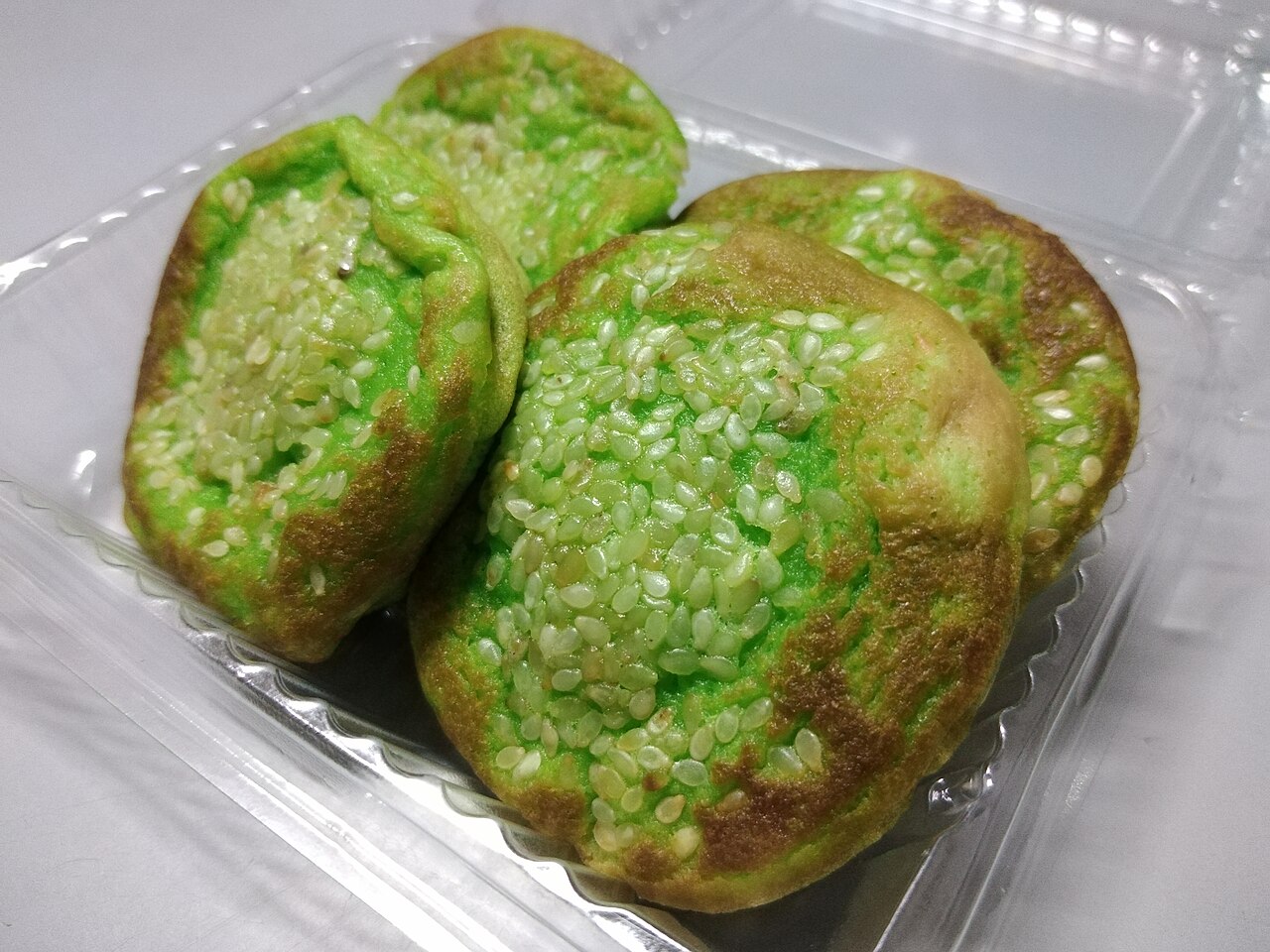
Beyond akok and putu, there are plenty more colourful coconut-milk sweets that make a Malay dessert stall look bright — green from pandan, other colours from natural ingredients. Most use rice flour and coconut milk as a base, steamed or baked until chewy and soft, then drizzled or tossed with coconut milk for richness. These are heirlooms that many makers are determined to keep alive for the next generation.
- Putri raya (putri riayu) — rice flour, egg, milk, coconut milk and sugar, pandan-green, steamed until the top cracks; chewy and fragrant, around 5 THB a piece.
- Bata buro (old-pillow sweet) — crisp fried rice flour with a herb filling, eaten with sweet coconut milk; a hard-to-find savoury-sweet treat.
- Jaemae — a soft Malay sweet fragrant with coconut milk, a familiar name to Narathiwat locals at the old dessert markets.
- Korawo / komut — steamed rice-flour sweet with sugar and coconut, cut into pieces; lightly sweet and soft.
- Piana — an old sweet of flour and egg yolk, baked with heat above and below until fragrant; popular during Ramadan, found in Narathiwat, Pattani and Yala.
These sweets are very budget-friendly — mostly 5–15 THB a piece — so you can mix several into a bag and sit and eat them with tea. It's an easy way to try the full range for just a few dozen baht.
Yakang 100-Year Floating Market, the hub of Malay sweets
If you want to find the fullest range of Malay sweets in one place, the Yakang 100-Year Floating Dessert Market is the spot. It sits in the Ban Yakang community, Bang Nak subdistrict, within Narathiwat town, about 4 kilometres from the centre. It opened as a tourist destination back in 2016, with more than 50 stalls of local sweets and food, many making century-old recipes handed down through the generations. Wander and graze, and you'll find akok, putu, colourful coconut-milk sweets, all the way to nasi dagae and nasi kayo.
- Opening days — Fridays and Saturdays only, roughly 12:00–20:00 (check the market's page first, as times can change).
- Location — Ban Yakang community, Bang Nak subdistrict, about 4 km from the town centre; easy by car or motorbike.
- Highlights — over 50 stalls of old Malay sweets, including akok, putu, putri raya, bata buro, jaemae, plus savoury Malay dishes.
- Atmosphere — a riverside community market with a simple, easy pace; perfect for slow grazing and chatting with the recipe-keepers.
Making the most of Yakang Market
The market only opens Friday–Saturday, so if you're planning a Narathiwat trip, set a Saturday aside for it. Go in the late afternoon when the full range of sweets is out and the air starts to cool. Popular items sell out fast, so arrive before evening, and bring cash — many stalls don't take transfers.
Real, open shops to find Malay sweets
We've picked shops and spots in Narathiwat town that are open and where locals actually go, ordered by how easy they are to drop by and their reputation. Prices are rough ranges, so allow for changes and call ahead before religious holidays or during Ramadan.
Akok Ban Bano Yakang 1 (Hajjah Yamilah)
The akok maker many locals rate as the best in Narathiwat town, carrying an old Malay recipe down several generations and still baking with heat above and below the traditional way. The cake is fragrant with coconut milk, soft and moist. During Ramadan people call to reserve a day ahead. It sits in the Yakang area and works as both kitchen and shopfront.
Yakang 100-Year Floating Market
A hub of old Malay sweets with over 50 stalls in the Ban Yakang community. You can graze on akok, putu, putri raya, bata buro, jaemae and savoury dishes like nasi dagae. Open Friday–Saturday only, it's the place to tick off the full range in one spot.
Dessert stalls at Narathiwat Municipal Market
A morning market in the town centre, Bang Nak area, with stalls of freshly made Malay sweets sold in the morning — putu, coconut-milk sweets and colourful steamed treats. Cheap and what locals buy every day. Best to drop by early before it sells out.
Dessert stalls at the Yakang Market entrance (Rangae Makka Rd)
Along Rangae Makka Road right at the Yakang floating market entrance, Malay sweet stalls set up here and there, especially akok and coconut-milk sweets. You can buy even on days the floating market is closed — handy if you're driving past and want a quick taste.
Tepung Plito (old sweets, three generations)
Old Malay sweets handed down three generations, selling well every festival in Narathiwat town. It's a fried-dough rolled sweet in the deutayab style, fragrant with coconut and palm sugar — a good pick to try a genuinely old recipe the older generation grew up with.
A note on shops and hours
Opening hours and prices can change. Yakang Market opens Friday–Saturday only, and some shops adjust their hours around Friday prayers or during Ramadan. Check the shop's or market's page, or call ahead before you go — especially if you've got your heart set on one particular shop.
Malay sweets with hot tea, the local way
Most Malay sweets are soft, sweet and fragrant with coconut milk, so they pair best with strong hot drinks. People in Narathiwat like their sweets with hot tea, teh tarik or old-style coffee (kopi). The tannin and strength of the tea or coffee cut the sweetness just right, so you can keep snacking without it getting cloying. Order a hot tea and work through the sweets one at a time — it's the break where you'll see this town's rhythm most clearly.
Akok + hot tea
Fragrant, soft-sweet akok paired with lightly tannic hot tea cuts the sweetness perfectly — a classic afternoon snack.
Putu + old-style coffee
Putu filled with palm sugar and tossed with coconut, with strong kopi; the richness of the coconut goes well with the coffee.
Colourful coconut sweets + teh tarik
Colourful steamed sweets fragrant with pandan, paired with frothy teh tarik — a full-range Malay dessert set.
Etiquette and safety to know
Narathiwat is a Malay-Muslim area, so dress modestly and respect local culture, especially near mosques and within communities. Most sweets and shops are halal. And because this is the deep south, follow the latest news and safety advisories before you travel, and plan your route and timing sensibly — it'll make the trip more relaxed.
An unhurried 2-day Malay-sweets itinerary
If you want to tick off the full range of Malay sweets, set a Saturday aside for Yakang Market. Here's a 2-day rhythm that lets you try both the old-timer shops and the dessert market — adjust it to each shop's opening days.
Morning market and akok shops
Yakang 100-Year Floating Market
Plan a full day of eating in Narathiwat
See the Narathiwat travel guide →