🔄 Updated 21 Jun 2026
You can visit Nong Bua Lamphu almost year-round, but each kind of sight looks best in a different season. If you want a clear, open view of the Ubolratana Dam reservoir from the Phu Phan Kham viewpoint, come in the cool season. If you want to see Tao To Waterfall running at full flow, come in the rainy season. So read the timing section first, that way you can pick dates that match what you actually want to see.
When is the best time to visit Nong Bua Lamphu
The most comfortable time to visit is the cool season, November to February: cool air, gentle sun, clear skies, perfect for heading up to the Chong Khao Khat viewpoint on Phu Phan Kham to look out over the reservoir above Ubolratana Dam. In November the dry dipterocarp forest inside the Phu Kao–Phu Phan Kham park also starts to turn its leaves red and orange. If you're more into waterfalls, the rainy season into early cool season is when Tao To Waterfall has the most water and looks its best.
- Nov–Feb — Cool season, pleasant and cool with clear skies, ideal for the Phu Phan Kham lake viewpoint. In early November the dry dipterocarp forest starts changing colour. This is the most enjoyable time to go.
- Jun–Oct — Rainy season, everything lush and green, Tao To Waterfall running full, and very few people, but rain comes in spells and the rocks at the waterfall get slippery, so take care.
- Mar–May — Hot and dry, the waterfall low or dry and the mountain views often hazy. In this period stick to temples and the lake in the late afternoon, which is more comfortable than being out in the midday sun.
Straight talk
Nong Bua Lamphu doesn't get packed the way Loei or Chiang Khan does, so fully booked accommodation is rarely an issue. That said, lodging in the province is limited, mostly hotels and resorts in town, so if you come on a long weekend it's worth booking a little ahead for peace of mind.
What's the weather like and what should you wear
Nong Bua Lamphu sits in upper Isan, so the weather is typical Isan. In the cool season, nights to early mornings in town run around 16–20°C, and some nights drop a little lower, while the daytime sun warms things up a lot. In the hot season the daytime can hit 35–38°C, and the rainy season is humid with rain in spells. So pack for both cool mornings and hot afternoons.
- Cool season — A jacket or light layer for early mornings and for the windy mountain viewpoints. You can take it off during the day when the sun is warm.
- Hot season — Light, breathable clothes, a hat, sunglasses and sunscreen, because the Isan midday sun is genuinely strong.
- Rainy season — A rain jacket or folding umbrella, plus shoes you don't mind getting wet if you're heading to Tao To Waterfall where the rock floor is slippery.
- Comfortable walking shoes — Several sights are forest temples and nature trails, so sneakers or hiking shoes are easier than sandals.
- Modest clothing for temples — Wat Tham Klong Phen and other temples here are practising temples; dressing neatly makes entry easier and shows respect for the place.
Tip
The rule for dressing here is to wear thin layers and keep a jacket on hand, because cool-season mornings and evenings differ a lot from midday. Once the sun comes up mid-morning you can just take the jacket off and stash it, no need to roast.
Cool season — making the most of the mountain viewpoint
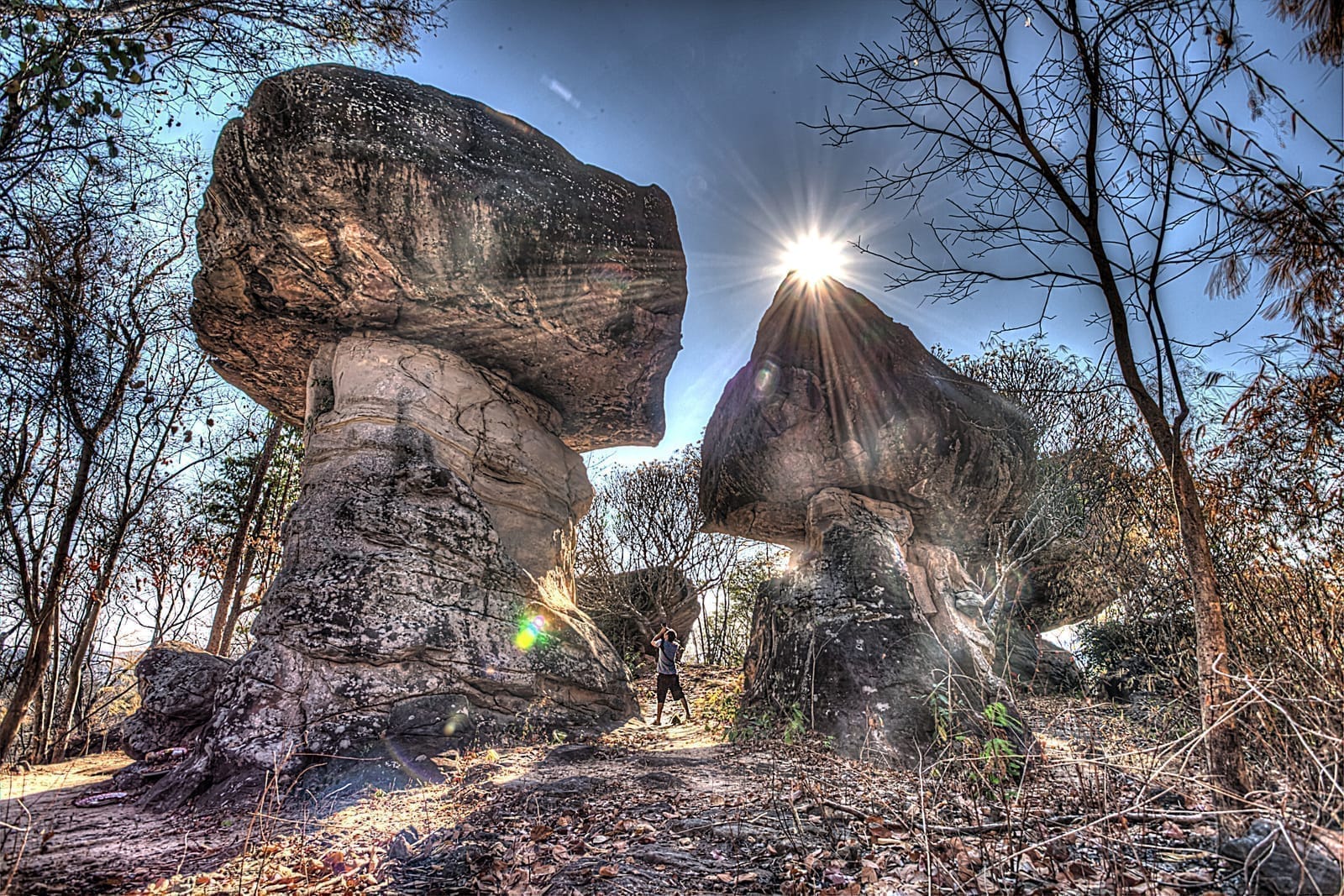
The cool-season highlight of Nong Bua Lamphu is heading up Phu Phan Kham inside Phu Kao–Phu Phan Kham National Park. The spot people like to stop and photograph is the Chong Khao Khat viewpoint, about 100 metres before the park entrance. From there you look out over rolling hills and the wide reservoir above Ubolratana Dam, and the clear cool-season sky makes the view sharper than in other seasons.
- Chong Khao Khat viewpoint — It sits on a roadside bend where cars like to slow down and stop for photos. Watch for oncoming traffic since it's a curve, and only pull over where it's safe.
- Go in the morning or evening — The light is softer than at midday, and in the evening you can catch the sunset over the lake.
- Forest changing colour — In early November the leaves inside the park start turning red and orange, a short window when the forest looks especially good.
- Check the weather before heading up — If it's hazy or smoky the view won't open up. Early cool season usually has clearer skies than late season.
Straight talk
Nong Bua Lamphu isn't a bitterly cold province like Loei or Phu Ruea, so don't expect a thick sea of fog or near-freezing temperatures. This is an easygoing Isan cool season, cool enough to throw on a jacket and spend the whole day outdoors without worrying about the heat.
Rainy season — the waterfall at its best
If you love waterfalls, come in the rainy season through early cool season. Tao To Waterfall is the one closest to town, on the Nong Bua Lamphu–Udon Thani road about 3 km from the centre. It's a tiered waterfall flowing down rock steps, shaded by trees, and nearby is the Chao Pu Lup shrine that locals revere. In the dry season this waterfall runs so low it's nearly dry, so you have to time your visit to the right season.
- Go in Jun–Oct — This is the period with the most water, full flow and a lush, shady setting. In the dry season the waterfall barely has any water.
- Watch the slippery rocks — The boulders at the waterfall get wet and very slippery when the flow is high. Walk slowly and wear shoes with good grip.
- Easy stop near town — It's only 3 km from the centre, so you can pull over for photos and shade on your way to Udon.
- Rain in spells — Isan rain usually falls hard in short bursts then stops, so bring a rain jacket and watch the sky before heading down to the waterfall.
Rough per-person budget
One of the upsides of Nong Bua Lamphu is that it's cheap to visit. Most nature spots and temples are free or charge a small entry fee, and local food is friendly on the wallet. Below are rough numbers for a 2-day, 1-night trip per person, just to give you a picture before you plan for real. Prices shift with the season and holidays.
- Getting there — A Bangkok–Nong Bua Lamphu coach runs from the high hundreds to low thousands of THB per trip, or you can fly into Udon Thani and drive about an hour more, with flights starting in the low thousands of THB.
- Accommodation — Most hotels and resorts in town run around 400–900 THB/night, with lake-view stays near Ubolratana Dam costing a bit more.
- Food — Local restaurants and markets run 40–90 THB a meal, so a comfortable full day is around 250–350 THB.
- Entry fees — Wat Tham Klong Phen and Tao To Waterfall are free; Phu Kao–Phu Phan Kham park is around 40 THB for a Thai adult.
- Rough total — A budget 2-day, 1-night trip runs about 1,200–1,800 THB per person, and it's cheaper still if you drive with friends and split the fuel.
What to pack so you don't regret it
- Cash — Local shops, markets and many entry points mostly take cash, so small bills are handy.
- Sunscreen and a hat — The Isan midday sun is strong, especially at the open-air viewpoints.
- Insect repellent and personal meds — Nature spots and forest temples have mosquitoes in the evening, so it's reassuring to carry them.
- A light jacket — For cool-season mornings, evenings and the wind up on the mountain; it rolls up small in your bag.
- Rain jacket / folding umbrella — If you come in the rainy season, Isan rain arrives fast and hard in spells.
- Your own water bottle — Some spots are far from shops, so it's better to carry water with you.
Tip
The sights in Nong Bua Lamphu are spread out beyond town and public transport is scarce, so driving yourself or renting a car from Udon makes getting around easiest. Fill up the tank before heading out of town, since petrol stations along the way aren't very frequent.
How to get to Nong Bua Lamphu
Nong Bua Lamphu has no airport of its own, so most people arrive by coach, or fly into nearby Udon Thani and drive in. The sights are spread out and outside town, so having your own car or a rental is easiest.
- Coach — Bangkok–Nong Bua Lamphu takes about 8–9 hours with daily departures; you arrive in town and then take a local ride or rent a car.
- Plane — Fly into Udon Thani, which has frequent flights, then drive about an hour into Nong Bua Lamphu. Handy if you want to cut down on time spent on the road.
- Self-drive — The most flexible option, reaching Phu Phan Kham, Tao To Waterfall and Wat Tham Klong Phen, which public transport doesn't get to.
Plan your routes and getting around Nong Bua Lamphu in detail
See how to get around Nong Bua Lamphu →